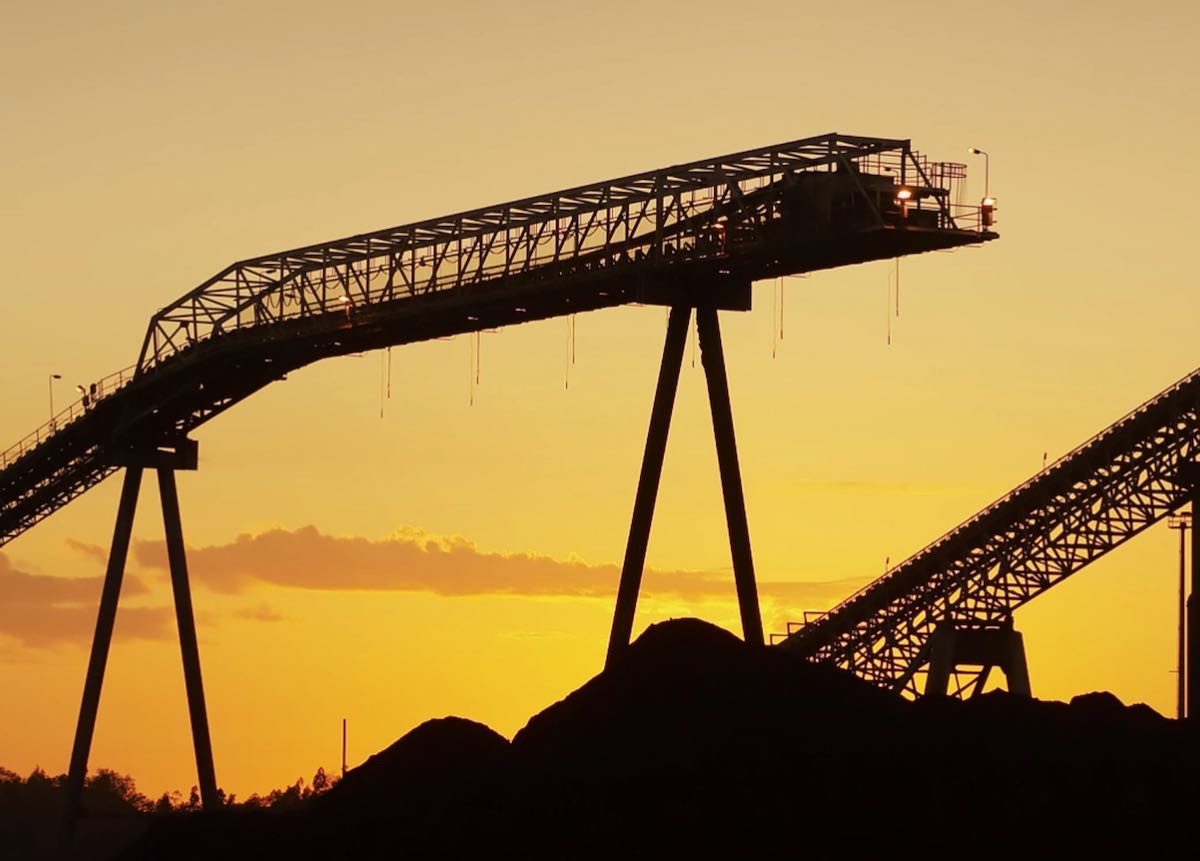
The potent methane emissions from the giant Hail Creek coal could be as much as eight times higher than what owner Glencore is officially reporting, a new study shows.
The United Nations-backed study showed that actual measurements of methane plumes over the coal mine in Queensland’s Bowen Basin tell a very different picture to the estimates the commodities giant reports.
University of New South Wales (UNSW) researchers flew over the Hail Creek open-cut coal mine in September 2023 in a plane equipped with two different measuring instruments.
They compared measurements taken downwind of the open-cut coal mine to what Glencore reported in the 2023 financial year, and found that if sustained across the year, methane emissions would be three to eight times higher than reported.
“Our airborne measurements are further evidence that emissions from the mine are not well-captured using state-wide emission factors,” says UNSW co-author Dr Stephen Harris from the UNSW ESSRC Greenhouse Gas (GHG) Measurement team.
“The results support phasing out these generic reporting methods in favour of more advanced, mine-specific coal gas content modelling for open-cut coal mines in Australia.”
Over a 20 year period methane is 80 times more potent as a greenhouse gas than carbon dioxide. Reducing these emissions from coal mines is a “fast, cost-effective” way to radically drop the country’s overall emissions, Harris says.
Glencore disputes the findings, criticising the “extremely limited aerial surveys” and using that small sample to extrapolate annual emissions for the mine, and says it’s since shifting to a site-specific sampling, an approach that becomes compulsory later this year but has been available as a voluntary method since 2011.
In an emailed statement, the company said the findings didn’t detect methane emissions “from parts of our Hail Creek mine”, failed to assess upwind methane emissions, and attributed all emissions just to Hail Creek when they might also come from elsewhere.
“We believe these deficiencies in the paper… highlight again the shortfalls of satellite / remote sensing methods and unsuitability for annual inventory reporting,” the statement said.
“The Australian Government and its Climate Change Authority have also stated that further work is required before such methods can be applied to estimate emissions inventory with transparency and credibility.”
But this is not the first time Glencore’s Hail Creek coal mine has been called out for excess methane pollution, which hasn’t been logged under the National Greenhouse and Energy Reporting (NGER).
The methane-detecting instrument Tropomi onboard an Earth observation satellite detected four enormous plumes from the mine in June 2023.
The data, released by the Australian Conservation Foundation, showed the open cut coal mine released more methane pollution in 16 days than the company reported over an entire year.
Australia failing to get methane under control
Australia signed up to the Global Methane Pledge in 2022 alongside 150 other countries pledging to reduce methane emissions by 30 per cent from 2020 levels, by 2030.
But the country doesn’t know what its true methane emissions are, partly because of stark underreporting allowed by coal mine owners under the NGER framework.
A year after the government signed the global pledge, the International Energy Agency reckoned that Australia was producing five times as much methane as the population should warrant – led by agriculture but with coal mines a close second.
Coal mine owners have been allowed to report estimates of fugitive emissions based on how much coal they extract and is used, using state-based emissions factors.
But that will all change from 1 July this year, the date the federal government has set for phasing out this method in favour of site-specific sampling.
Furthermore, in February the NSW Environmental Protection Agency (EPA) released a guide for “Large Emitters” across the economy, with the clear expectation that the state’s biggest coal miners will set out “ambitious emissions reductions goals” that align with the state’s climate targets.
Fugitive emissions from coal mines are now a priority for the NSW EPA, with its guide compelling any new facility or modification that emits more than 25 thousand tonnes of additional CO2-e each year to report on their emissions in a standardised manner, and to set goals that align with the NSW Net Zero commitment, and its interim emission reduction targets.
They’re watching
Momentum is behind efforts to independently track methane emissions, and ultimately to embarrass governments and companies into doing something about them.
The UNSW study on Hail Creek, published in Environmental Science and Technology Letters, is the first academic work in Australia to verify what companies like Glencore are claiming against what the coal mine is actually emitting.
But it’s now an area that has global and local non-profit and government-backed support, and uses tools a varied as aircraft-based measurement, satellites, and even activists with handheld devices are determined to find out just how badly Australia is doing at recording methane.
Non-profit organisation Carbon Mapper launched a satellite late in 2024 to detect and track greenhouse gas super emitters, and is one of two tracking methane.
In April last year the Superpower Institute launched its Open Methane tool which suggested national methane emissions are at least twice as high as reported.
- * Updated to include comments from Glencore.