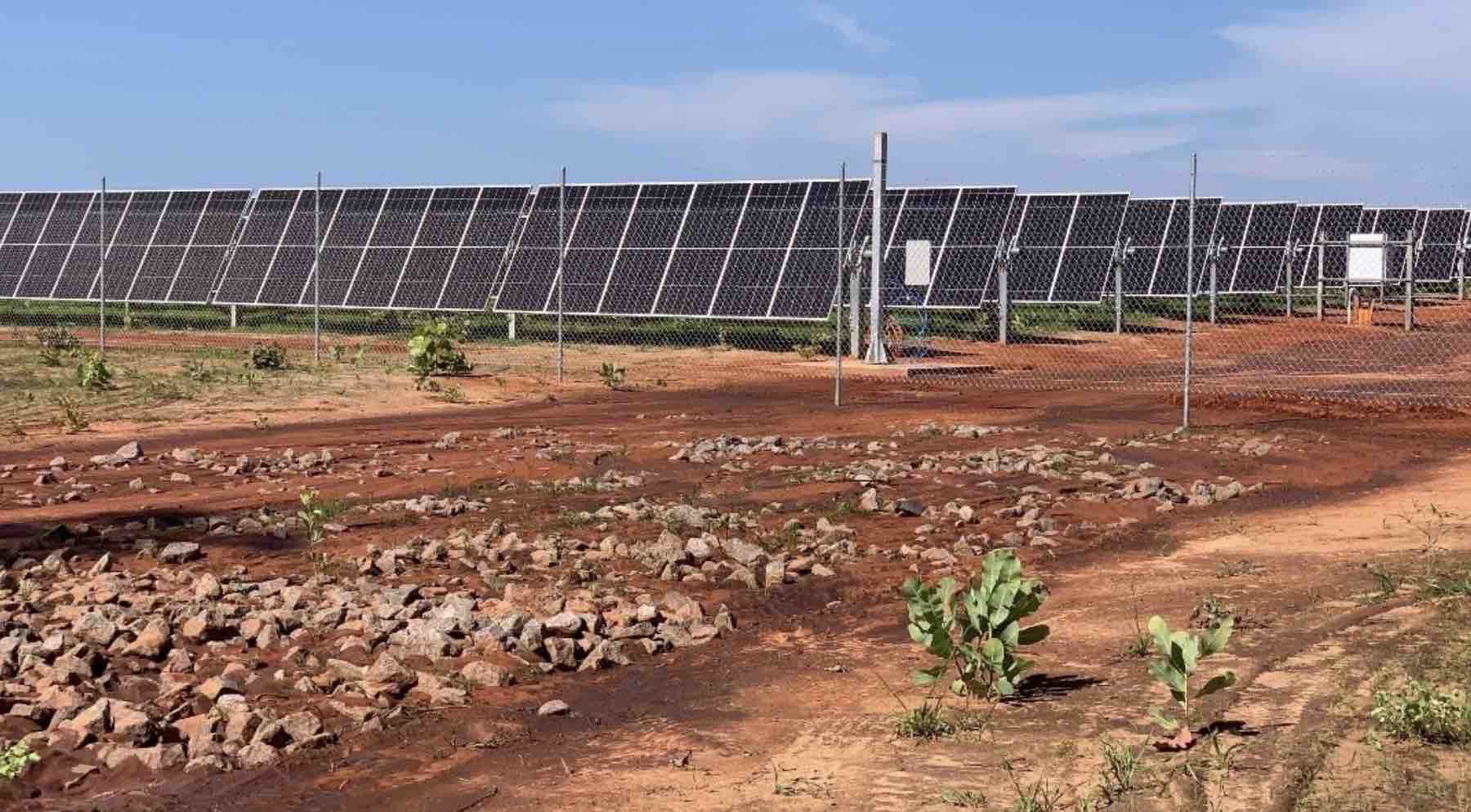
Three utility-scale solar farms in the Northern Territory are finally being allowed to send power to the grid and ramp up to full capacity – some five years after they were actually built.
The stranding of the three solar projects – at Katherine, Batchelor and Manton Dam, totalling around 45 MW and all owned by Italian energy giant ENI – has been one of the most extraordinary episodes in Australia’s green energy transition.
They were not banned from producing per se, but the operating conditions imposed (after they were built) by the local regulatory body so severe that none could see the point of generating. But it seems now that the issues are finally being resolved.
Rod Hayes, the chief executive of Jacana Energy, the main energy retailer in the Northern Territory, which will buy the output from the solar facilities, says it is clear that the “raw cost” of solar is the lowest of any power source.
But he says that in the NT there were issues around integration with the territory’s cumbersome fossil fuel generators, and a lack of knowledge about how that can be done.
“The challenge is that when you push solar energy in particular, which changes every time a cloud comes across the sun, or there’s any change in in how much sunlight is hitting the panels, the power output changes, so that has impacts on the system as a whole,” Hayes told ABC local radio this week.
“It’s much like dropping gravel into the trailer that you’re towing on your car. The load shifts, so the engines that are trying to drive the system will try and pick up that change, and they struggle. So networks everywhere around the country, around the country, in the world, are trying to work with, how do you bring solar on?”
Nowhere, however, did solar integration seem quite as complicated as in the NT. Even off-grid mines have dealt better with the integration of solar, with some delivering up to 80 per cent renewables and often running at “fossil fuel off” – something that the NT is a long way from achieving.
“Everyone’s experience and kind of knowledge data set was low,” Hayes admitted. “And so it’s, it’s been a really slow, turgid, expensive process to kind of get through those processes for the developer.”
The 25 MW Katherine solar farm has already been slowly ramping up after the addition of a 5.68MW and 3.44MWh battery system – in 2022 – that would help it meet a strict rolling forecast system imposed for the solar farms. Now the smaller 10 MW solar farms at Batchelor and Manton Dam to the north are also sending power to the grid.
“Those solar farms are now producing serious levels of power and injecting that into the grid, so that that’s great, and we’re starting to see the benefit of that in really significant ways,” Hayes said.
“Manton is still at very low levels, but the other two are really getting up towards full production, still some months away from getting to that point. But every day, we’re getting production out of the farms, which is great.”
Simone Rizzi, the head of the Australian operations of ENI Plenitude, the Italian giant’s renewable energy arm, said in a statement:
“Over the past five years, our teams have worked hard to satisfy the stringent conditions requested by the System Controller and are working towards finalising the remaining steps to achieve full export from our three solar farms. In the meantime, we are proud to now supply a considerable quota of renewable energy to Territorians.”
ENI Plenitude’s annual accounts show that the company received revenue of just €1 million ($A1.75 million) in calendar 2024 from its Australian solar operations, and produced just 26 GWh.
This was presumably from the Katherine facility, which has been slowly ramping up from just 2 GWh produced in calendar 2022, when it first installed its battery, to 6 GWh in 2023.
Jacana’s Hayes says the NT can make “considerable savings” from renewable energy contracts, and said that the contracts with ENI had recently been “restated”, without providing further information.
“New sources of energy including renewables must be brought into the mix where it makes sense. We’re focused on lowering the total costs of the energy system,” Hayes said in the statement.
“We’re grateful to Plenitude for their patience under challenging circumstances, and we look forward to continuing to work with them in the future.”
Renew Economy has reached out to both Jacana and ENI for further information.
Meanwhile, a fourth solar farm affected by the strict operating conditions, a 10 MW facility also located at Batchelor, and built by Merrick Capital, has been the subject of a legal case seeking liquidated damages for the delay in production.
According to an article in Australasian Lawyer, the damages were awarded in the Federal Court in favour of Rimfire Energy, another NT energy retailer, against Batchelor Solar Farm, which it noted was due to deliver its PPA in 2021, after signing it in 2020.
Rimfire had argue that the respondent had failed to comply with the target commercial operation date under the PPAs and that certain extension of time (EOT) notices were invalid and the respondents were unentitled to the claimed EOTs.