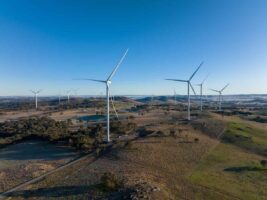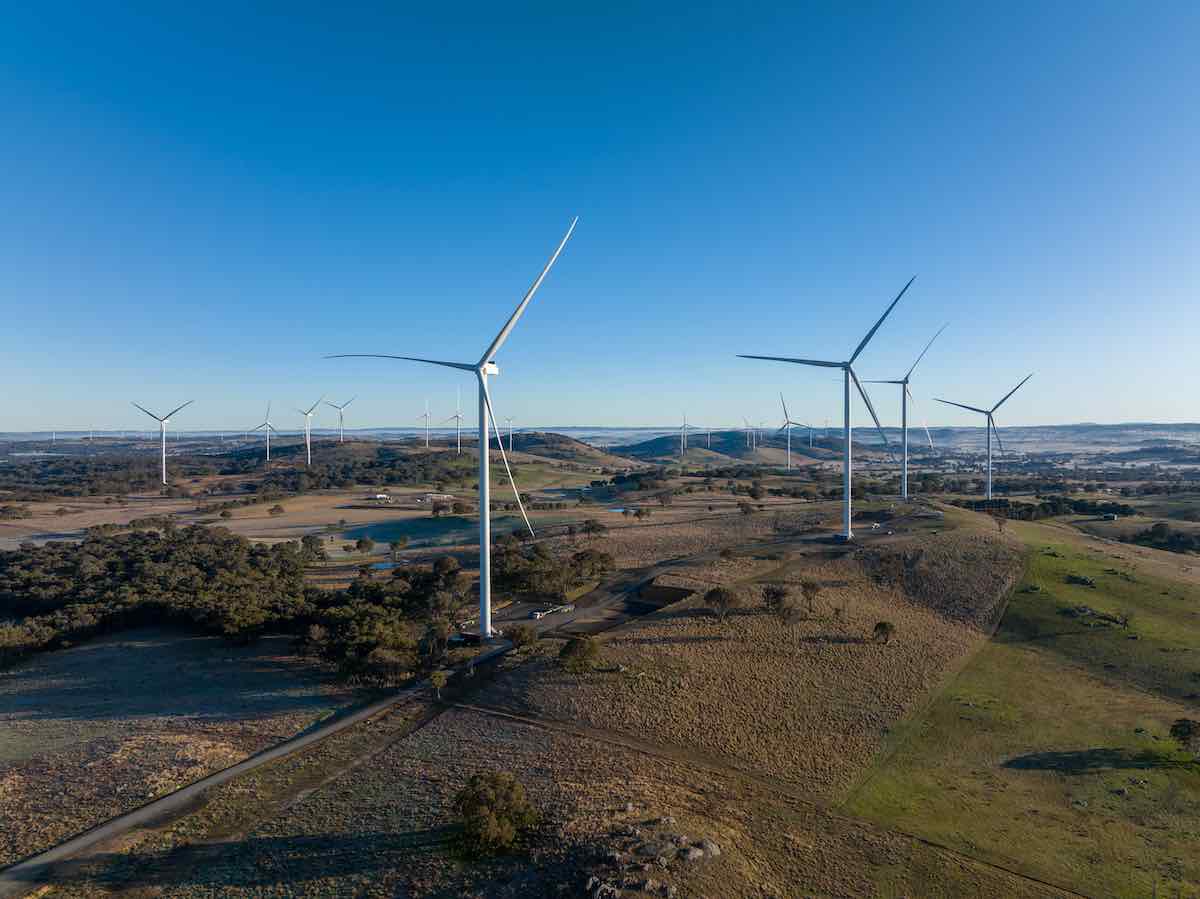

Tom Gunthorpe is a second generation farmer and one of the many hosts of one of the country’s newest wind farms, the 312 megawatt Bango facility south of Yass.
And his experience – and that of the landowner group that was created by the local farming community – is an important one given some of the pushback and the deliberate misinformation that is engulfing wind and even solar and battery projects around the country.
One of the biggest arguments currently put against wind farms, and the farmers that host the turbines, is that they will be left holding the bill of decommissioning those turbines in a few decades time, and will also be left holding the tab if any damage or repairs are needed.
Gunthorpe says that is not the experience of the group of farmer hosts that he is involved with. But that may be at least partly because of the way they went about negotiating with the developers when first approached more than a decade ago.
“So one thing that we did, we put a farmer group together, we decided very early in the piece that we would negotiate as one and not have this divide and conquer thing going on,” he told an audience of more than 400 people at the National Renewables in Agriculture conference in Orange earlier this month.
“So we all got together, and then we formed a subcommittee group that basically did all the negotiations …. and that’s what we did. We were very fortunate that the company that we were dealing at the time, CWP, which is now Squadron Energy, were very respectful.”
One of innovative results from those talks was the creation of an escrow fund – believed to be one of the first of its kind, if not the first – that enables the landholders to gain quick access to money to deal with any issues that may arise from the operation of the wind project – such as erosion or damaged fences of other infrastructure.
The second issue is that of decommissioning. But Gunthorpe says he is not bothered by that, mainly because of the nature of the lease agreements.
“What we wanted to do was to create this peace of mind, and while we talked about decommissioning, what we created, in fact, was an escrow fund that covered off any shortfall where they (the wind farm owners) didn’t meet their obligations,” he said.
“That gave us that peace of mind.
“Now, with the decommissioning itself, let’s break that down a little bit. Number one, we’ve got a 25-year plus 25-year plus 25-year lease, so it would likely be the case that the turbines would be refurbished and repowered, certainly through the first round, and then hopefully in the second round.
“So all the spruiking you hear around decommissioning is that it is going to be a big problem. It’s all on the farmer’s shoulders. But it’s not that big a deal.
“Number one, it’s part of their development consent … and there’s talk right now of bringing legislation into managed decommissioning anyway.”
The escrow fund was established soon after the project was begun, and represents an amount per turbine per year, and indexed to inflation.
“We’ve got an independent organisation that’s managing those funds. So if any farmer needs to draw on those funds, they just put an application in.
“It could be an erosion event or something that’s happened that they it’s taken too long to get it through the system. So let’s draw on the escrow fund, get it fixed, and then once all they’ve done, they’ve got the obligation to put those funds back in again.”
Gunthorpe says he grew up on his farm, and has been through many droughts, including the millenial drought. “It’s one reason why I didn’t question the opportunity on our door. I’ve been through this enough times, why wouldn’t you?
“What we’ve done here is being able to be able to keep the farm in the family now for generations because we’ve got that off-farm income.
“We can go through all the droughts and any other economical issues that go around the world, and we’ve got that passive income coming in every quarter.”