
The New Zealand government has recommended legalising plug-in solar in Aotearoa, moving a crucial step closer to tapping into a huge new, and game-changing market for distributed PV – and potentially beating Australia to the punch.
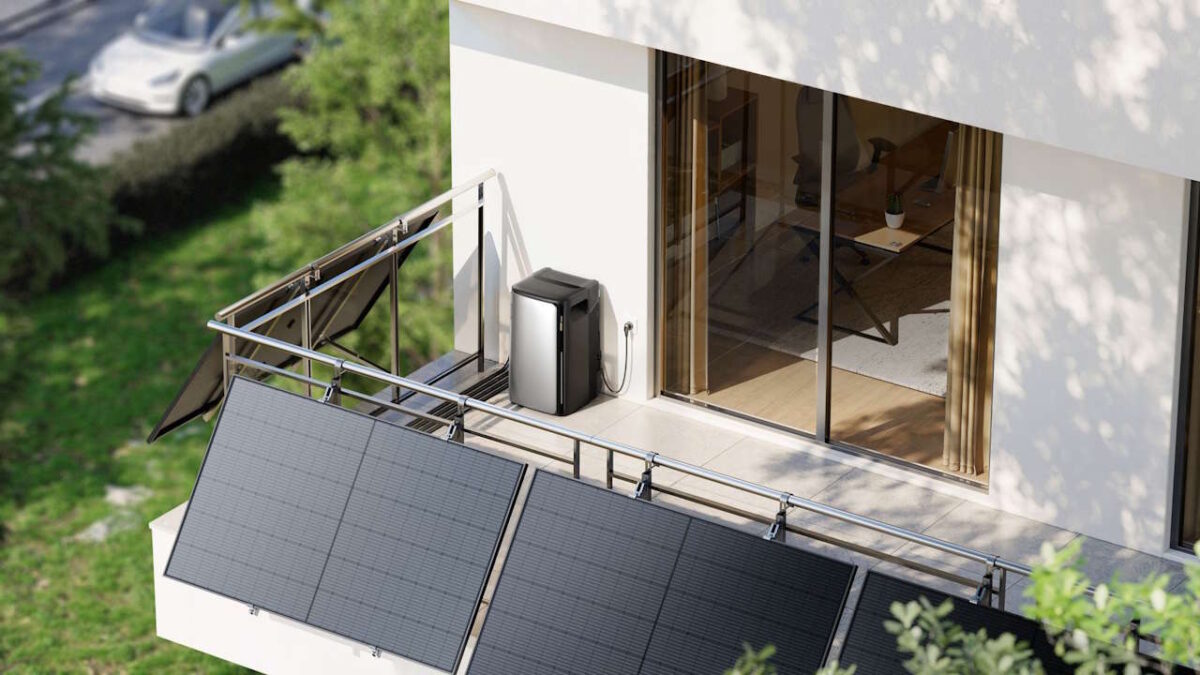
Plug-in solar – sometimes called ‘balcony solar’ in reference to one of its most common applications – has been a runaway success in parts of Europe, like Germany, where it has extended the bill-slashing benefits of PV to apartment dwellers and renters and others previously locked out of the market.
In Australia, however, it is not yet legal. As Smart Energy Lab general manager Glenn Morris explained it to Renew Economy here, Australia and New Zealand have slightly different electrical standards than the rest of the world, in terms of the configuration of our networks and safety requirements.
And while various state governments around Australia seem keen on addressing the legal, technical and regulatory barriers to plug-in balcony solar and batteries, it does not yet appear to be anywhere on the radar of the federal government.
Across the ditch, however, the Ministry for Regulation has just completed a major review into the New Zealand’s solar installation system, identifying a package of recommendations to make it easier and more predictable for households and businesses to install solar.
Chief among the recommendations that have come from the review is to legalise plug-in solar – an outcome the review says could be delivered within nine to 12 months.
“The Report recommends legalising plug in solar because there was no good for reason for preventing Kiwis using it,” said regulation minister David Seymour in a statement late last week.
“Plug-in systems can be used by renters and people living in apartments who can’t access traditional rooftop solar. If they’re good enough for Germany and the UK, they’re good enough for us.”
Getting technical
One of the main barriers that will need to be overcome, according to the report, are existing standards for grid-connected photovoltaic systems, including AS/NZS 4777.1 – a standard that also applies in Australia – don’t allow PV systems to connect to an electrical installation through a plug-and-socket arrangement.
The review says the preferred approach to legalising plug-in solar in NZ is to remove existing regulatory barriers through targeted amendments, develop a suitable safety standard, and make targeted amendments to safety regulations to enable plug-in solar systems under defined conditions.
“This means that regulatory settings can specify what is permitted, including core safety requirements, system capacity limits, certification requirements, inverter protections, and connection conditions,” the report says.
“These amendments would enable use of plug-in solar in New Zealand and specify minimum technical and safety requirements. Matters such as maximum system capacity, inverter protections, certification requirements, and connection conditions could be prescribed.
“The Ministry for Regulation acknowledges that a number of electrical safety risks have been identified in relation to plug-in solar, including risks associated with household wiring, protection devices, and reverse power flows,” the review says.
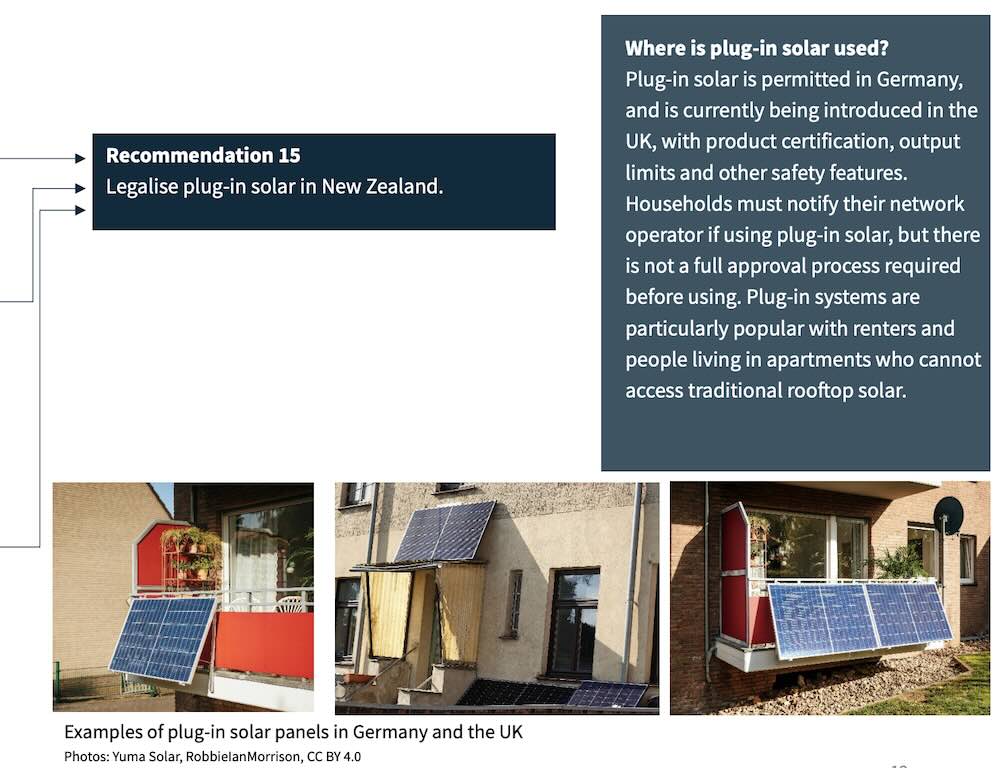
Source: Solar Regulatory Review – Summary Report
“There is also uncertainty about how plug-in solar products would perform across New Zealand’s housing stock, given variations in the age and quality of existing electrical installations.
“As part of the work already commissioned by the Minister for Energy, [the Ministry for Business, Innovation and Employment] will also determine appropriate safety requirements that would be required before plug-in solar is enabled in New Zealand.”
Most promisingly, the review suggests reforms to allow plug-in solar could be delivered relatively quickly – potentially within 9-12 months – particularly considering that the minister for energy has already kicked off early work on determining the approach to developing or modifying standards.
“New Zealanders want more control over their power bills and want to harness the power of the sun,” NZ energy minister Simeon Brown said last week. “These proposals will help give power back to the people by making solar uptake cheaper and faster.”
To join more than 29,000 others and get the latest clean energy news delivered straight to your inbox, for free, click here to subscribe to our free daily newsletter.