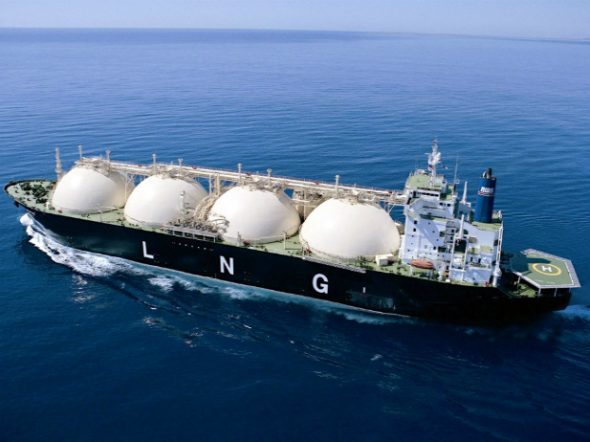
Pakistan’s request for Qatar to divert or sell twenty four contracted LNG cargoes in 2026 is a useful starting point for understanding what is happening in global gas markets.
Pakistan was once described as a growth market for LNG in South Asia. It built import terminals, signed long term contracts and expected domestic gas demand to continue rising.
That picture has faded. Solar is now the cheapest source of electricity in the country. Power demand is flatter than planners expected. Many of Pakistan’s LNG power plants run far fewer hours.
The result is excess cargoes that the country cannot absorb. Pakistan is trying to hand them back to the seller or push them into a glutted spot market. This is not an isolated event in an unstable economy. It is a signpost for a structural shift in LNG demand that many exporters are not ready to face.
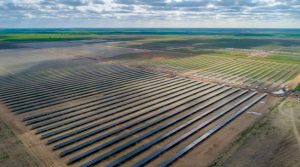
The force driving this shift is the global boom in solar and battery storage. Every major LNG importer except perhaps Korea is experiencing a steady decline in gas fired generation during the hours when solar produces the most.
Batteries are taking a growing share of evening peaks in many markets. Gas used to hold the margins of electricity systems.
Combined cycle plants provided baseload and operated steadily. Peaker plants filled demand spikes. That two legged model is disappearing. Solar has cut into daytime operation. Batteries are starting to take the rest.
Gas plants run fewer hours and earn less revenue. In markets with LNG import contracts this changes the financial calculus. Imported LNG becomes a fixed cost with declining use cases. Countries that expected higher power demand and steady gas plant run hours are confronting the opposite. Pakistan is a sharp example but it is not alone.
The clearest evidence is the number of LNG import terminals that have been cancelled or shelved in the past few years. South Asia was once the bright spot for LNG developers. Pakistan planned multiple terminals but none of the new projects have moved forward. All have stalled or been abandoned. Bangladesh cancelled its third floating storage and regasification unit (FSRU) and walked away from other expansion plans.
Sri Lanka cancelled a Japanese backed LNG terminal and shifted focus to renewables. India cancelled or shelved several coastal LNG projects, including both Kakinada FSRUs. Developers and governments no longer see stable gas demand growth. The economics of LNG to power are less appealing than cheap solar, and in many cases domestic financing institutions are wary of exchange rate exposure after the 2022 price spike.
Southeast Asia followed a similar trajectory. Vietnam shelved or suspended more than half of its planned LNG import terminals as its long term power development plan shifted toward solar, wind and storage. The Philippines approved seven LNG import terminals but only one is operating. The others are delayed or unfunded as demand growth weakens. Thailand scaled back its plans after seeing gas demand flatten and rooftop solar grow faster than expected. Markets that were supposed to anchor long term LNG growth are turning into small or stagnant consumers.
The Middle East and Africa show the same trend even though the energy systems are different. Lebanon abandoned its LNG to power FSRU. Oman and Saudi Arabia dropped early stage LNG import concepts and chose to expand solar capacity instead. South Africa cancelled the Richards Bay LNG to power plans. The gas plant permit was annulled and the linked FSRU was cancelled.
Kenya abandoned the Lamu LNG project after solar and wind undercut its economics. Ghana and Senegal shelved LNG power plans as well. These are diverse markets, some with domestic gas resources and some without. The shared theme is that imported LNG no longer fits their cost structures or long term planning assumptions.
Europe adds another layer. Several high profile LNG import projects have been cancelled or reversed. Ireland’s Shannon LNG project remains blocked on planning and policy grounds. Italy walked away from expansion plans. France cancelled expansion at Dunkirk. Germany paused or scaled back multiple proposed terminals. Part of the story is policy alignment with climate goals.
Another part is the steady decline in European gas demand over the past few years. Solar growth and heat pump deployment have cut consumption in the residential and commercial sectors. Industrial load remains uneven. Europe built LNG import infrastructure in response to the 2022 crisis but long term demand is not developing in a way that justifies the scale of construction.
Even where terminals have been built and commissioned, several are running at single digit utilisation. Germany’s Mukran terminal operated at roughly 5% in the first quarter of 2025. Greece’s Alexandroupolis FSRU operated at roughly 2% after a technical failure and demand uncertainty. France’s Le Havre FSRU was idle for most of 2024 and 2025 and is now being demobilised.
Other EU import facilities are operating at low utilisation as well. These terminals exist on paper but do not absorb meaningful LNG volumes. They contribute little to balancing global supply. They highlight the gap between nominal regasification capacity and real world LNG demand.
Japan provides another clear example of how LNG demand is changing. Japan was the world’s largest LNG importer for decades. It signed long term contracts that anchored the global market. Today Japan imports far less LNG than it did at its peak. Nuclear restarts have cut into LNG demand. Solar has grown at a steady pace for years. Energy efficiency standards have reduced overall consumption.
Japanese utilities and trading houses have become LNG resellers. They buy LNG under flexible contracts and sell it into third countries when domestic demand is low. This is a dramatic shift for a country that used to be the buyer of last resort. Japan still matters, but it no longer guarantees LNG offtake. Exporters who assume Japan will soak up market slack are betting on a past that is no longer relevant.
China and India are behaving quite differently in 2025 than many LNG exporters originally expected. In China, LNG imports have fallen sharply—down about 22% in the first half of 2025 compared with the same period a year earlier. China is adding more solar and battery storage, boosting domestic natural gas production and pipeline supply, and re-exporting some LNG cargoes when demand is low. That makes China a variable, rather than a reliable, buyer.
India shows a similar trend. In the first part of 2025 its LNG imports dropped by nearly 9% as gas generation fell by 34% compared to the previous year. Solar build out is accelerating, hydropower output rises during monsoon, and higher spot LNG prices push many industrial and power-sector users back toward cheaper or domestic alternatives. India recently re-sold a US LNG cargo to Europe, underscoring how gas is shifting from backbone fuel toward marginal or swing fuel in its energy system.
These developments confirm that the two economies once thought to anchor global LNG demand growth are now transitioning their power and gas systems in ways that substantially reduce long-term imports.
This demand side picture is unfolding at the same time as a large expansion in LNG export capacity. Qatar is bringing on major new volumes from its North Field expansion. The United States has a wave of new liquefaction capacity coming online between 2025 and 2028. Mozambique and Papua LNG are emerging. Canada’s west coast LNG plants are beginning to commission.
The global LNG market will have much more supply available over the next several years. If import demand remains flat or declines, this creates a long period of oversupply. Prices will be weak. Spot markets will be volatile. The long term contracts that exporters rely on will be more difficult to sign unless they offer more flexibility. The mismatch between supply growth and demand flattening is becoming harder to ignore.
This leads directly to the implications for Australia’s LNG export sector. Australia long built its LNG strategy around the expectation that Asia would remain a reliable, growing market for its gas exports. That export-oriented build-out delivered real volume: Australia remains among the top global LNG exporters. But the conditions that justified that expansion are shifting.
The industry faces a looming global oversupply wave – up to a 40% increase in LNG supply between 2025 and 2028 – at the same time demand growth is slowing or reversing. Major long-term supply contracts are due to expire, leaving Australia increasingly exposed to volatile spot markets and fierce competition from low-cost producers whose gas production costs undercut Australia’s higher-cost export model.
At the same time, Australia’s existing LNG infrastructure faces rising headwinds. Aging upstream fields, potential domestic supply constraints, and domestic political pressure to prioritise home-market energy security over exports are increasing. With global demand under pressure from the rise of solar and battery power, and lengthy contract coverage becoming harder to secure, the economic case for new Australian LNG projects looks weak.
The industry may still export LNG for some time, but the old model – high-volume, long-term contracts supplied to fast-growing Asian buyers – is unraveling. What remains is a risk of underused export infrastructure, falling asset values, likely stranded assets and a shrinking role for Australia in the evolving global energy system.