A four hour big battery proposed for construction next to a key connection point between the Victoria and South Australia grids has been waved through the federal environmental assessment process, leaving the developer Atmos Renewables now waiting on a state nod.
The 300 megawatt (MW), 1200 megawatt-hour (MWh) Heywood battery is planned for development one kilometre north of the Heywood Terminal Station in southwest Victoria, a major transmission junction feeding electricity across the border into South Australia and to the Portland aluminium smelter.
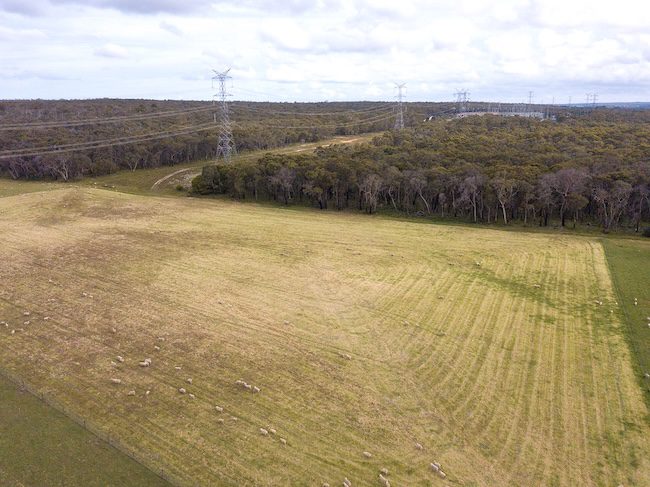
According to planning documents, the BESS will connect to the Heywood Terminal Station via an underground cable located within the existing 500 kV overhead transmission line easement running through Mount Clay State Forest.
The location, in Victoria’s South West Renewable Energy Zone (REZ), is favoured for its strong average wind speeds and hosts some of the state’s earliest wind farms, including its very first – the Codrington wind far – which started operations in 2001 and is due to power down in 2027.
If the Kentbruck wind project, now owned by HMC Capital, is built it will add 600 MW of electricity to the area and the Southern Ocean offshore wind zone is directly south.
Atmos says the piece of land the big battery is proposed for is currently used for grazing with a house at one corner which will be abandoned if it goes ahead.
The battery’s quick EPBC assessment is proving typical of the federal process, which has been making decisions, often as in this case that it’s not a “controlled action”, within months.
Atmos made its EPBC application for the Heywood project on the last day of October.
The developer expects the battery to be operational in 2029, with construction to start next year, and for it to be working for 20-25 years “assuming the facility is not upgraded or expanded”.
Atmos has more than 1 GW of renewable energy projects in its portfolio, including a quarter share in the 420 MW Macarthur wind farm which at one time was the largest in the southern hemisphere.
If you would like to join more than 28,000 others and get the latest clean energy news delivered straight to your inbox, for free, please click here to subscribe to our free daily newsletter.