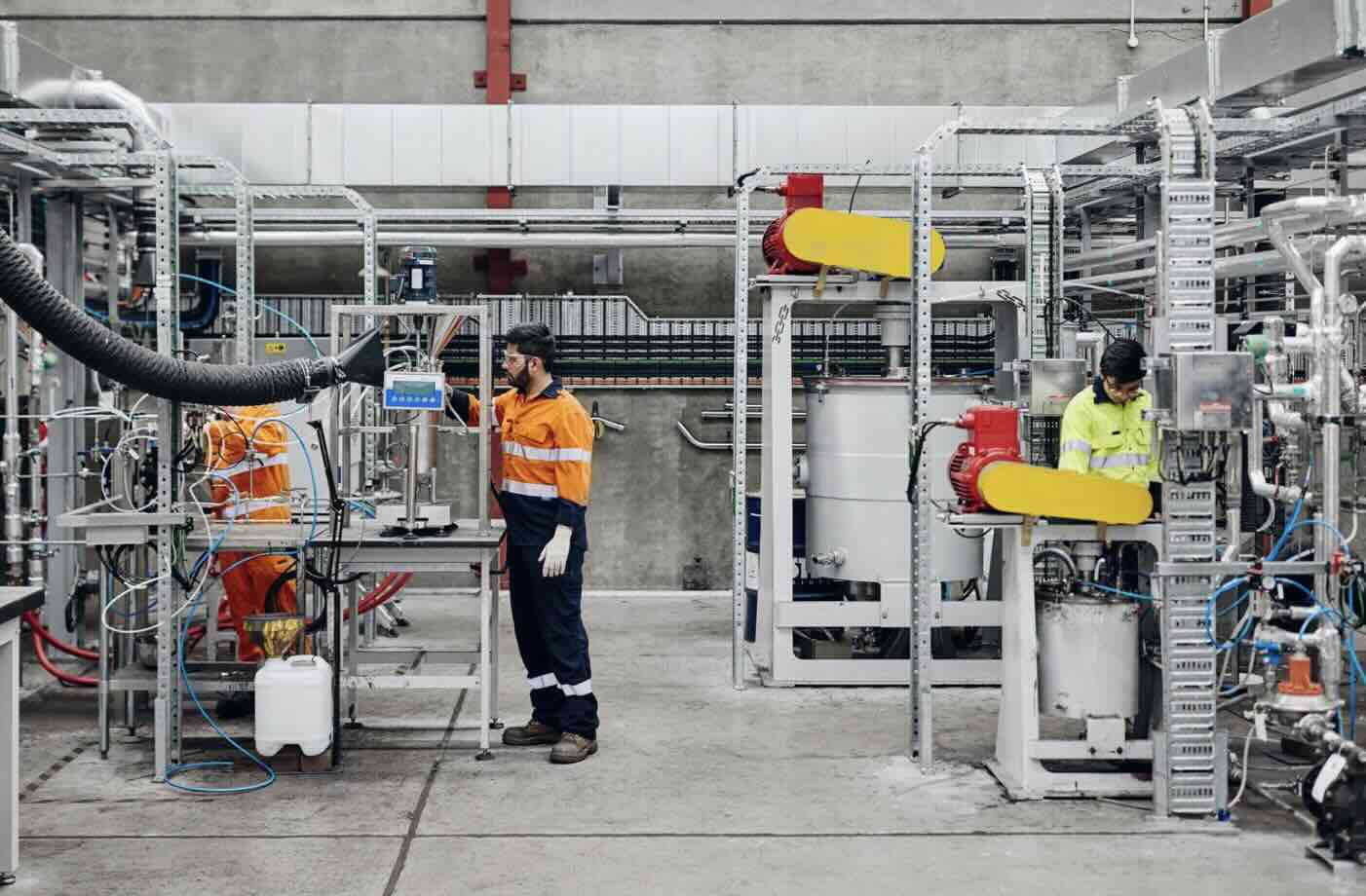
An Australian company developing unique silicon-based anodes that can boost the energy density of lithium ion batteries has received a $45 million grant from the federal government to set up a commercial-scale manufacturing facility in its home town.
Sicona Battery Technologies says its silicon carbon anodes, which come in the form of a black powder that has been described as a “magic pixie dust” by the former CTO of EV giant Tesla, can boost the energy density of lithium-ion batteries by at least 20 per cent, depending on the application.
And it says it can do this at lower cost than its rivals, thanks to the unique intellectual property that it has developed out of its origins at the University of Wollongong.
The technology is particularly applicable for electric vehicles, which seems destined to be its biggest market because it can improve range and cut charging times, and it can deliver smaller and lighter battery packs.
But the technology it is also applicable in power tools, mobile phones, drones, robotics, AI and other applications where the energy intensity gains may be even more significant.
The $45 million grant was announced jointly on Sunday night by federal industry minister Tim Ayres and climate and climate and energy minister Chris Bowen.
The grant, which will contributed to a $100 million project to boost Sicona’s manufacturing capacity in Port Kembla by up to 300 times – to 230 tonnes a year – and has been awarded through the federal government’s Future Made in Australia objectives.
“This investment … backs large-scale battery material production right here in Australia with real commercial demand and long-term market potential,” Ayres said in a statement.
“This is about making sure Australian discoveries are developed, scaled and manufactured here, delivering long-term value for the next generation.”
Bowen said Australia has critical minerals and now needs to develop its manufacturing capacity. “Global demand for batteries is growing rapidly, and this investment helps make sure Australia captures more of the value, rather than simply exporting our resources and buying the finished products back.”
Christiaan Jordaan, the co-founder and CEO of the company, whose technology originated out of the University of Wollongong, says silicon-based anodes are being developed around the world, including by the likes of Chinese car giant BYD, which is now using the technology in its electric vehicles.
But Jordaan says Sinoca’s technology is different, because is uses solid forms of silicon, rather than silicon as a gas, which he says makes it safer and significantly cheaper to use.
“We think we have something pretty unique,” Jordaan tells Renew Economy. “We think we can establish a significant position in a key technology in an emerging battery supply chain.”
Jordaan describes making lithium ion batteries as a bit like “baking a cake”, with the cathodes (such as nickel manganese cobalt or lithium iron phosphate) on one side, and the graphite-based anodes on another.
The silicon powder is “sprinkled” on to the anode side in the process, displacing some of the graphite, and results in a significant lift in energy density – hence the “magic pixie dust” quote attributed to Drew Baglino, former head of Tesla Energy and now head of battery technology company Heron Power.
Jordaan says an improvement in energy density in EV batteries of around 20 per cent is “easily achievable” – and that means more battery capacity in the same space, and weight, and so more range.
But he says it depends on the mix. For defence drones, for instance, the energy density can double, because the makers of those machines are desperate for more range.
“This is the next generation of batteries. It plugs in seamlessly with lithium ion platforms. It drops in as a material in existing battery factories, displacing graphite in the anode. It’s a big leap forward in the EV batteries and drone space …. but EVs will be the biggest market.”
Jordaan says the use of silicon in batteries has been studied for more than 15 years, but has faced various challenges, which he says Sinoca has overcome with the development of “smart materials” that has helped overcome negative side effects.
“We are making silicon carbon composite materials – a power basically. Once it is shipped, it looks like a black powder, it is shipped in one tonne bags to battery cell manufacturers and car OEMs.”
The grant follows Sicona’s May 2025 licensing and strategic partnership with Himadri in India, including a $17.5 million follow-on investment.
If you would like to join more than 29,000 others and get the latest clean energy news delivered straight to your inbox, for free, please click here to subscribe to our free daily newsletter.