Iron ore major Fortescue Metals has confirmed it has pulled the plug on what was supposed to be a flagship green hydrogen facility in Gladstone, Queensland, but insists its plans to reach “real zero” on emissions from its giant Pilbara operations remain on track.
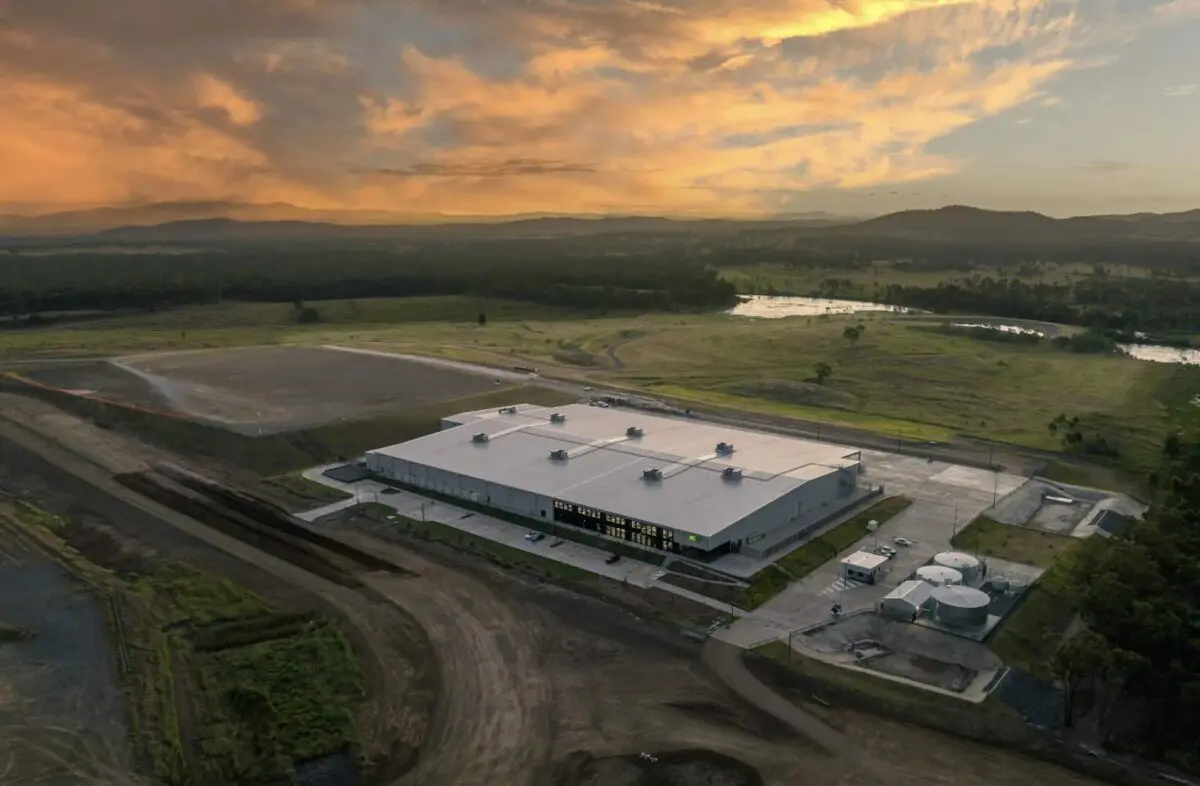
Fortescue on Wednesday confirmed what many in the market had already suspected, the scrapping of the $150 million PEM50 Gladstone hydrogen plant in Gladstone, along with its proposed green hydrogen project in Arizona, as it continues its retreat from its once ambitious green hydrogen plans.
The company has already rowed back on a number of large green hydrogen projects, including Gibson Island near Brisbane, and admitted that it could not meet Andrew Forrest’s grand ambitions of producing 15 million tonnes of green hydrogen a year by 2030.
But the closure of the Gladstone project, which will account for the bulk of a $150 million write down, will be a bitter blow, as it accepts that the proton exchange membrane (PEM) electrolyser technology it had developed in-house and was seeking to roll out at the facility is not competitive.
The company had built a manufacturing plant with a nominal annual production capacity of 2 GW, but that was closed earlier this year because of a lack of demand. Now, after a string of job cuts, it has confirmed the closure of the PEM50 facility which was to feature a 30 MW electrolyser to make green hydrogen, followed by another 20 MW.
The scrapping was confirmed at the company’s quarterly production briefing on Thursday by its newly appointed head of green energy Guy Pichot.
“We have made a strategic shift away from PEM electrolysers to focus on advanced technologies to provide low cost hydrogen for green industry in Australia,” he said.
“This change in direction is vital for the progress of our green iron ambitions. However, it means that PEM 50 project is no longer needed to test that technology. We will be looking at future opportunities for the site in Gladstone.”
The Arizona project has also been scrapped, which is no surprise because of the uncertainty of policy in the US under the Trump administration that has already caused numerous wind, solar and battery projects to be scrapped or put on hold.
“Our other projects globally will remain in our development pipeline, and when the market is ready and when the economics stack up, we will provide updates and progress them in a disciplined way,” Pichot said.
“Right now we are focused on is investing in research and development. We have learned a lot over the past few years about improvements and technologies that are needed to move the energy position along.
“Innovations and technologies we’re working in forestry zero will help us to decarbonize, drive down the cost of green hydrogen, launch that green iron industry and deliver our own green metals projects.
“We know that we need to show the world that decarbonizing and eliminating emissions is not only possible, but it’s profitable. So that’s what we’re going to do.”
Despite the hydrogen setbacks, Fortescue says it is very much on track with its ambition to stop burning fossil fuels at its giant iron ore mines in the Pilbara, at least for the mining operations and terrestrial transport, and to focus only on wind, solar, battery storage, and electric and hydrogen vehicles.
Fortescue is planning to spend around $US300 million on energy in the current financial year, has begun construction on another major solar farm and has sought planning approvals for a 2 GW wind project and the massive Turner River solar and battery hub.
“The next two years are going to be big years for our decarb deployment,” CEO Dino Otranto said, adding that money would be spent on mobility, transmission, battery installation, solar, wind, work camps, and software. It has recently completed a new transmission line between Solomon and Eliwana and has deployed its first electric drill rig.
“We are full steam ahead in deploying capital on a really exciting decarb program,” Otranto said. “We are certainly on track across the suite of the program to deliver our target by the end of the decade.”
The Pilbara operations include its pilot green iron facility at the Christmas Creek green energy hub, which will feature two already built 700 kW hydrogen electrolysers, and a hydrogen refuelling station for the 10 hydrogen fuel cell coaches purchased from Hyzon.
“I want to make it clear we are not giving up green energy and green hydrogen is key to our future, and our green metal strategy technology is improving at rapid speed, the cost will come down and the market will come,” Pichot said.
“But we also but we must also be realistic and discipline so we re-assess and evaluate the future and timelines for our global projects to ensure that they are economic and we deliver value to our shareholders.
“Being first isn’t always easy, but to success succeed, we must remain nimble and proven with the resources our shareholders have entrusted with us.”