A new coalition of clean energy lobbies, environmental groups and unions is imploring new minister Murray Watt to refocus on reforming the country’s ageing environment laws, saying time is running out to redesign a system that currently isn’t working.
The alliance wants the government to get nature positive reforms back on track, including a national protection agency, to reform the decades-old Environmental Protection and Biodiversity Conservation Act (EPBC).
They say the Act is no longer protecting the environment but is wrapping clean energy projects – yet apparently not polluting gas and coal projects – in green tape.
“The EPBC Act’s uncertain and unpredictable assessment and decision-making processes fail to protect nature or support investment in renewable energy,” said Kelly Australian Conservation Foundation chief O’Shanassy in a statement.
“We have a once-in-a-generation opportunity to re-shape the law to tackle Australia’s climate and nature crises.”
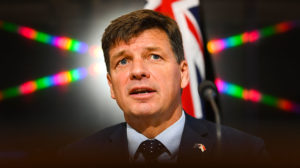
But they’re up against a minister who doesn’t want the words ‘nature positive’ anywhere near EPBC reforms, telling The Guardian in May he wants to drop that framing in order to push through reforms faster.
Failing at reform
A Clean Energy Investor Council (CEIG) report last year found the EPBC is crippling renewable energy investment by making the approval process too long and is something of a ‘choose your own adventure’ journey.
The country needs modern, fit-for-purpose environmental laws in order to have better decision-making and meet its renewable energy targets, said CEIG chief Richie Merzian in a statement.
“If delivering a clean energy future is a priority for the Albanese government, then reforming the EPBC Act must be too. It is now the single biggest barrier to timely, environmentally responsible, renewable energy development in Australia,” he said.
The second, and latest EPBC review was finished by former corporate competition cop Graeme Samuel in 2020 and his recommendations formed the basis of the government’s Nature Positive Plan published in December 2022.
That review found the law was failing to protect the environment, and set out a pathway to amend the EPBC Act.
But when developers and miners pushed back against strong reforms, Labor switched to a staged process and indefinitely delayed a full-scale revamp.
The first stage set up a voluntary biodiversity market.
The second stage was to establish a national environmental regulator and environmental data agency, with a statutory definition of “nature positive” to help with data collection and monitoring.
But this was stymied by those same activists and by WA Labor premier Roger Cook, who lobbied against it. In November Prime Minister Anthony Albanese torched the second stage when he killed a deal with the Greens to pass legislation which would set it up.
The third stage would have created legally enforceable national environmental standards to guide project assessment, approvals, and the use of biodiversity offsets.
Trying again
Now this cross-sector alliance of the CEC, CEIG, ACF, Biodiversity Council, WWF Australia, Australian Marine Conservation Society and the Electrical Trades Union are trying again, this time with a minister who hasn’t promised action on environmental issues, as Tanya Plibersek did after the 2022 federal election.
Stalling these reforms further risks an opportunity to fix significant challenges facing renewable energy investment, given the current EPBC is causing delays measured in years, says Clean Energy Council CEO Kane Thornton.
The result is an environmental regulatory system that is being dragged into the 21st century by piecemeal changes that don’t fix the root problems.
One such change has been to streamline approvals so a project can be weighed once for both federal and state requirements.
Another is a bill, introduced to Parliament in March, that seeks to change how decisions can be reviewed – controversial as it followed requests to the minister to reconsider decisions on salmon farming in Macquarie Harbour, Tasmania, in relation to the impact on the Maugean skate, an endangered species listed under the EPBC Act.
It’s not just energy on the line
It’s not just investors and renewable energy developer representatives who have joined forces to push something forward, but environmentalists and unions as well.
The CEO of WWF Australia, Dermot O’Gorman, says with the COP31 climate summit potentially on the horizon, the world will be watching both the country’s energy transition and for evidence of its commitment to climate leadership.
“Industry and environment groups are ready to help deliver the Prime Minister’s promise of making Australia a renewable energy superpower — but that won’t be possible unless we fix our failing nature laws,” he said.
“We need strong nature laws to ensure the renewable energy transition protects our environment and delivers for communities.”
And there is an awareness that jobs are on the line, from Electrical Trades Union secretary Michael Wright.
Energy projects promise a lot of jobs, but these are put at risk when stuck in an EPBC queue, he says.
“The uncertainty of the assessment process means there is no reliable pipeline of work for communities, or to train apprentices on anywhere close to the scale we need – an extra 42,500 electricians in the next five years,” he says.
“Reforming the EPBC Act must be a key priority of the Albanese government. That’s how we can escape this situation where everyone knows where the work is, what it is and roughly when it is, but has no idea who will be doing it.”