
Around Australia, some owners corporations of strata complexes have started to draw up plans to replace their centralised gas hot water systems with low carbon alternatives such as heat pumps. This is especially true in Victoria and the ACT.
There remains a lot of uncertainty about how to size such systems, however. I have seen several quotes for unnecessarily expensive, oversized systems because plumbers are using very conservative rules of thumb based on the number of units or the number of hot water fixtures.
In the first part of this article, I explain how to think about hot water system sizing for apartment buildings. In the second part, I show how to go about doing a basic first-pass estimate for a building’s hot water demand.
This is not intended to replace a detailed system design from a qualified engineer, plumber, or hot water system supplier. It will, however, give you a feel for when you might need to question the advice you are getting.
Centralised gas hot water systems are frequently found in newer multi-unit buildings. The water is heated at a central plant and distributed around the building using a circulation loop that ensures that each apartment receives hot water quickly even when located far from the plant.
In such buildings, unit owners are billed for their share of the gas consumed by the hot water plant (typically a bank of instantaneous heaters). Water meters at each apartment measure the hot water usage and use this as a proxy for gas consumption.
A water meter is also installed at the cold water inlet of the hot water plant. If a resident’s unit had drawn off 1% of the volume of water that went into the hot water plant, they are billed for 1% of the gas consumption.
The water meters and the gas meter are owned by the gas network and read remotely. These consumption figures are then provided to the resident’s chosen gas retailer that handles the billing.
Each unit owner also pays a daily supply charge as any freestanding house would. For many unit owners, this is a considerable fraction of their quarterly gas bill.
Part 1: Hot water demand in multi-unit buildings
It’s important to note that neither the Plumbing Code of Australia (volume 3 of the National Construction Code; NCC) nor AS 3500.4 (Heated water services) specifies how to size hot water systems to meet demand.
The Plumbing Code specifies things like temperatures for safety and gives guidance on piping diameters to ensure that the expected flow arrives at each fixture. Sizing of storage tanks for residential hot water is largely left to manufacturer guidelines, industry practice, and the judgement of the licensed plumber or hydraulic engineer.
Be wary of a plumber telling you that you can’t size a hot water system smaller than they recommend because of “the regulations.” There aren’t any. Now, that’s not to say that you should throw caution to the wind, skimp on system sizing, and run the risk of running out of hot water. However, it’s also not necessary to spend tens of thousands of dollars more to further reduce a small risk of running out of hot water.
Just like electrical appliances, hot water fixtures exhibit diversity in their usage patterns. It’s very unlikely that every apartment will open several hot water taps at the same time. This means that large apartment buildings have hot water draws that are a small fraction of the hot water draw if every fixture in the building was operated at once. This diversity of hot water use dramatically reduces the hot water peak demand.
Trading heating capacity for storage
Like the electricity grid, hot water systems are sized to critically meet the peak hot water demand. Hot water demand is usually measured in litres per hour (or gallons per hour in US literature). As long as the hot water system can meet the demands of each hour, everyone will be happy.
There are two sizing dimensions to a hot water plant: heating capacity and storage volume. If you have more of one, you can have less of the other. Think about the ubiquitous instantaneous gas water heater – it has a lot of heating capacity and no storage.
A typical example of such a heater has a heating capacity of about 22 kW, but no storage. It can meet a continuous demand of around 600 litres per hour, but no more. If the system had some storage, it would be possible to heat the water more slowly, with the storage decoupling the demand from the hot water production.
In another example, a typical household electric storage hot water system has a 3.6 kW heating element with a 300 litre tank. This is much slower heating than the gas system but there is a lot of storage. Larger tanks than this are often chosen when off-peak electricity is used because a longer period has to be covered by the storage without the possibility of re-heating.
In plumbing circles, the term “first hour delivery” is often used. This term refers to how much hot water can be delivered in the first hour assuming that the tank is fully heated. That will be the volume of the tank plus the volume of water that can be additionally heated during that hour (the “recovery rate”).
In the instantaneous gas water heater example, the first hour delivery is 600 L/h. In the electric storage tank example, the first hour delivery might be 360 L/h (300 litres in storage plus 60 L/h recovery rate).
This trade-off between heating capacity and storage volume has significance for replacing gas hot water systems with heat pumps because heat pumps are typically less powerful than gas systems. You need to compensate with more storage. However, you may have limited space or load limits on concrete slabs that make the right amount of storage impossible. In this case, you have to circle back to adding more heating power with a larger or second heat pump system.
How are hot water systems sized?
There are two aspects to hot water demand that you need to consider: daily demand (litres per day) and peak demand (litres per hour). Generally, the challenge isn’t heating the volume of hot water demanded daily – the challenge is meeting the morning and evening peaks.
In the following example from a real apartment building, the morning peak is 1,400 litres per hour (7-8 am) and the evening peak is 1,200 litres per hour (7-8 pm) with a few hours either side also having high demand. The daily demand is 10,475 litres (about 430 litres per hour on average).
The objective is to have sufficient hot water available to cover the two peaks, mostly from storage with only a little from direct heating. Between the peaks, there are seven or eight hours available to reheat the storage. There is also some hot water demand during these hours, but it’s low.
Part 2: How do I measure hot water demand in my building?
There are high-tech ways to measure hot water demand, but they are too much hassle to set up when you only need to do this once or twice. I prefer the low-tech approach of manually reading the meter. If you have a couple of helpers, you can create a few shifts to make the job less tedious.
To measure the building’s hot water demand, all you need to do is manually read the cold water meter located at the hot water plant. It should be easy to locate this meter. It will be at the hot water plant and placed inline on the cold water pipe. It also looks nothing like a gas meter! Here is an example of a common Elster meter:

Figure 1: Elster H4000 helix water meter. Source: Elster
Your cold water meter should tell you what units are being displayed. If not, refer to the data sheet. On some meters, fractional amounts will be shown on dials. On others, two or three red digits show the fractional amount.
For example, a kilolitre meter with black digits reading 1234 and red digits showing 567 would be read as 1234.567 kilolitres. On meters like the one shown below there is no fractional part. To read less than one kilolitre, you’ll need to estimate how far the final digit is in its rotation to make a reading down to hundreds of litres. Without a hundred-litre reading, it will be difficult to measure the low demand periods.
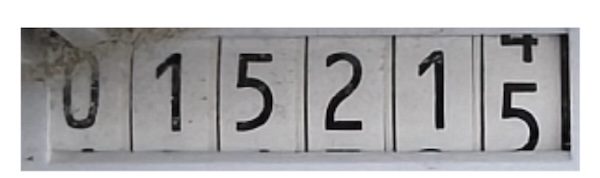
Figure 2: A meter showing an estimated 15214.8 kilolitres. Photo courtesy of Robin Eckermann.
If you take readings 24 hours apart, you will accurately know your daily consumption. With all of the important hourly readings being taken just through the morning and evening peak hours, you can fill in the low demand periods by interpolation. Exact hourly data for these low demand periods are not so critical.
Once you have cold water meter readings, you can put them in a spreadsheet, calculate the volumes of water used from one hour to the next, and construct a chart, like so:

In this case, the total demand is 10,475 litres per day. If a supplier is recommending 10,000 litres of hot water storage, you may have an oversized system. Similarly, if the storage is sized at 1,000 litres and the peak demand is 1,400 litres, you may also have a problem.
My colleague Robin Eckermann and I have developed a freely available hot water sizing tool in an Excel workbook that allows you to enter an hourly demand profile, a chosen heat pump capacity in kW (thermal) and a chosen storage volume. The spreadsheet will highlight hours where stored hot water gets low or runs out fully. It will similarly show when the storage is full.
Using the demand profile shown above, we might try a 40 kW heat pump with 2,500 litres of storage. The tool identifies three hours where stored hot water falls below a user-specified minimum threshold of 500 litres: 8 am (193 litres), 9 am (265 litres) and 10 pm (391 litres). Increasing the storage to 2,800 litres or the heat pump capacity to 45 kW in the tool is sufficient to eliminate these risks of hot water shortfalls.
Summary
At little cost, it is easy for an owners corporation to understand the pattern of hot water usage in an apartment building and what kind of system configuration could meet the demand.
A variety of system configurations can all achieve the right outcome by trading off storage for heat pump capacity. The freely available tool can help with understanding the trade-offs.
Demand can change, of course. Single occupants of an apartment could leave and be replaced by a family, increasing hot water demand. It’s necessary to give this some consideration (for example, by adding a safety margin), but industry rules of thumb can lead to oversized systems.
A hand-made demand profile can be really useful in assessing a quoted system or at least prompting some questions to suppliers. With system sizing agreed upon, a supplier can assist with system selection.
Ben Elliston is an independent energy researcher and modeller. He is also the chair of the ACT branch of the Australian Electric Vehicle Association