A growing energy policy divide is emerging between Queensland and the rest of Australia, after the Sunshine State once again declined to support key energy market reforms in the latest meeting of the Energy and Climate Change Ministerial Council.
Australia’s state and territory energy ministers met in Melbourne on Friday for the latest meeting of the ECMC, to discuss the ongoing energy security impacts of the conflict in the Middle East and to progress reforms to the nation’s electricity market.
On the agenda at the meeting was the Electricity Services Entry Mechanism (ESEM), one of the key reforms to emerge from the National Electricity Market (NEM) Review led by Tim Nelson and concluded last year.
The ESEM seeks to take over from where federal Labor’s Capacity Investment Scheme leaves off in 2027, bridging the gap between the short-term contracts energy retailers want and the long-term certainty necessary to deliver large-scale renewables.
The idea is for the ESEM to be a permanent – but voluntary – contracting framework embedded in National Electricity Law that uses a “warehouse and recycle” model to provide long-term revenue certainty for large-scale wind, solar and battery storage projects.
The new mechanism is proposing to operate by procuring “core in-market services,” which the NEM Review panel has suggested should include bulk energy, shaping and firming.
Many of the details of the ESEM have yet to be finalised – and concerns have been raised by investor groups about potential design flaws – but all of the ministers at the meeting on Friday, “excluding Queensland, agreed to develop a legislative package to implement the ESEM and Market Making Obligation,” the communique says.
The ministers agreed to engage AusEnergy Services to continue preparatory work related to the ESEM ahead of another ministerial meeting in a few months time.
The communique also noted that other schemes will be able to transfer contracts to the ESEM, including those under Victoria’s announced offshore wind auctions, South Australia’s Firm Energy Reliability Mechanism (FERM) and NSW’s Electricity Infrastructure Roadmap.”
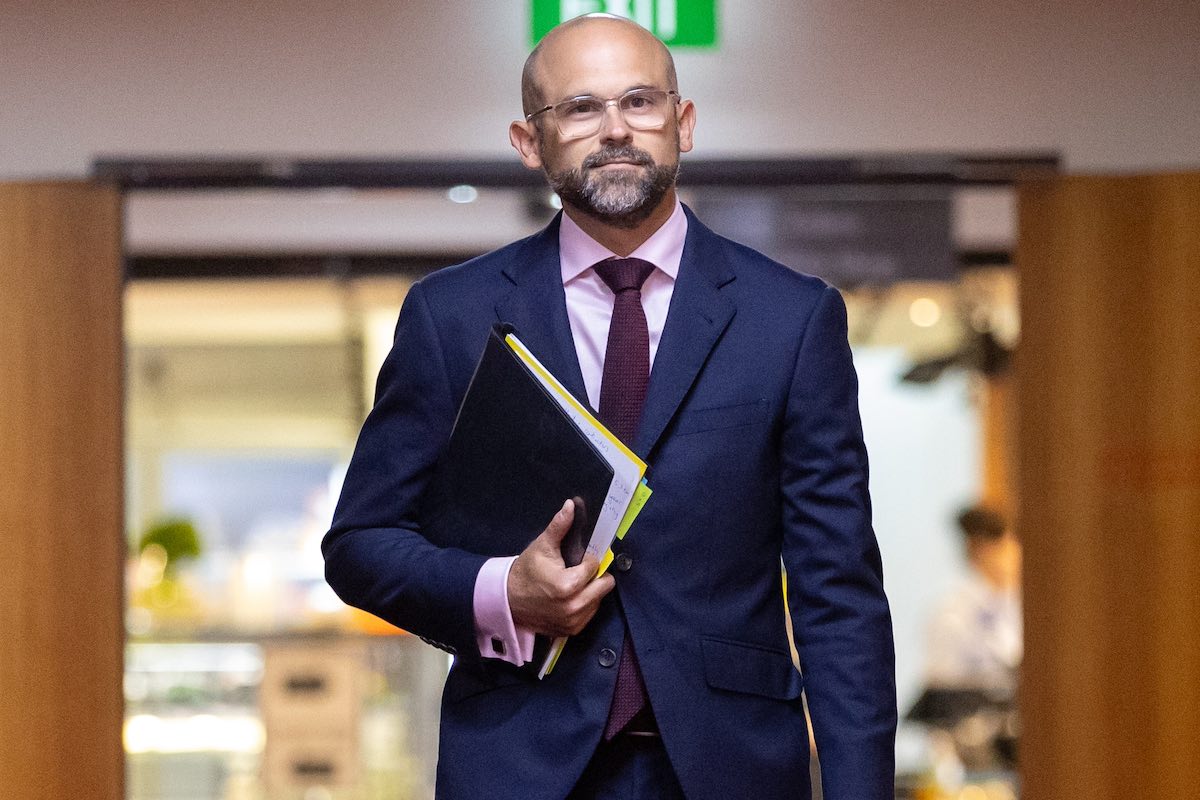
The Queensland LNP government’s energy minister David Janetzki, who is also the state’s treasurer, has withheld his support for the ESEM and other NEM Review recommendations since they were handed to energy ministers in December last year.
Since coming in to power in late 2024, the Crisafulli government has scrapped the state’s targets of 50 per cent renewables by 2030, and 80 per cent by 2035 and dedicated $1.6 billion to propping up its ageing coal plants.
It has also introduced strict new planning rules for large-scale wind, solar and battery projects, while seeking to fast-track oil and gas projects.
The former Labor state energy minister, Mick de Brenni, told the Smart Energy conference in Sydney last week that the state is now “going backwards” on renewables, because of the stop on so many new projects.
In an April update on the state’s Energy Roadmap, Janetzki repeated his party’s claims that the previous Labor government’s energy plan “lacked credibility and was undeliverable.”
“The Roadmap is a credible plan as we’ve already seen more than a gigawatt of new storage and a gigawatt of new renewables becoming operational since mid-2025,” he said in a media statement, despite the fact that most, if not all, of this would have been developed under the previous government.
“There’s been overwhelming market interest with more than 50 parties engaged and over 10 gigawatts (GW) of prospective gas‑fired generation identified across 17 projects, highlighting Queensland is open for business for new energy investment,” he added.
In a statement emailed to Renew Economy on Monday, Janetzki said it was holding out for more detail on the proposed national reforms, before agreeing to adopt them in Queensland.
“Queensland’s continued commitment is to affordability and reliability as the foundation of our energy system and that means we expect to see details on costs, benefits, and risks before agreeing to any national proposal that impacts Queensland’s energy system and Queenslanders’ electricity bills,” the minister said.
“Further work is needed before imposing under-developed national proposals to advance other policy objectives and I look forward to considering AER and AEMC advice which is expected to be completed later this year.”
Elsewhere, it appears the Queensland government also has reservations about some facets of the National Data Centre Expectations set out by the federal government in March and proposed to work alongside national, state and territory laws.
As Renew Economy has reported here, the idea of the new guidelines – which include developers offsetting their demand with new renewable energy and storage projects – is that data centre proposals that meet expectations will be prioritised under federal regulatory assessments.
Climate Energy Finance director Tim Buckley supports the move, noting that data centres could trigger a new wave of energy projects and spur on investment from other firms if given clear renewable energy requirements.
“It’s been really important that the federal government has said we want you to solve the problems you’re creating before we approve your projects,” Buckley says in a separate report published on Renew Economy, here.
“They can be clearly told if you bring your battery, your solar and your wind project and your (desalination) plant with you, the chance you’re getting approved is really high.
“Data centres done right could actually be a big part of the solution for decarbonisation,” Buckley says.
But Queensland, it seems, is not keen on the idea.
“Ministers, except Queensland, agreed that data centres in the NEM and the [Western Australia Electricity Market] should invest in additional renewable generation and firming in their state of operation to fully offset their electricity demand and provide demand flexibility services to avoid additional costs being borne by other energy users,” the communique from Friday afternoon’s meeting says.
“Further, that data centres should provide transparent reporting on their energy use and emissions production.”
On this topic, it is understood that Queensland has raised questions around the levelised cost of energy at which data centres are considered viable in Australia.
To this end, the communique from the meeting notes that ministers requested targeted advice from the Australian Energy Market Commission (AEMC) on firming and/or flexible operation expectations, and geographic location within transmission and distribution systems, for data centres.
If you would like to join more than 29,000 others and get the latest clean energy news delivered straight to your inbox, for free, please click here to subscribe to our free daily newsletter.