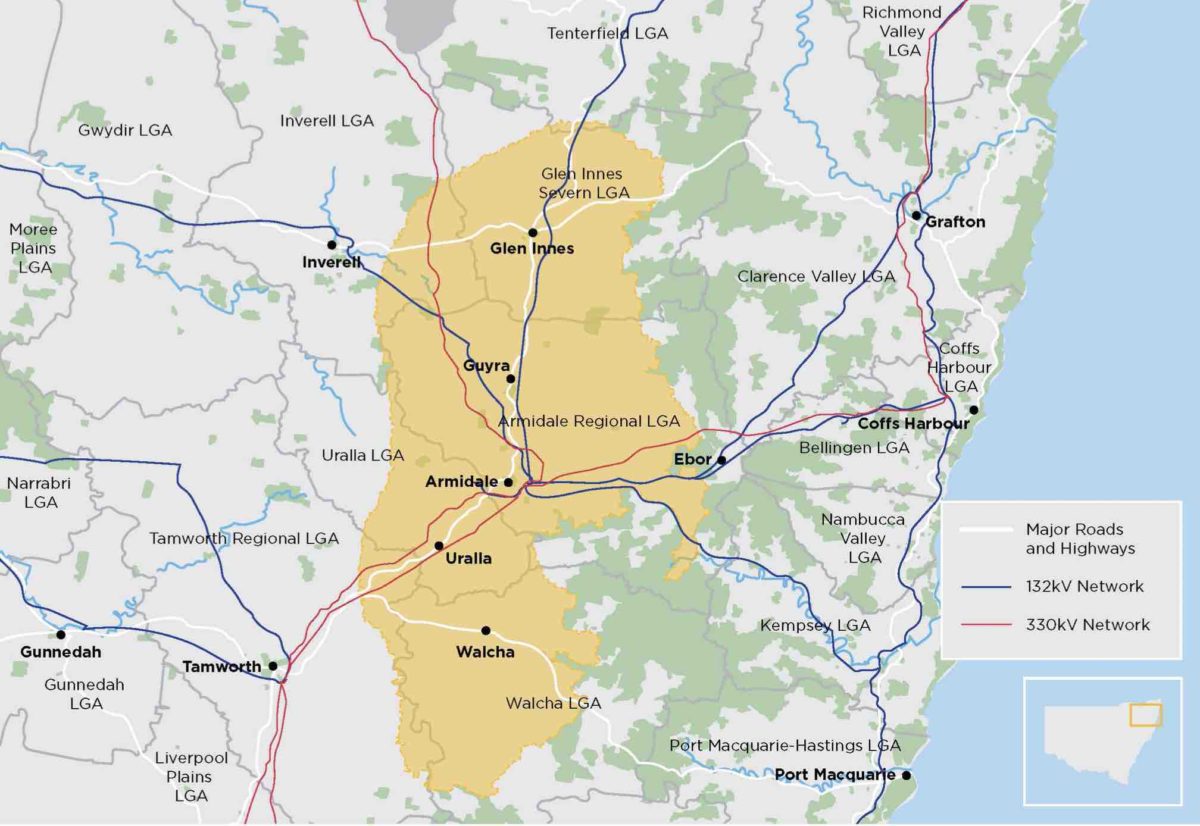
The most complex and hotly contested renewable energy zone (REZ) in NSW, one which also takes in the heartland of newly converted One Nation member Barnaby Joyce, has landed in the federal queue for environmental assessment.
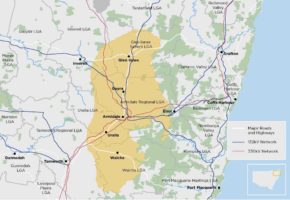
The referral shows the extent of the impact the New England renewable energy zone (REZ) will have, taking in the Maxwell Mine wildlife refuge and travelling within 10km of 13 state reserves.
While most of the area the new transmission line will cross is farmland, there are also several current mining and exploration titles within the study corridor and some uncertified aerodromes, according to the EPBC referral lodged this week.
The proponent, state-owned EnergyCo, is promising to contort the route so it doesn’t damage or impact on national parks and conservation areas.
These include Ben Halls Gap National Park and Tomalla Nature Reserve, the 80-plus Timor karst caves system in the upper Hunter Valley, and protects “regionally significant agricultural land from incompatible land uses”.
The EPBC referral identified 15 national threatened or endangered plant species in the way of construction, and 20 animals, birds and water creatures.
Another 46 animals listed with the EPBC are or are suspected to be in the area, and 14 migratory birds.
“Recent changes to the alignment have been implemented that have reduced the overall impact on biodiversity, with the proposed route approximately 50km shorter than the previous alignment,” EnergyCo says in its referral.
“This has reduced the direct and potential indirect impacts on vegetation and habitat.
“However, due to the scale of the project and the need to traverse generally south to north through the landscape, full avoidance of biodiversity impacts is not possible and residual biodiversity impacts will remain.”

The new 3km wide study area, in blue, is a radical change from the original proposal. Image: EnergyCo
The REZ is the second declared zone of five on the New South Wales (NSW) program, but its size and plummeting social acceptance mean it is likely to be the last finished.
It’s also going to be a tricky build, starting as it does on the valley floor around Muswellbrook before traversing up to higher elevations of 1360m near Nundle State Forest.
Construction is forecast to start in 2027 and take six years, the EPBC referral says, which covers the transmission infrastructure needed to host up to 8 gigawatts (GW) of renewable energy in the zone.
EnergyCo is handling the planning for 290 km of 500 kilovolt (kV) transmission lines, 25 km of 330 kV transmission lines, and five energy hubs, before selling the full permitted construction and operation to a manager.
As of November there were one Australian and two Spanish bids on the shortlist for running the REZ.
The infrastructure is planned to connect the New England REZ to the National Electricity Market (NEM) south of Muswellbrook NSW and then send out transmission tentacles into the REZ to connect into the energy hubs.
The REZ will be built in stages, with 2.4 GW to be built by 2032 and 3.6 GW by 2034, with any extra needed to be built by 2043, the EPBC referral says.
EnergyCo is jointly planning the network with NSW transmission company Transgrid to make sure it fits in with the existing surrounding network.
Getting to this point has been difficult, with the route into the REZ changing twice in 2025 – the second time taking a radically different pathway that takes a more direct line and avoids property owned by One Nation senator Barnaby Joyce.
The New England REZ is the one facing the most push back from residents inside the zone, who say consultation by EnergyCo has been minimal and are concerned by the new transmission and electricity generation projects creeping across the countryside.
While the EPBC is primarily concerned with environmental issues, the amount of community consultation a project has already finished is increasingly high up in referrals.
EnergyCo’s was fairly brief at one page of the total 63 page referral, outlining its 599 meetings with individuals and groups in the New England REZ since May 2023, 35 community sessions, and 20 meetings with Aboriginal representatives.
It’s also crossing seven local government areas. One of these, the Tamworth Regional Council, is so opposed to wind projects in particular that it is trying a last ditch legal challenge to block the Hills of Gold project.
The council will have its day in court in late March.
If you would like to join more than 29,000 others and get the latest clean energy news delivered straight to your inbox, for free, please click here to subscribe to our free daily newsletter.