The body that sets the rules of Australia’s electricity market has officially launched what it says is a complex and “highly contentious piece of work” that looks at the role of networks in establishing much-needed EV charging infrastructure.
The review comes amid a surge in interest in electric vehicles – thanks to the fossil fuel supply crisis – that is highlighting the growing need for more public EV charging bays, particularly in cities where many households are not able to charge at home.
The Australian Energy Market Commission is considering three separate rule change requests at the same time, which is leading into a wholesale review of network regulation in the light of the new technologies – particularly home batteries and EVs that are being rapidly adopted by homes and businesses.
One of the rule change requests comes from the federal government and seeks to allow distributed networks to add the net cost of installing charge points under the $40 million government funded “acceleration program” program to their regulatory asset base.
The government estimates this will no more than 70c to $1.44 to the annual bills of households (depending on the network area), and with no bill impact before 2029.
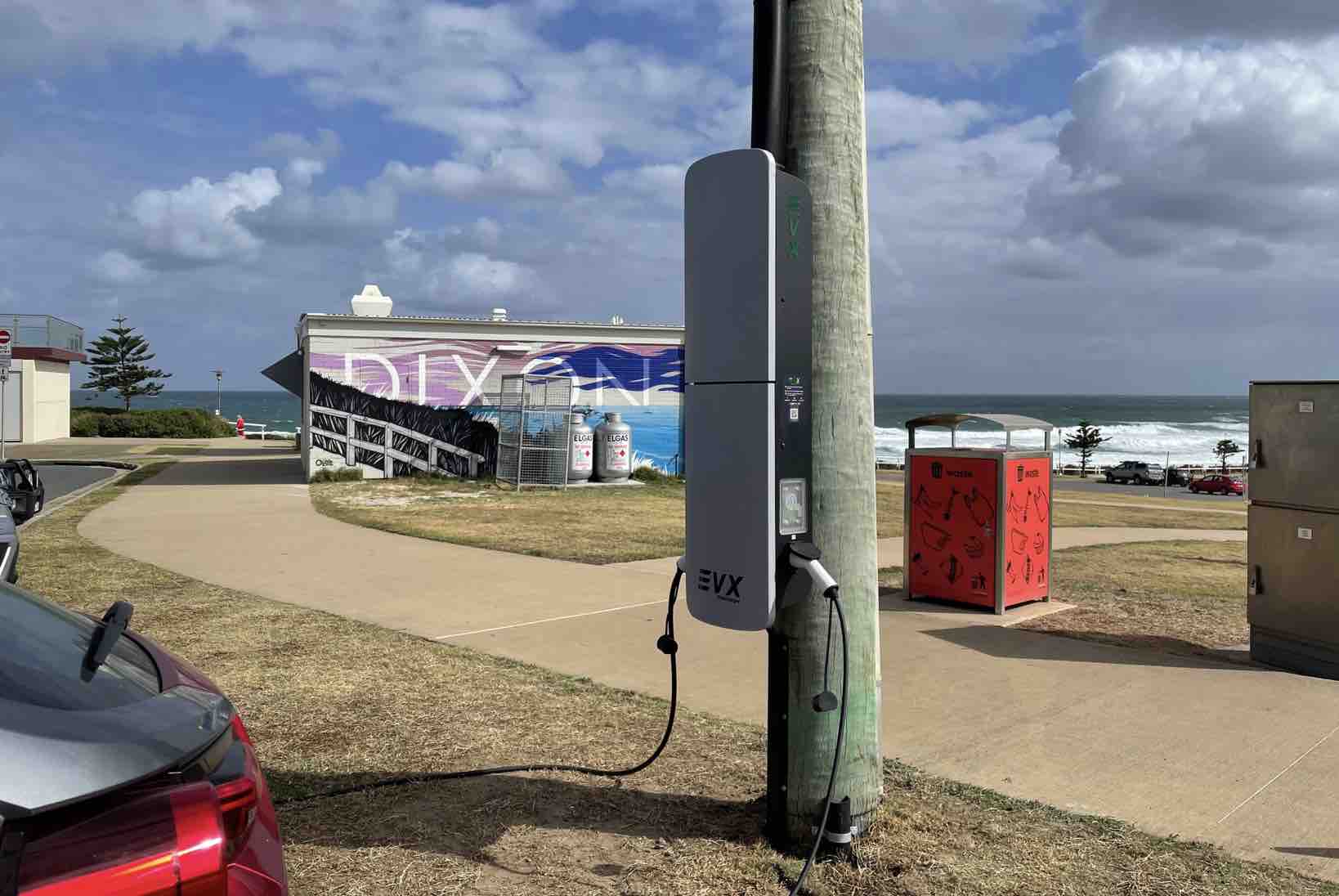
The second rule change request is on similar lines, and comes from the network lobby, ENA, and argues that allows distribution networks to install, own and maintain kerbside EV charging- using existing infrastructure such as power poles – will deliver faster, more affordable, and more widespread access to charging.
They too, argue, that the total costs smeared across the population will be minimal. But critics say networks have poor form on such claims, and are worried that private operators are being crowded out.
That has sparked the third rule change request, from Nexa Advisory, which argues for a strong enforcement of so called “ring fencing” rules to prevent networks from locking in an unfair market advantage over private Charge Point Operators (CPOs).
“We’ve received three rule changes, all of them, of course, suggest different solutions, different models, and different roles for DNSPs (distributed networks),” says Danielle Beinart, AEMC’s executive general manager of Networks & Technical, said at the EEC conference on Thursday.
“So, that’s going to be a really interesting and contentious piece of work, and we plan to run that alongside the network regulation review.
Beinart says the AEMC has released one consultation paper on Thursday, dealing with the government request given the urgency with which it wants to roll outs accelerating EV charger program, and the next two will be addressed side by side next month.
That will also be accompanied by a “stage one paper” that goes to the heart of a review of network regulation.
“We’ll start to ask the question: What should the scope of regulation be? What should be regulated? What shouldn’t be regulated? And then package two of the review will then focus on … how it should be regulated.”
The rule change request received from the federal government, through the department of climate change, energy, the environment and water (DCCEEW) insists it is time and scale limited, designed to help it deliver on its promise to scale up kerbside charging in cities, and other EV charging in remote “black spots.”
“The rule change request is specifically focused on enabling the funding program and therefore does not address or apply to EV charging infrastructure rollout more broadly,” the AEMC notes in its fact sheet.
“We are initiating this rule change request separately from the others and propose a standard rule change process with a final determination by the end of 2026. If a rule were made, this would allow the rollout of the Commonwealth funding program in 2027.”
But it concedes that the competing rule change requests from ENA and Nexa go to the fundamental nature of the role of networks, and their ability to deliver services such as EV charging to the community.
It proposes two packages – one to identify services that networks are needed to provide in the future, which will be initiated through a joint consultation paper alongside the Nexa Advisory and ENA rule change requests on ring-fencing and EV charging infrastructure.
“The Commission will undertake the Review component as a six-month sprint to determine key policy principles, concluding at the end of 2026,” it says.
“The rule changes will then build on the principles-based work delivered under Package 1 of the Review and progress with further rounds of consultation in 2027 before we make draft and final determinations. “
Package two will clarifying distribution ringfencing in emerging energy markets, and if the economic regulatory framework can support consumer outcomes through efficient processes, risk allocation and compensation arrangements.
If you would like to join more than 29,000 others and get the latest clean energy news delivered straight to your inbox, for free, please click here to subscribe to our free daily newsletter.