Liberal leader Angus Taylor and Nationals leader Matt Canavan have a pretty strong track record in coming up with some of the dumbest energy transition ideas, usually with little regard for economics, not much for engineering, and none at all for climate science.
Their latest – coal to liquids – which Taylor’s assumed leadership rival Andrew Hastie is also promoting, is – without doubt – the dumbest yet.
Not just because of the cost, the emissions, and the water impact, but also because it would be years before it could ever be delivered. And given the opportunity for electrification – in both passenger cars and heavy vehicles – it would be an economic, environmental and policy nightmare.
“It’s a distraction,” says Climate Energy Finance head Tim Buckley. “It’s a stupid policy, has not been costed and has no chance of being implemented. All they are doing is climate science denialism.”
Buckley and others note that the technology has been around for a while, but is rarely used. Adolf Hitler adopted it in WWII because he had no other way to provide fuel for his warplanes, and cost and emissions were not top of mind.
The apartheid government in South Africa developed it, too, in the 1970s, again for lack of other options, but it has proved to be an economic and environmental nightmare. It has not built a new plant for more than 40 years.
The US looked at the technology after the 1970s fossil fuel crisis, but decided it was too expensive and too dirty to deploy at scale, although it toyed with the idea for military bases, where costs and emissions are not priorities.
China has also deployed the technology, wary of a Trump-led US and the closure of fossil fuel supply lines, but is focused more on coal gasification as a potential substitute for LNG imports. Again, cost and emissions are the problem.
Australia has also toyed with the idea. There was the ill-fated, and environmentally crazy plan to try and use Victoria’s filthy brown coal reserves and turn them into hydrogen. Two tonnes were produced at a cost of hundreds of millions of dollars, mostly subsidised by Japan, and the idea has been abandoned.
In Queensland, Linc Energy tried to push the technology, but abandoned the idea in 2016 and left the environmental cleanup, and the bill, to the state government and taxpayers.
But Taylor, Canavan and Hastie would have us do it all over again.
“I am not going to cop lectures from the ABC – and other left wing media outlets – that we have not done enough to secure our petrol and diesel supplies,” Canavan writes on his own website.
“I, and my colleagues in The Nationals and Liberal Parties, have fought for years to drill, baby, drill. But every step of the way we have been frustrated by a cabal of Labor environmental groups, overseas funded campaign outfits and an activist left-wing media.”
“We must dig, and we must drill,” Taylor said in his address to the nation, borrowing Trump’s teleprompter. Hastie soon followed, telling ABC’s Insiders program: “I think we need to do exploration in this country. We need to drill in this country for unconventional oil, shale gas. And we should also talk about using coal.”
Rewiring Australia, which promotes “electrifying everything” and is leading a ground-breaking post-code wide electrification program north of Wollongong, likened the idea to the Mad Max movies.
“When asked how expensive it would be, he (Hastie) conceded he couldn’t give a figure,” Rewiring Australia points out. “When asked about its emissions, he said there are ‘always trade-offs.’
“Let’s be clear about those trade-offs. Coal-to-liquid is one of the most carbon-intensive fuel production methods on earth and it’s expensive.
“South Africa’s Sasol plants have required decades of state support. And it would take years, probably a decade or more, to build at scale in Australia. It solves none of the immediate problems Hastie spent the rest of the interview worrying about.”
Independent MP Monique Ryan chimed in, noting that it would likely cost at least $8 billion, and take 10 years, to build a suitable facility in Australia.
“So the leader of the Nationals, most likely the next leader of the Liberals, are talking up World War 2 technology,” Ryan said. “We don’t need that. We have a clean energy future ahead of us based on cheap, clean renewable energy wind and solar. We do not need our political leaders to be taking us backwards.”
In 202020, the National Energy Technology Laboratory in the US, found that coal-to-liquids technology was both expensive, and high emitting – with an average of 221 grams of Co2 for every metajoule of liquids.
That’s nearly three times more than conventional fossil fuels. The emissions could be reduced with CCS, but that would inflate the costs even further.
Buckley says coal-to-liquids technology is not only very emissions intensive, but requires significant amounts of water and is costly.
“Why would you go with the most expensive technology that is proven to be emissions and water intensive, when you can electrify everything?” Buckley told Renew Economy.
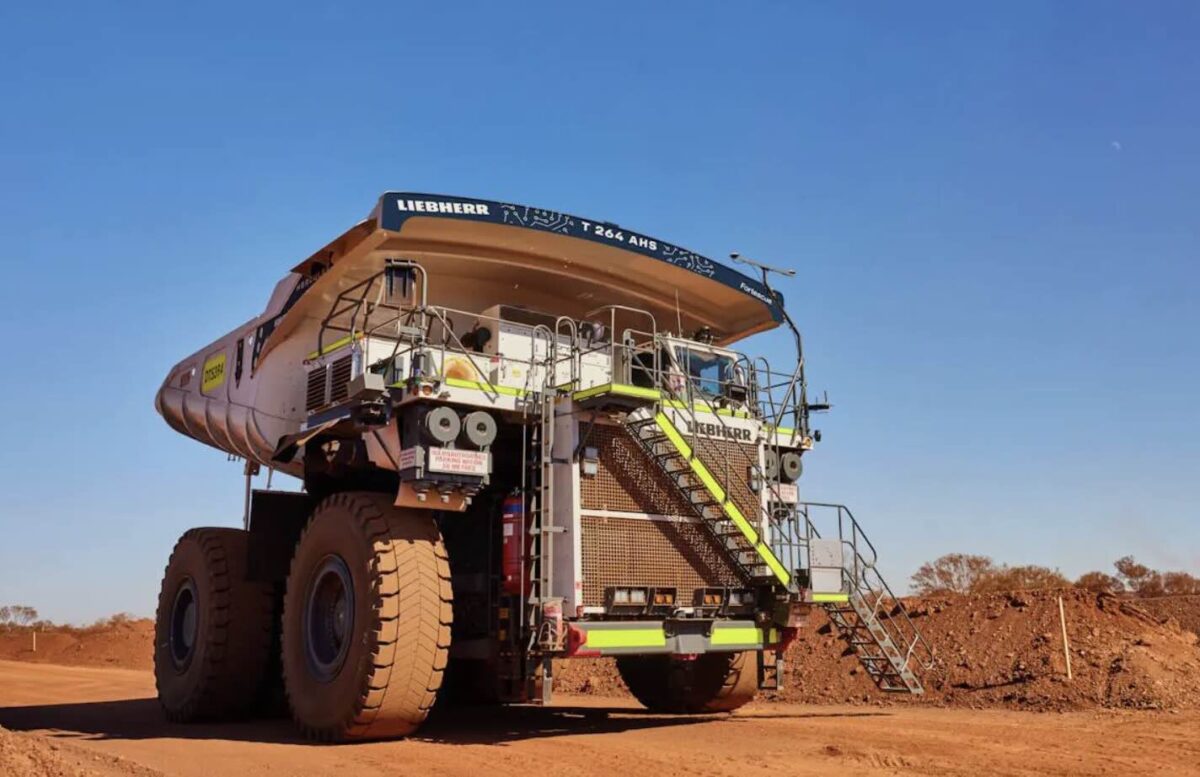
He points to Andrew Forrest’s Fortescue, which has a goal of reaching “real” zero emissions by 2030, and eliminating the consumption of 700 million litres of diesel a year by turning to wind, solar and batteries for power, and electric vehicles for its giant haul trucks, bulldozers and excavators.
Fortescue is now talking of reaching that target a year or two early, despite the protestations of other mining giants such as BHP and Rio Tinto, who argue that the technology does not exist.
“The mining industry uses some 6 billion litres of diesel a year,” Buckley says. “Wouldn’t it have been better for BHP and Rio to follow Fortescue rather than investing in climate denial and delay?” And, he notes, the federal government is paying a $4 billion annual subsidy to support the mining industry’s diesel use.
“Why wouldn’t you incentivise the solutions,” Buckley asks. The Coalition has other ideas – it wants to scrap all EV support mechanisms, and the home battery rebate. It seems that coal is their answer to just about everything – and that is a new level of crazy, on so many levels.”