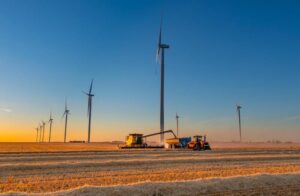
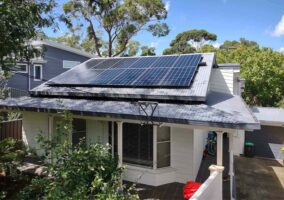
There is yet more evidence on how the federal government’s EBPC Act approvals process is failing renewable energy projects, with another report showing that no projects sent into the queue 2023 or 2024 have been approved.
Data from law firm Herbert Smith Freehills Kramer shows 27 renewable energy projects were deemed EPBC controlled actions in 2023, and 49 projects in 2024, according to figures reported by the AFR.
None of these have secured approval, as of early August.
The data covers Queensland, New South Wales (NSW) and Victoria from 2018 to 2024, and updates figures provided in a Clean Energy Investor Group (CEIG) report last year, which found the EPBC was doubling timelines.
The EPBC is the federal environmental process; its terms reflect international treaties that Australia needs to enact at home, and covers all sectors across the country, meaning there are myriad views on how to make it functional.
The latest figures add more pressure on environment minister Murray Watt to push through the long-promised EPBC reforms which were launched after the previous statutory review, and which many have cited as one of the main blocks to the rollout of new projects.
“We are now more than half way to the next statutory review of the EPBC Act, with the recommendations of the 2009 Hawke Review and the 2019 Samuel Review still not implemented,” lawyers for the firm wrote on the company’s website last week.
“Over its 25 year life, there have been numerous statutory reviews, audit reports and commentaries criticising the EPBC Act, its failure to deliver environmental protection and frustrations with its complexity, delays and costs to project.
“Despite an almost universal cry for amendment, significant amendments to the EPBC Act have never materialised.”
Watt confirmed in June he wanted to have the reforms, repackaged again into a single stage, wrapped up within 18 months.
Last week, a statement from the Department of Climate Change, Energy, the Environment and Water confirmed the 18 month timeline, suggesting that deadline is already slipping.
No one wants the current EPBC
The original CEIG report in December last year begged the government to deliver some quick wins, after Prime minister Anthony Albanese killed stage two of the reforms ahead of the federal election in May.
Those quick wins could have included further aligning state and federal assessment processes to eliminate duplication, limiting and clarifying requests for additional information to reduce bottlenecks, giving the the Department of Climate Change, Energy, the Environment, and Water (DCCEEW) more people to deal with the influx of referrals, and standardising environmental conditions and reforming offset policies so they’re more predictable.
The last of these is on the wishlist of most renewable energy-focused groups.
In May, a coalition of big clean energy lobbies, environmental groups and unions pleaded for Watt to move quickly on the promised EPBC reforms.
Among a range of suggestions, they called for streamlining approvals so a project can be weighed once for both federal and state requirements.
And in August, the Productivity Commission made an even stronger claim: that the EPBC doesn’t have clear and enforceable environmental standards at all.
That in itself is leading to lengthy project delays and contentious final decisions.
All of the reports say the EPBC has become a brake on the economy, with the AFR reporting even the conservative Business Council of Australia is begging for action, and Opposition leader Sussan Ley also interested in making a deal to get the reforms across the line.
Many delays
Australia’s renewable energy industry wasn’t supposed to be in this position in 2025.
Federal Labor turned Graeme Samuel’s 2020 review, which found the EPBC was failing the environment and called for states to handle all approvals under a set of federal rules, into the Nature Positive Plan two years later.
But when developers and miners pushed back against strong reforms, Labor switched to a staged process and indefinitely delayed a full-scale revamp.
The first stage set up a voluntary biodiversity market. The second stage, launched to much fanfare by then-environment minister Tanya Plibersek, was to establish a national environmental regulator and environmental data agency, with a statutory definition of “nature positive” to help with data collection and monitoring.
But this was stymied by those same activists and by WA Labor premier Roger Cook, and in November Albanese torched the second stage when he killed a deal with the Greens to pass legislation which would set it up.
The third stage would have created legally enforceable national environmental standards to guide project assessment, approvals, and the use of biodiversity offsets.