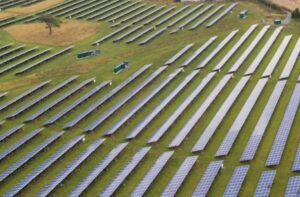
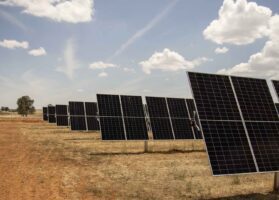
South Australia – regarded as the most advanced renewable energy state in Australia, if not the world – has set a stunning new record as rooftop PV continues to dominate its daytime generation.
According to the Australian Energy Market Operator, South Australia posted a new record for “negative demand”, reaching minus 263 megawatts (MW) at 1.30pm on Christmas Day.
Grid demand was low, as can be expected on such a public holiday, and rooftop solar was supplying a record 117 per cent of underlying demand at the time.
The dose was repeated on Boxing Day, when rooftop solar met 110 per cent of underlying demand and when minimum grid demand hit a negative 165 MW.
According to AEMO, rooftop solar met 100 per cent or more of South Australia’s underlying demand in nine half hour intervals on each of those two public holidays – and in 78 half-hour intervals over the year.
South Australia is at the vanguard of the remarkable transformation of the electricity grid in Australia, and has averaged nearly 75 per cent wind and solar over the past year, and aims to reach 100 per cent “net” renewables by the end of next year.
No other state comes close in terms of rooftop solar share, which is why South Australia is currently the only grid to experience “negative demand.”
As per an AEMO report this week, which listed some of the records of the past year, Victoria experiences the next lowest grid demand levels of mainland grids at 1,287 MW, which is reached on December 27, at 1pm.

Tasmania has minimum demand of 720 MW, but it is a much smaller grid, and it doesn’t have a lot of rooftop solar, which struggles to provide much more than 20 per cent of grid demand at any one time.
South Australia can deal with negative demand because it is connected to both Victoria and New South Wales, which means it can export surplus capacity to those states, although it does need to keep at least one gas unit running (about 42 MW) for the provision of critical grid services.
The capacity to export more renewables, and cut curtailment of large scale solar and wind farms, will be increased next year when the link to NSW is complete. Currently that line can export 150 MW, but that will increase to 800 MW when the work is finished on the NSW component.
AEMO did have to take additional action when rooftop solar was dominant, and on both Christmas Day and Boxing Day it issued directions to Neoen’s Blyth battery – the biggest in the state – to provide minimum system load services.
That meant it had to remain synchronised, maintain a pre-agreed minimum state of charge, and follow dispatch targets, effectively acting as a backstop for AEMO if system demand reduced even further.
Victoria has a similar system, although the battery response is voluntary in that state (some facilities have agreed to be paid for the service). In South Australia, AEMO was unable to strike a similar deal, presumably because of the asking price, so has to fall back on its capacity to issue directions.
If you would like to join more than 29,000 others and get the latest clean energy news delivered straight to your inbox, for free, please click here to subscribe to our free daily newsletter.