Big batteries are becoming an increasingly important part of Australia’s power mix, and on Saturday morning smashed all previous records by providing more than one third of South Australia’s power demand in some trading intervals in the early morning peak.
According to data on OpenNEM, the big batteries in South Australia reached a peak of 33.4 per cent of South Australia’s local demand at 7am.
Over a half period the big batteries accounted for more than 30 per cent of power needs. Anyone remember when the former Coalition government dismissed battery storage as being about as useful as the “big banana”? The Coalition still does not appear to appreciate its utility.
At its peak, battery storage was the biggest single source of power in South Australia on Saturday morning, beating wind (29.9 per cent) and gas (23 per cent). It smashed the previous record high in South Australia, which had been 20.3 per cent, according to another data provider, GPE NEMLog.
The growth of battery storage is not surprising, given its flexibility and speed, and because the cost of battery storage is falling rapidly. South Australia already has five big batteries operating in the grid, including the nation’s very first at Hornsdale, as well as Dalrymple North, Lake Bonney, Tailem Bend and Torrens Island.

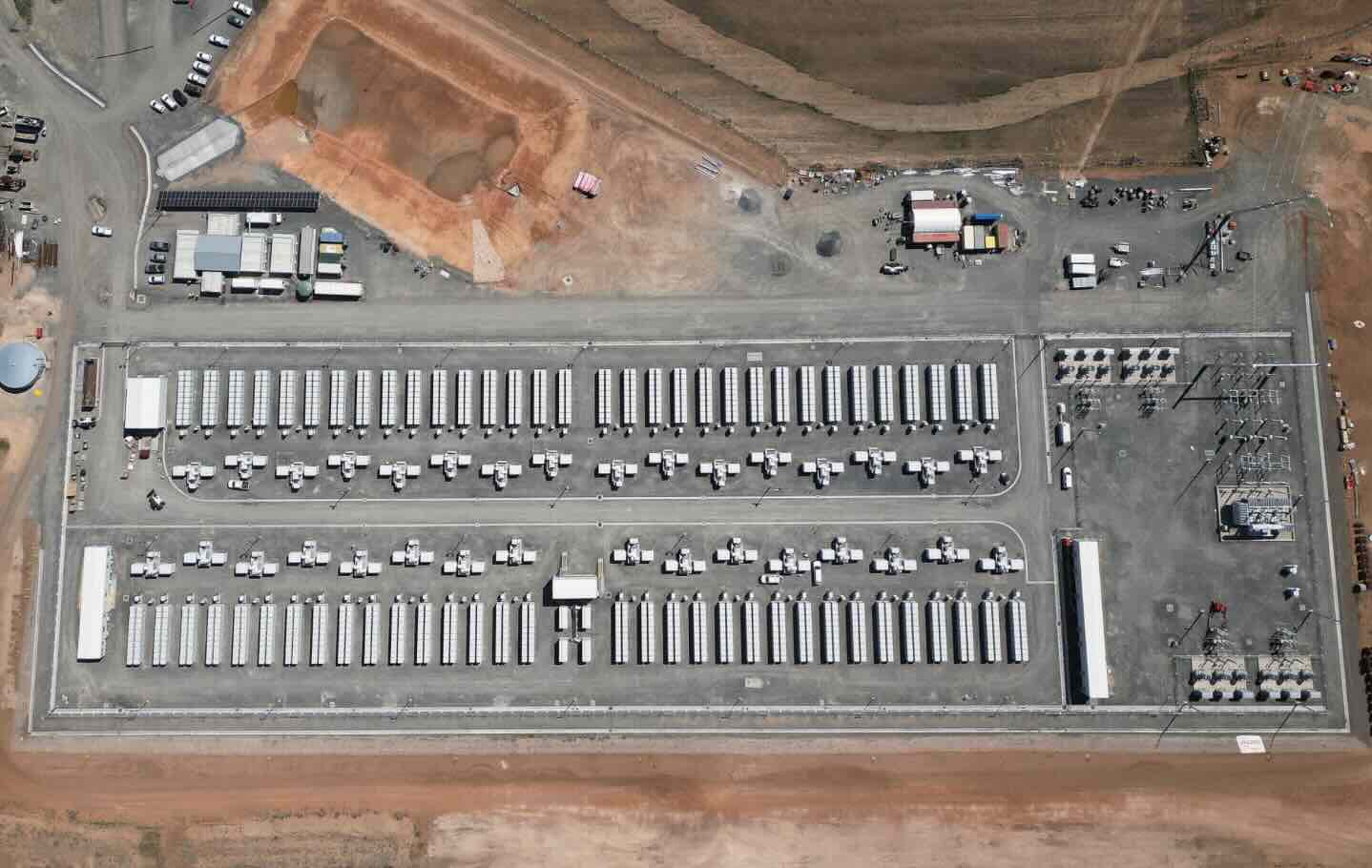
The latest surge appears to have been driven by the intervention of the state’s fifth big battery at Blyth, a 238 MW, 477 MWh facility that is now going through its commissioning phase. As part of that testing process, it injected up to 199MW into the grid in Saturday’s morning peak.
Blyth is interesting because it forms a major part of Neoen Australia’s land market “baseload renewables” deal with BHP’s giant Olympic Dam mine, but will also be trading in the market, as well as providing essential grid services, including inertia once its grid forming inverter capabilities have been finalised.
The 33.4 per cent share, however, is something of a landmark. California has captured much of the energy industry’s interest in the past year because of the sheer scale of its battery portfolio. While South Australia’s record battery output is 375 MW (reached on Friday evening at 6.30pm), California’s is 8.3 gigawatts.
In California, battery storage is now regularly the biggest single contributor to meet that state’s evening demand peaks. But the surge on Saturday morning, and the peak share of 33.4 per cent in South Australia, is better than the 31 per cent share record for battery storage in California.
But the share of battery storage will grow in South Australia. The state already leads the world in its share of wind and solar in the grid (averaging 72 per cent over the last 12 months), and aims to reach 100 per cent “net” renewables by 2027, meaning it will still import and export power when required.
It has a number of new battery projects under construction, including Bungama, Templers West, Summerfield, Limesstone Coast, Solar River, hamlet, and Clements Gap, and many more in the pipeline.
See Renew Economy’s Big Battery Map of Australia for more information.