Victoria’s Labor government has approved two major new renewable energy generation and storage projects through its planning fast-track scheme – both of which have faced strong opposition from their respective councils and parts of the local communities.
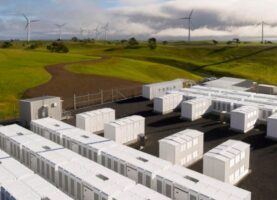
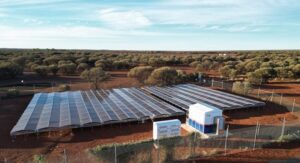
The two projects – a 500 megawatt (MW) solar farm and battery in Colbinabbin and a 200 MW/ 400 megawatt-hour (MWh) battery energy storage system (BESS) in Dederang – were approved by Victoria planning minister Sonya Kilkenny through the state’s Development Facilitation Program (DFP).
Kilkenny says the decision brings the number of wind, solar and battery projects approved through the DFP to 15, since the program was expanded to include renewables last year.
“Through this pathway, we’ve fast-tracked enough renewable energy projects to power more than half a million Victorian households with cheaper and cleaner energy,” the minister said on Thursday.
“We already have the cheapest wholesale energy prices in the country,” added state energy minister Lily D’Ambrosio. “Fast-tracking this process means even more Victorians will benefit from cheaper renewable energy powering their own homes sooner.”
The use of a fast-track scheme to approve renewable energy projects in Victoria has been contentious, raising concerns among communities and industry watchers that it has removed planning checks and balances and runs roughshod over, and erodes, social licence.
On the other hand, it has been defended as a necessary move, after the state’s renewable energy buildout slowed to a trickle due to large numbers of approved projects being sent to VCAT, only to have the initial planning department decision upheld.
The use of the DFP to approve these particular projects – both of which have faced vocal opposition from local government and residents – is bound to reignite debate.
Venn Energy’s Cooba solar and battery (300 MW, duration as yet undecided) project, proposed for 4.5km outside of Colbinabbin, made the news at the end of last year when the Campaspe Shire Council voted to oppose its planning application.
“Whilst we fully support solar energy facilities in suitable locations, we feel that the Cooba Solar Farm’s proposed site and unresolved issues make it an unsuitable choice,” said Campaspe Shire Mayor Daniel Mackrell in a statement at the time.
As Renew Economy has reported, an online petition against the project detailed concerns that the 700,000 solar panels might create a “heat island” effect, damaging to neighbouring vineyards. Similar concerns at other projects about “heat island” impacts have been debunked.
Community concerns also extended to the removal of farming land from production, the visual impact of 665 hectares of solar panels, and claims that the economic benefits of the Cooba project were not clear.
Similarly, the big battery that has been approved Dederang was officially opposed by the Alpine Shire Council in north-east Victoria, after a turbulent council meeting highlighted the depth of division it had created in the community.
Opponents to the project said developer Mint Renewables had not provided enough information on a variety of issues ranging from bushfire risk management to economic benefits.
Just over a week ago, community opposition to the Dederang battery, alongside the Kiewa Valley BESS being proposed for the same region by Trina Solar, was the subject of a special report by ABC TV’s 730.
The report claimed “most of the town’s population” of about 200 residents were fighting the development of the batteries over the fire risk they could pose to the town.
In a statement on the planning minister’s decision to approve the Dederang battery, Mint Renewables said there was still a lot of work to do before shovels start turning the first sod – not least of all on listening to and building trust with the community.
“We remain committed to community engagement and will continue to work hard to reassure the community and the authorities that our project can co-exist safely and provide benefits to the local area and Australia more widely,” Kim van Hattum, Mint Renewables’ interim head of Australia said on Friday.
“We hope that by continuing to be open about what we’re planning, some of the concerns held by community members can be alleviated.
“We thank those who have taken the time to participate in the planning permit application process and hope to further those relationships.”
The Victorian government stressed on Thursday that proponents for both projects were required to undertake consultation with neighbouring property owners and relevant government agencies including the Country Fire Authority, Agriculture Victoria, DEECA and local water
authorities.
Once completed, the solar and battery projects will collectively generate enough power for around 540,000 households a year, the storage component capable of meeting evening peak demand for almost a million households.
“Meeting Victoria’s renewable energy targets will deliver $9.5 billion in economic activity while Victoria’s energy workforce is projected to grow to over 67,000 workersin 2040, more than doubling the currentsize of the industry, with many of the ongoing benefits being in regional Victoria, including new jobs and local business growth,” the government statement says.