Australia’s only silicon producer, Simcoa Operations, is set to receive a $A39.8 million grant from the Albanese Labor government, issued as part of the third batch of the Powering the Regions Fund (PRF) Safeguard Transmission Stream.
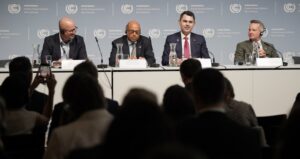
Federal energy minister Chris Bowen announced the news at a press conference in Kwinana on Thursday, where he also announced funding for a huge green hydrogen production plant in Western Australia, along with the results of a battery storage tender.
Bowen said the grant, which Simcoa will use to reduce its coal dependence during silicon manufacturing, will “help industry stay in Australia to support a future of clean energy jobs.”
With silicon being a vital ingredient of solar PV panels, the funding could also give a boost to the Solar Sunshot program, which aims to develop a dedicated solar supply chain within Australia.
Substituting coal for charcoal
Simcoa Operations, acquired by Japan’s Shin-Etsu Chemicals in 1996, currently owns and operates a silicon manufacturing plant located approximately 140km south of Perth at Kemerton Industrial Park in Western Australia.
According to its website, Simcoa exports around 85% of the 52,000 tonnes of high purity silicon it produces each year. Despite the volume exported, it still claims to be a “major supplier of silicon to the Australian domestic market” – which, in terms of solar cell production, is currently very small.
In an effort to move away from coal, Simcoa will use the grant from the federal government to increase the use of charcoal within its silicon manufacturing process.
During silicon metal manufacturing, a carbon source is required, such as coal or charcoal, which is reacted with silicon dioxide to isolate the metal, along with carbon dioxide and silica fume as by-products. Simcoa produces around 13,000 tonnes of silica fume annually, which is often added to concrete to increase its material properties.
The importance of heavy industries moving away from oil and gas should not be understated, with several of these processes, such as silicon manufacturing, deeply intertwined with the green energy transition.
According to the US Department of Energy, around 90-95% of the world’s solar panels currently use silicon solar cells, highlighting the importance of government-backed financial stimulus, such as the one awarded to Simcoa.
“Lock in those jobs”
During Thursday’s press conference, Bowen said switching from coal to charcoal would reduce emissions at the Kemerton site by 89%, equivalent to over 100,000 tonnes annually.
Not only this, but Bowen stated the funding would “lock in those jobs”, referring to the 220 people currently employed at Simcoa’s Kemerton site.
The Energy Minister also took aim at Peter Dutton and his Coalition’s plans for the future of Australian energy, stating they had “no plans for Australian workers or local industry”, and instead are focusing on a “$600 billion nuclear scheme that relies on a smaller economy.”
A recent report, commissioned by the Clean Energy Council, found that Dutton’s plans would inflate the average household electricity bill by up to 41% between now and 2030.