German energy giant RWE says it received official sign-off to operate Australia’s first eight-hour battery energy storage system at full capacity.
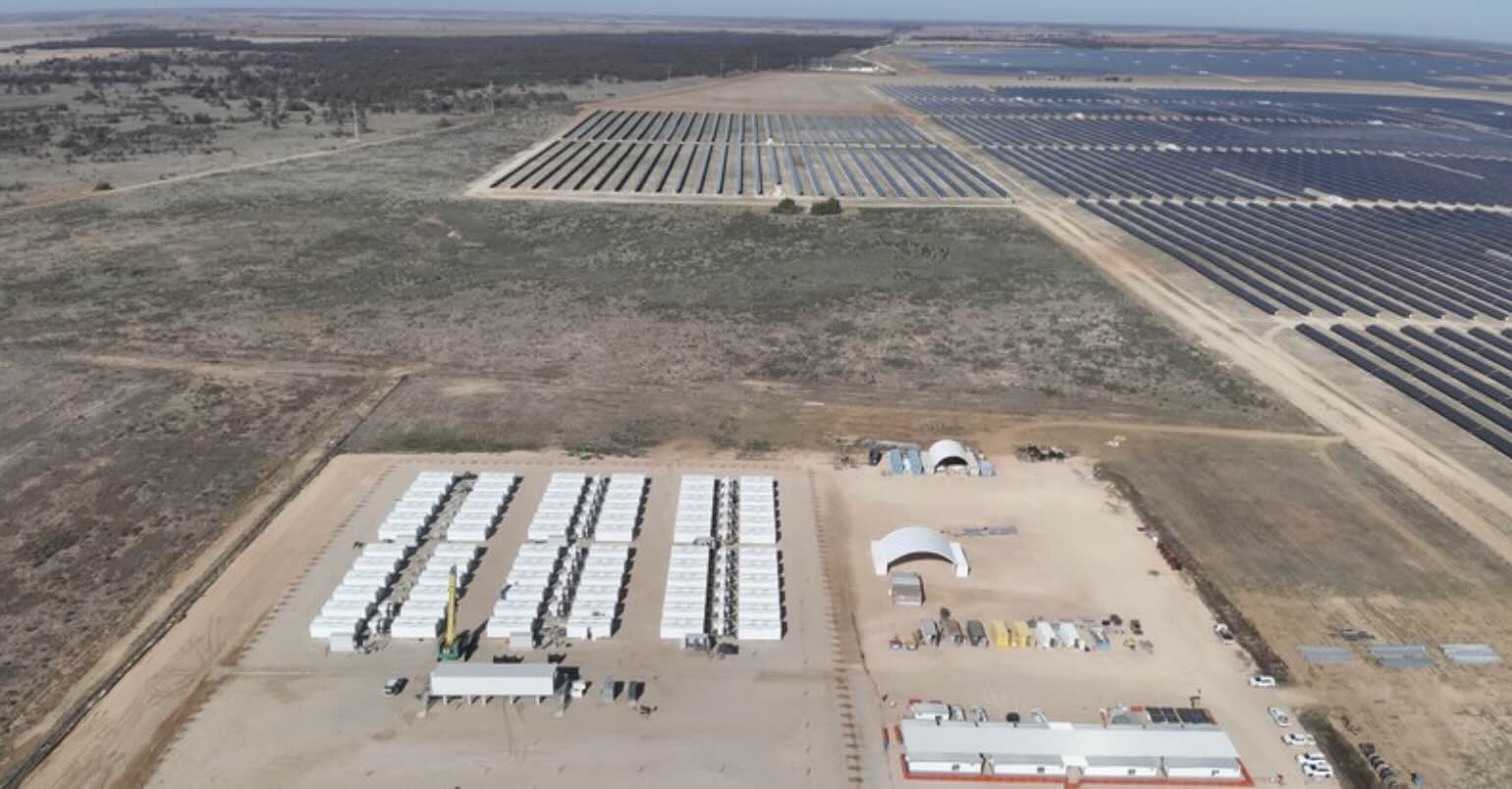
The full commissioning of the 50 megawatt (MW, 400 megawatt-hour (MWh) Limondale battery next to the solar farm of the same name in the south-west of NSW represents a significant milestone for the Australia grid.
The project defied predictions that batteries would be limited to shorter storage periods, and was the flag bearer for the technology when it was announced as the sole winner of an underwriting agreement in the first tender for long duration storage in Australia.
Long duration storage (defined as eight hours of storage or more) had been expected to be dominated by pumped hydro and other technologies. But the costs of pumped hydro have soared – largely due to civil construction costs – while battery storage costs have plunged in recent years.
Since Limondale’s tender win, another 10 eight-hour battery projects have won contracts under the state’s long duration storage tenders, with the scale increasing almost ten-fold and the storage duration has also grown even longer.
The biggest winner to date is Neoen’s 330 MW, 3,500 MWh Great Western battery boasts more than 10 hours of notional storage.
RWE says the Limondale BESS comprises 144 Tesla Megapacks, which suggests that the actual available storage is more than 530 MWh, but some of it will have been installed for redundancy.
It has been registered to charge at 100 MW and discharge at 50 MW, which means it can charge in half the time it is allowed to discharge, and also underlines that the length of storage is really about the set up and business model rather than some profound technology breakthrough, apart from costs.
RWE says the battery will reduce network pressures during peak demand, and support a more flexible and secure electricity system.

It has received the official sign-off from both the Australian Energy Market Operator and transmission company Transgrid following a series of grid compliance and performance tests.
“This groundbreaking project transforms battery storage in Australia, marking a significant milestone in the development of long-duration energy storage and enhancing the reliability and resilience of the national energy system,” said Daniel Belton, the CEO of RWE Renewables Australia.
RWE says Australia is one of its focus markets, and it is developing a portfolio of wind, solar, and battery storage projects across the country, including the 1 GW Theodore wind project which last weekend was named a winner of the latest tender held by the federal government’s Capacity Investment Scheme.
That project, located near Gladstone, is currently working through the federal EPBC process, and is negotiating off-take agreements, including with Queensland state owned utility Stanwell.
RWE is also hoping to develop the 200 MW,800 MWh Tully battery in Queensland, and has obtained EPBC approvals but has had to resubmit its state planning application following a change of rules in that state. It is also working on the 1 GW Cattle Creek wind project in the same state.
If you would like to join more than 29,000 others and get the latest clean energy news delivered straight to your inbox, for free, please click here to subscribe to our free daily newsletter.