Last week, Deakin University announced that it had completed a year-long, Australia-first study trialling technology that allows households and small businesses to buy and sell solar and battery power to each other via a digital platform.
The Virtual Energy Network (VEN) study, led by Deakin Business School and funded by Energy Consumers Australia, used the software of Australian company Enosi to allow peer-to-peer and anonymous pool trading of solar power.
As Deakin University’s Andrea La Nauze told Renew Economy’s Solar Insiders podcast last week, the early findings from the 300-odd participant study found the use of VENs increased access to solar and battery use, lowered electricity prices, and encouraged greater perceptions of a fairer energy system.
But according to Enosi, one of the most promising applications of its software – an an approach that promises to have the greatest success in actually boosting access to solar non-solar households – is yet to be tested in Australia’s risk-averse retail market.
Instead, it’s “going gangbusters” in Italy – and making Australia’s newly launched Solar Sharer Offer look like a “blunt instrument” when applied to the task of matching demand to generation and democratising access to energy generated from the sun.
Enosi says the same Powertracer technology underpinning the highly promising Australian study is now operating commercially in Europe through Italian energy company Plenitude’s “Adopt a Panel” – or “Adotta un Pannello” – program, which has attracted over 110,000 customers in just 12 months.
“A year ago they deployed full-scale a product called Adotta un Pannello, and it has been going gangbusters, they’ve signed up something like 10,000 customers a month,” Enosi CEO Steve Hoy tells Renew Economy.
“By anybody’s standards for retail product launches, that’s extraordinary.
And what it does is really simple, much simpler than the peer-to-peer stuff. We’re matching solar farms’ output to consumption for people who live in apartments, and so can’t do solar themselves.
As the website puts it (according to the Google translation): “You get a 100% discount on electricity bills for the amount of energy generated by the panel and consumed by you. You can choose from three different panel sizes located at our photovoltaic plant in Cerrillares, Spain.”
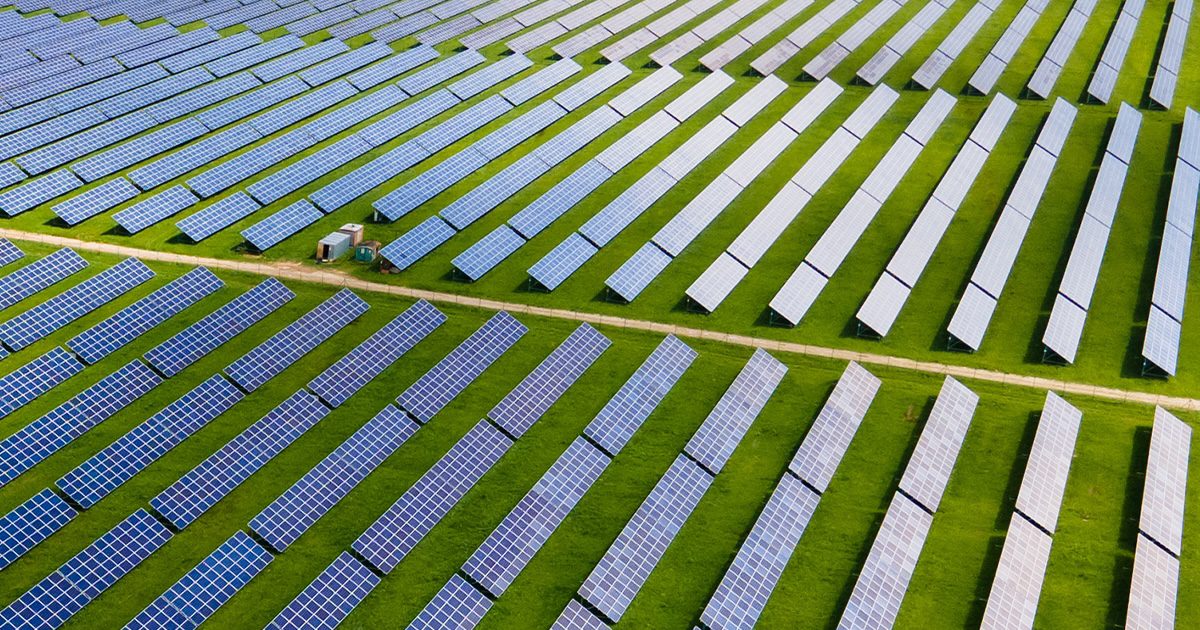
“The customers are signing up to rent a panel, maybe 600 watts, 900 watts. It’s not physically a panel, it’s a virtual panel – it’s a small percentage of the solar farm outputs… and when we match [the customer] to their panel’s output, the energy is free.
“It’s a very simple proposition with customer, you know, it’s just like putting a solar on the roof, because when you use energy, when it’s actually coming from the solar solar panels, it’s free,” Hoy says.
“So people are adopting this in spades, so that [the retailer is] getting run over with demand… and not only that, but also shifting their demand to the solar hours again.”
Hoy says that early feedback shows that the amount of Plenitude customers that are actively changing their energy consumption behaviour to match the daytime output of their adopted panel is similar to the sort of numbers recorded in the Deakin study, 15 to 20 per cent.
“The business case appears to be kind of paying off … for that retailer. So, yeah … a really good outcome, and still growing … and in some ways disappointing that we had to go overseas to get that kind of result,” he says.
Hoy says part of the reason this approach has not been trialled in Australia is retailer unwillingness to invest in significant innovation – which, in turn, can come back to retailers being overburdened by laborious and in some case outdated regulations.
But he also says there are some fundamental differences in between the two countries’ energy pricing structures that make the adopt-a-panel approach more difficult to package up in Australia.
“The main thing, probably with Italy, is that network charges have never been per kilowatt-hour,” Hoy tells Renew Economy.
Rather, network charges have always been fixed, per-day tariffs – ironically, along the lines of what the Australian Energy Market has been proposing for Australia as part of its much-criticised pricing reform recommendations.
Hoy says making network charges fixed makes the “energy bit” of the retail transaction transparent, which means consumers are more likely to behave the way that the market wants them to behave.
“So if it’s cheaper because of solar, great, show them that, and yeah, don’t confuse the idea… Italians get that, because they’ve never seen anything else. And so, when Plenitude says the energy is free, the energy is free. The network charge is still the same, they’re just not charging for energy.
“It’s a much simpler thing to do, and in fact it’s much more cost effective overall,” he says.
Hoy says Enosi is currently pitching the idea to Australian retailers as “a better alternative than Solar Sharer,” which he describes as “a bit of a blunt instrument that could have been done with more finesse.”
“I guess our point of view is that it … [puts] retailers between a rock and hard place … because they have to pass on the zero cost and they’re not in control of … what that costs them at the time… so they might take a bath, or they’re going to certainly have to price elsewhere in their stack to cover the cost of this free energy.
Adopt a Panel, on the other hand, says Hoy, is “actually coming from renewable resources… not just a time-stamp, … it lasts all day, not just three hours, and it kind of literally tails off as the sun sets, which is exactly what you try to do, right, instead of having… a step change [in prices] at the moment it finishes.
“And people will shift their demand, anyway,” he adds. “We’ve proven that with the [VEN network] study.
“Customers and retailers will be better off when consumption is matched to generation,” Hoy said in a separate statement. “This is the first time we’ve had rigorous causal evidence.
“It shows that consumers respond exactly as the energy transition needs them to if lower prices reflect when renewable energy is actually available.”
“The lesson isn’t simply that people like cheaper electricity. It’s that when electricity is matched to real renewable generation, consumers shift demand, solar owners are rewarded more fairly, and retailers don’t have to underwrite costs outside their control.
“Solar Sharer is on the right track,” says Hoy, “but a better approach is to reward renewable consumption when it actually occurs, rather than relying on blunt pricing mechanisms that disconnect prices from the reality of the grid.”
“So that’s what we think … [is] going to have some significant kind of sway; and our success in Italy. We’re finally getting the attention, now, of the retailers of Australia.”
You can listen to the Solar Insiders interview with Deakin University’s Andrea La Nauze here. The final VEN report is available to read here.
If you would like to join more than 29,000 others and get the latest clean energy news delivered straight to your inbox, for free, please click here to subscribe to our free daily newsletter.