Key Takeaways
- Researchers from Monash University and SMU Airrane have developed a method to efficiently store and transport hydrogen using regular fuel tankers.
- The method involves a semi-pilot membrane system that extracts hydrogen from Liquid Organic Hydrogen Carriers (LOHCs) at low temperatures.
- If successful, this method could enable hydrogen export across shipping routes and make hydrogen more affordable for industries.
Researchers from Monash University and Korean company SMU Airrane believe they have developed a method to more efficiently rely on regular fuel tankers to safely store and transport hydrogen.
Hydrogen made using renewable energy is critical to industrial decarbonisation, but moving it around safely and efficiently is a major hurdle. A lightweight gas, it’s costly to store and transport, often requiring extreme pressure or temperatures.
Monash and SMU Airrane, a global leader in membrane commercialisation, believe they have developed a semi-pilot membrane system that overcomes these challenges to efficiently extracting hydrogen from Liquid Organic Hydrogen Carriers (LOHCs).
The project centres around the development of custom-built membranes and catalysts to extract hydrogen from LOHCs at low temperatures, a process that reduces the costs, risks, and energy of current extraction methods.
An early proof-of-concept has already been demonstrated to work at Monash University, and will now be scaled up and tested under real world conditions by the Australian Government’s Global Connections Fund – Bridging Grants program.
The pilot hydrogen release system project will be tested at Monash University and CSIRO’s new Membrane Pilot Facility.
If proven successful, the new method to release hydrogen from LOHCs could unlock hydrogen export across shipping routes, make it cheaper for industries, and even open the door for hydrogen to power planes and cargo ships.
“We believe our membrane system is the missing link to supply-chain success – a way to cleanly and efficiently release hydrogen at the point of use, without relying on complex high-temperature processes,” said Professor Matthew Hill, director of the Monash Centre for Membrane Innovation.
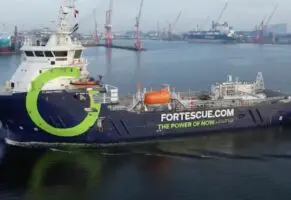
“Let’s say Australia produces hydrogen using solar power. Instead of liquefying or compressing it, we bond the hydrogen to a liquid carrier and send it off in regular fuel tankers – the same ones already used in the oil industry.
“Once it arrives, our system unlocks the hydrogen on-site and the empty carrier liquid is returned and reused. It’s clean, efficient and uses infrastructure we already have.”
The research has drawn on the experience of Australia’s liquid natural gas (LNG) industry which prioritised export capability first, eventually leading to more affordable local use.
Focusing first on export may, according to the researchers, help build the infrastructure and scale needed to reduce costs for local production.
“We believe this technology could forge a similar path to growing Australia’s clean hydrogen industry,” said Professor Hill.