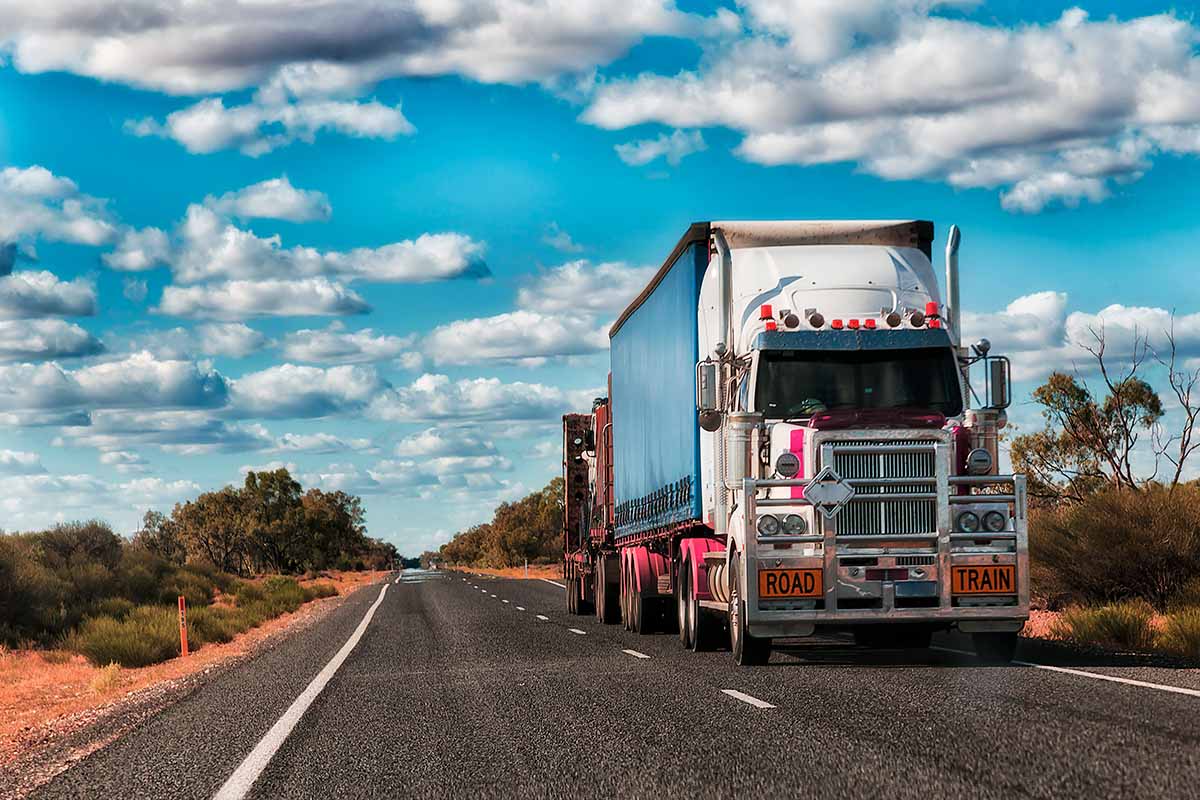
Ditching diesel fuel from industrial sectors like mining, freight and agriculture is “absolutely possible” from a technological perspective, a new report has found, but will require supporting infrastructure and policy reforms – starting with a review of the Fuel Tax Credits Scheme.
The report, released on Wednesday by the Australian Academy of Technological Sciences and Engineering (ATSE) in partnership with Andrew Forrest’s iron ore and green energy juggernaut Fortescue, puts forward five recommendations to support slashing diesel use in heavy industry.
Leading the recommendations is reform to one of the main policy levers that supports diesel used – the Fuel Tax Credits Scheme (FTCS), which the report describes as a major barrier to the transition away from diesel.

Fortescue’s Forrest opposes the fuel tax credit, actively lobbying successive federal governments to dump it, despite his company being among one of its biggest beneficiaries in the past.
Forrest’s argument, supported in the ATSE report, is that the fuel tax credit protects high-emitting sectors from the true cost of fossil fuel consumption and undermines national emissions reduction goals.
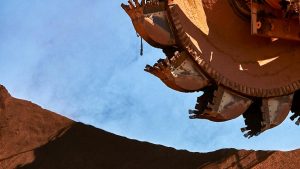
Fortescue, which announced its 2025 financial year results on Tuesday, has set itself a Real Zero Target to eliminate Scope 1 and 2 emissions from its Pilbara iron ore operations by the end of 2030, effectively meaning it will not burn gas or diesel for power or transport and mining operations.
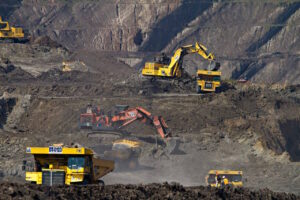
And the company is investing plenty of money in meaningful action to achieve this goal, with billions being spent on fleets of giant electric haul trucks, and a $A350 million deal announced in April to buy more than 50 autonomous electric drill rigs to replace existing diesel-powered kit.
But a new micro site launched to track Fortescue’s progress on its “Real Zero” journey so far, the company notes that “achieving profitable pathways [to real zero] assumes that by 2028 the policy disincentives to decarbonisation are removed.”
In a webinar briefing on the report on Tuesday, ANU professor and inaugural chair of the ANU Energy Change Institute, Ken Baldwin said the diesel fuel tax credit remains “the biggest policy impediment” to rolling out replacement technologies.
“The OECD and the International Energy Agency have both identified Australia’s diesel fuel rebate as the biggest subsidy of fossil fuels in the country, that amounts to almost $11 billion a year and is in the top 20 of expenses in the federal budget,” Baldwin said.
“Of this 47% goes to the mining industry, while 12% goes to agriculture and forestry.
“The diesel fuel rebate needs to be removed, first, in order to put diesel on a level playing field with all other fossil fuel use, and second, to help fund and encourage diesel fuel replacement.”
The report also recommends looking at changing Australia’s market-based emissions reduction mechanism by exploring the introduction of carbon pricing or an adjustment of the Safeguard Mechanism to better reflect the environmental impact of diesel.

And ATSE highlights a range of mature and emerging technologies, and the need for a comprehensive techno-economic assessment of decarbonisation pathways beyond electrification – as well as mechanisms to bring clean fuel tech to market.
“We understand pretty much all the technologies required to replace diesel energy use, but what’s needed is research to make this transition least cost and the most efficient,” Baldwin says.
ATSE CEO Kylie Walker said that to achieve its low-emission targets, Australia needed to take a new approach to fuelling heavy industry, and this could be achieved by applying technological solutions, and reforming policy and tax levers that support diesel.
“By encouraging the application of mature clean fuel technologies, investing in fast-tracking clean tech in development, reducing the cost of green alternatives and increasing the cost of diesel in a targeted and balanced way, Australia can achieve its industrial decarbonisation.
“It’s absolutely possible from a technological perspective,” Walker told the webinar on Tuesday.
“The technology absolutely is there. … it’s more the infrastructure that isn’t. And yes, I think the two key barriers there are the policy and tax settings and the infrastructure.”
On the infrastructure side, Baldwin cites electric vehicles as a case in point.
“Really what is needed is infrastructure rollout …of electric vehicle charging stations, in particular, in order to remove range anxiety amongst the average motor user,” Baldwin said on Tuesday.
“And I think when that happens, and everyone can guarantee they can get a charge wherever they go, we’ll see a complete shift in a very, very short period of time – a few years, and everyone will be driving electric vehicles.”
Other recommendations from the report include the establishment of a coordinated Future Diesel Strategy, investment in comprehensive infrastructure to support the clean energy transition and targeted R&D investment.
ATSE Fellow, Fortescue board member and former CSIRO CEO, Larry Marshall says it’s crucial that industry partners with government to help shape policy.
“Heavy industry wants to transition to cleaner fuels, but the current policy settings make it harder than it should be,” he said on Wednesday.
“Right now, the Fuel Tax Credit scheme effectively subsidises burning diesel, while companies that invest in clean alternatives face higher costs especially in this transition period. That imbalance holds back innovation and locks in emissions.
“The federal government has a critical role to play in fixing those settings and creating incentives that accelerate the adoption of clean technologies,” Marshall adds.
“At the same time, Industry must step up and co-invest in the solutions that will cut emissions and deliver new green industries for Australia.
“If we want Australia to become a Clean Energy Superpower; if we want a Future Made in Australia; then we need a system that rewards smarter, cleaner choices. Emerging clean technologies need the right mix of policy, incentives and investment to make Australia’s green and gold vision a reality,” Marshall said.