Australia is being urged to go hard on its 2035 emission reduction targets, as the latest data points to a solid reduction in the last year, and as the political party representing Australia’s fossil fuel industry pushes for net zero targets to be abandoned.
Australia cut its emissions by 1.4 per cent in the year to March, according to official data released on Monday, and the government says the year to June will likely reveal a bigger fall of 2.4 per cent from the previous 12 months, taking the total fall from Australia’s baseline year of 2005 to 29 per cent.
Environmental groups say this shows that Australia’s 2030 emissions reduction target of 43 per cent should be comfortably met, and existing state and federal policies should result in a reduction of 71 per cent by 2035.
The federal government is due to receive a key report from the Climate Change Authority in the coming weeks, and will then decide in September on its 2035 target which must be presented to the UN climate body. Its pitch could be key to its hopes of hosting next year’s annual climate conference in Adelaide.
Many expect the CCA to recommend a range – hopefully between 70 and 80 per cent – although environmental NGOs say that 80 per cent should be the bare minimum, particularly given the bleak climate analysis released by scientists in recent week and the increasingly extreme weather events across the world.
“To give Australians and our environment the best chance of holding global warming at the safest levels now possible, Australia should aim for no less than 80% cuts by 2035,” says the Australian Conservation Foundation’s climate and energy program manager Gavan McFadzean.
“While there is much we don’t know about what the world will be like in 2035, we do know the damage from climate change will continue to accelerate.
“The challenges of rapidly shifting to an economy powered by clean energy are nothing compared with the challenges of living in a world that is 3° hotter.”
The federal government’s climate data shows that over the past 20 years Australia’s emissions cuts have been led by the controversial “land use” calculations, and its industrial emissions have barely moved.
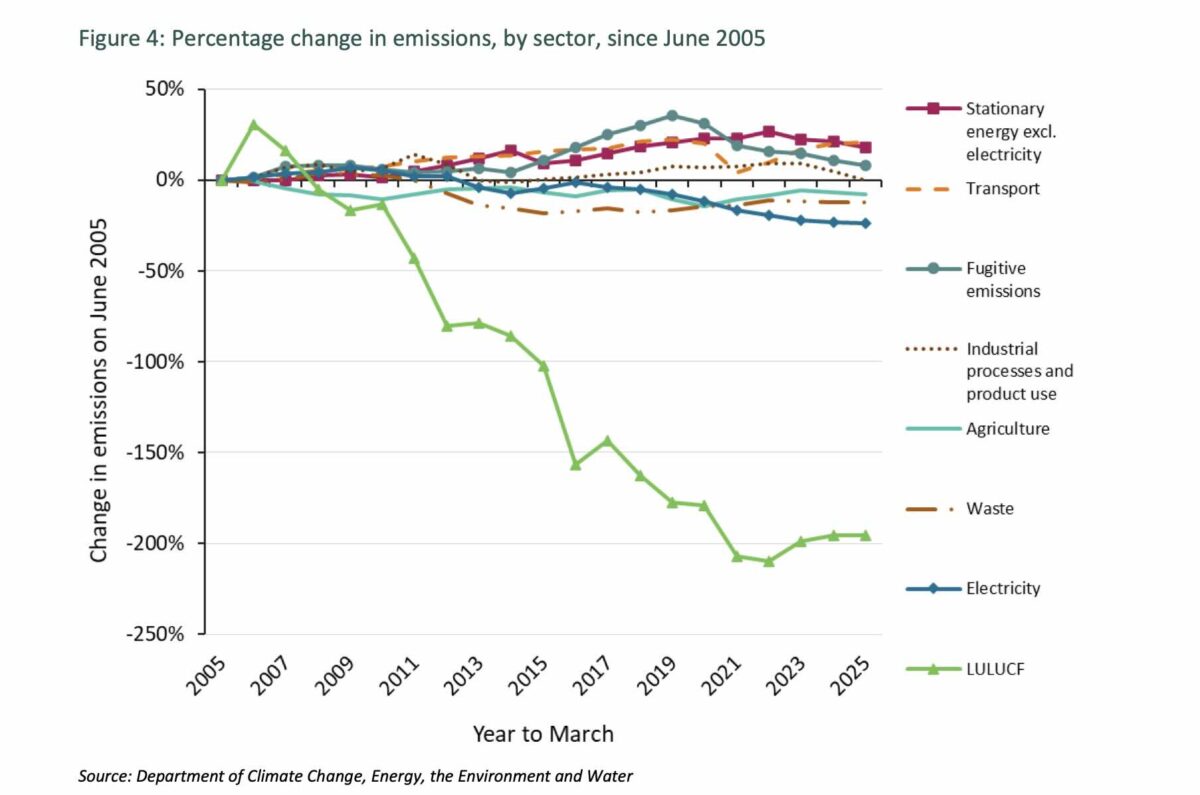
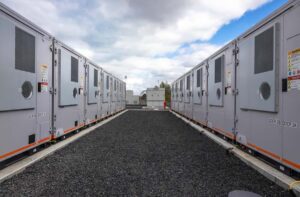
That is despite the rollout of wind, solar and battery storage that has helped slashed electricity emissions by 28 per cent since 2005.
But this reduction (46 million tonnes of Co2 equivalent) has been mostly offset by the emissions associated with LNG exports (up 16 million tonnes), and transport emissions, mostly from burning more diesel (up 14 million tonnes).
The federal government hopes to achieve more emission cuts through its renewable energy target (82 per cent by 2030), and through its vehicle emissions standard that it hopes can finally reverse the growth in transport emissions, although it is not clear how it thinks imposing an EV road tax will help this.
Federal climate and energy minister Chris Bown says Australia is “tracking well” to meet its 2030 climate pollution target, and highlighted the ongoing growth of wind and solar, and the new – and very popular – home battery rebate.

“Our practical policies, including cheaper home batteries, our reliable renewables plan and the safeguard mechanism, are working to drive down emissions across the economy – and we are making good progress,” Bowen said in a statement.
“With over [36,000] Cheaper Home Batteries installed with our support since 1 July, our policies are having a real impact on emissions and helping households with their energy bills. That’s more household battery capacity in 8 weeks than the Hornsdale Big Battery and Victorian Big Battery combined.”
The climate effort however is being challenged by key parts of federal and state Coalition members, with parliament to debate former Nationals leader Barnaby Joyce’s bill to repeal the 2050 net zero target proving a catalysts for state Coalition parties to drop net zero from their platform.
The Queensland LNP was the latest to do so over the weekend, and South Australia Liberals are being urged to do the same at their conference this week, along with calls to reverse their uptake of renewables – scheduled to hit net 100 per cent renewables in the state by 2027 – as conservative parties fall under the spell of the Trump administration.
Labor, of course, has attacked these moves as being “anti-science”. But there is a lot of it about, with the Gina Rinehart-sponsored, Murdoch media “Bush Summit” doing its tour of regional Australia, and conservative media taking every opportunity it can to try and demonise renewables, mostly with nonsense.
And the ultimate test with Labor will be on the strength of its climate targets. So far, it has come up short on the environment, scrapping an agreement for a new environmental body and backing the disastrous Tasmanian salmon industry. Perhaps it will need another march across the bridge to show Albanese that he should care.