Prime Minister Anthony Albanese’s visit to Beijing this week is far more than a diplomatic stopover; it’s a strategic push for a green steel revolution. Describing his approach as “patient, calibrated and deliberate,” Albanese’s decarbonisation push is laying the groundwork for Australia’s most promising economic future. And he couldn’t have picked a better country to partner with.
China is not only responsible for buying more of Australia’s exports than our next 10 trading partners combined, it’s also the world’s biggest steel producer by a country mile (and then some). According to the World Steel Association, China produces more steel than the rest of the world, combined.
But this linchpin of the global steel market is coming off historic peaks, and it looks like its short term demand is beginning to falter, and that’s put some of Australia’s biggest resource exports into a tough spot of late.
According to new data from the National Bureau of Statistics, China’s crude steel production has declined by 9.2% in the first half of 2025, while its pig iron production has dropped by 4.2% over the same period.
As a result, China’s iron ore imports have declined 3% so far this year, and the trickle down effects mean that global seaborne metallurgical trade is down roughly 14% this year.
While it’s too early to call this a structural downturn, if China sneezes, then the whole steel supply chain catches a cold. Analysts have projected this eventuality for years now, but the timing and scale has always been uncertain.
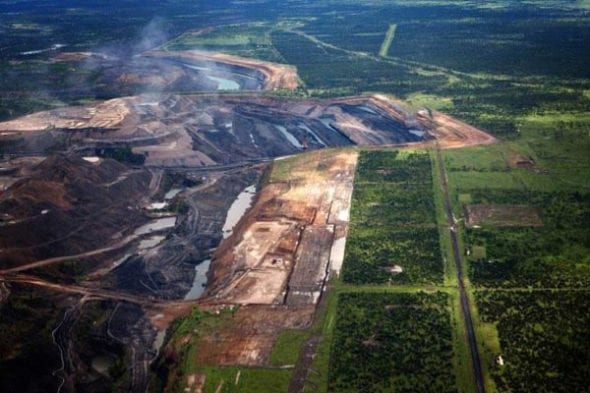
However, so far it’s clear that even a temporary tapering down of China’s blast furnace output is a seismic development for our coal exporters. Queensland’s metallurgical coal sector is already feeling the heat, and miners are now facing financial pressures at the worst possible time.
Coronado Global Resources recently suffered a credit downgrade, putting a planned $1 billion capital raise at risk. Meanwhile, Bowen Coking Coal now faces a $15 million legal demand from its contracting partners. Both will now have to deal with these pressures amidst pricing discounts eating into operating margins.
At the same time though, Queensland’s treasury department is doubling down on a bet that already looks out of date. Just weeks ago, its 2025–26 Budget projected a 10.5% increase in metallurgical coal export volumes this year, with further 3% annual growth expected through 2026–27.
It also promised to review its existing windfall coal royalties. This after they have played such a vital funding role for the state over the last few years, and just as the wind drops from the sector’s profits. Overhauling them now, would be like a mid-winter clean up that accidentally tosses out the heated-blanket.
But the bigger underlying risk is that these forward demand forecasts have missed a beat. While they have built in slight Chinese demand declines, they rely heavily on the assumption that India and Vietnam will pick up the slack.
And that hope is a long way from coming true.
India’s steel production did indeed rise last year, but at the same time, their coking coal imports fell. This decline was actually driven by reduced shipments from Australia and the US, raising pretty serious doubts about their capacity or willingness to be the reliable growth market for Queensland’s Budget in the short term.
Then there’s Vietnam, which is an export market that has a lot of buzz, but in reality has yet to materialise. The Vietnamese steel industry is certainly projected to grow, perhaps as high as 8% per year thanks to increasing construction and a booming electric vehicle sector.
But we also need to be realistic about where they’re starting from. Vietnam’s production is more comparable to an individual Chinese town than the country at large. Tangshan alone produces around 4 to 5 times more steel than all of Vietnam does each year.
Their steel export sector is also highly dependent on EU and US demand, and now it faces mounting pressure from the EU’s Carbon Border Adjustment Mechanism (CBAM) to decarbonise, especially as Trump’s tariffs begin to bite. While the sector isn’t moving quickly, every step towards decarbonisation is a step away from its proposed future as an import hub for Queensland’s metallurgical coal.
This is where a green steel transition starts not only to make decarbonisation sense, but real dollars and cents, sense.
As traditional steelmaking contracts, green steel technologies (that remain reliant on iron ore) could help fill the export void. While the golden ticket of a global green steel premium may not yet have come to pass, partnerships with China to secure long-term green steel demand could underpin future price stability.
This is precisely the kind of future-forward focus Australia should be pursuing. If China and Australia can lead here, the EU and much of the global market will be forced to follow.
But this future visioning being forged in Beijing this week only goes to highlight our own domestic dissonance. While the federal government is working to deliberately pursue a decarbonised, green steel future, Queensland remains anchored to a fading coal paradigm.
Admittedly, the state faces undeniable budgetary challenges. With an Olympics to prepare for, and some of the country’s fastest rent and housing price increases in the country, I can certainly understand why the state would be transfixed on squeezing out as much as it can from existing industries.
But the hope that the good ol’ met coal will find its inevitable way to new profitable markets even if China’s demand contracts, is a gamble with ever diminishing odds.
The beginnings of Australia’s green steel future are being forged this week, and Queensland could be a key part of its future supply chain. But without realignment, it risks missing the boat that I’d bet could reshape global resources markets over the next two decades.