EnergyAustralia has become the latest big-three Australian utility to be hit with fines from the national market regulator for failing to deliver essential grid services, in this case from big batteries.
The Australian Energy Regulator said on Wednesday that EnergyAustralia has paid $750,000 in infringement notices for alleged breaches of its obligations to provide frequency control ancillary services (FCAS), one of the key ingredients for keeping the grid stable and preventing blackouts.
The AER says it issued 10 infringement notices to the EnergyAustralia for infringements on multiple occasions during 2023 and 2024 – the breaches were self-reported by the utility.
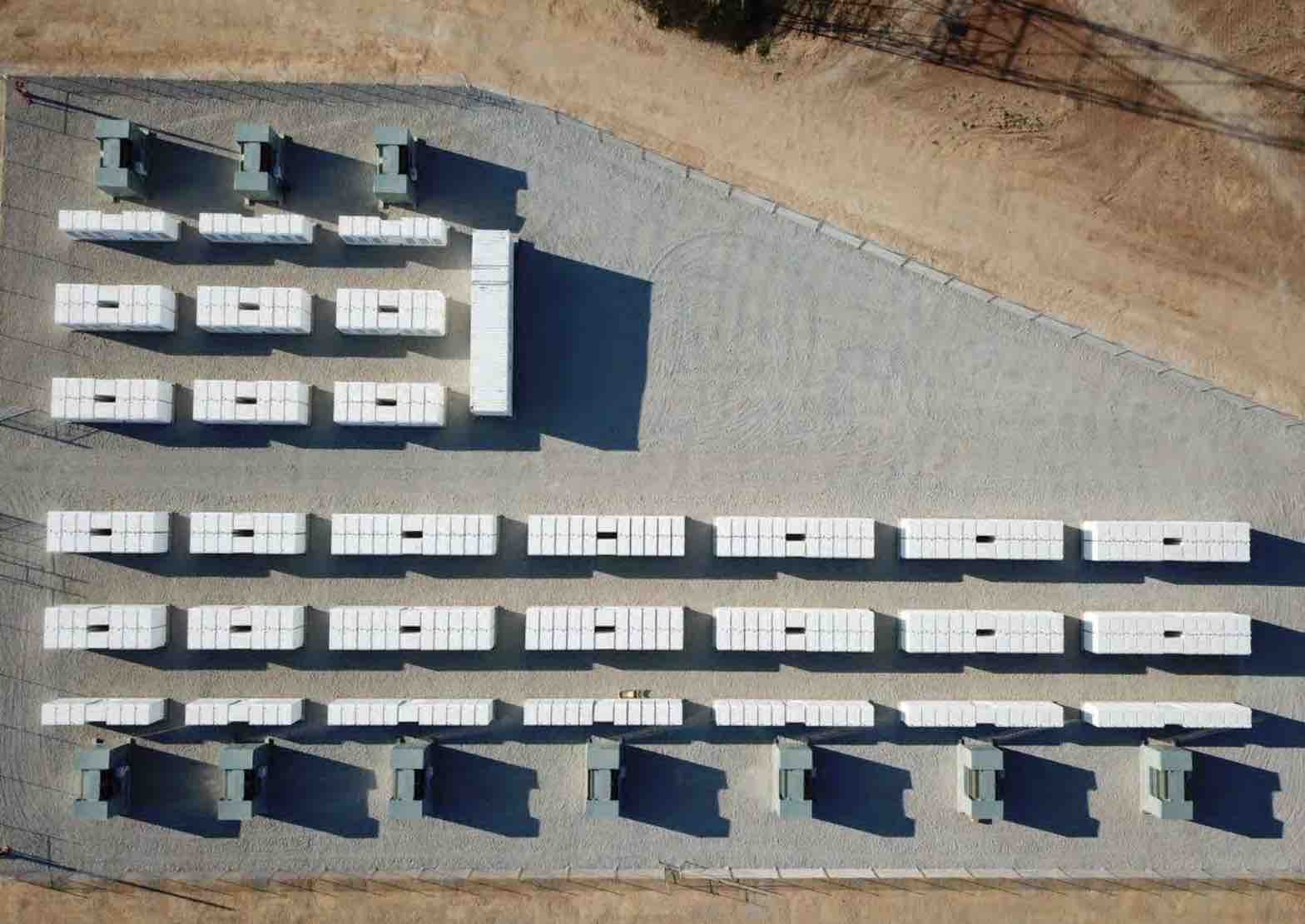
On these occasions the AER says EnergyAustralia “failed to ensure that four of the battery energy storage systems it manages in New South Wales and Victoria could fulfil FCAS offers submitted to AEMO” or failed to ensure that these four batteries complied with FCAS dispatch instructions from AEMO.
The AER does not name the batteries, but at the above dates these are likely to be assets that EnergyAustralia does not own, but manages and contracts via a long-term agreement covering energy arbitrage, grid stability, and frequency control services.
In Victoria, EnergyAustralia holds the commercial charge and dispatch rights for the 25 megawatt (MW)/ 50 megawatt-hour (MWh) Gannawarra Energy Storage System, west of Kerang, while in NSW it contracts or manages BESS including Darlington Point (25 MW/33 MWh) and Riverina (65 MW/87 MWh).
An EnergyAustralia spokesperson on Wednesday confirmed that the batteries connected to the breaches were the Ballarat, Gannawarra, Darlington Point and Riverina.
“EnergyAustralia has paid the infringement notices,” the spokesperson said. “It follows our self report to the AER that [the] four batteries … were at times offered into the frequency control ancillary services (FCAS) market with less capacity than they could actually deliver.
“We self reported the instances to the AER, the Australian Energy Market Operator (AEMO) and the Essential Services Commission. The AER took into account EnergyAustralia’s cooperation throughout the investigation, including its open engagement with the AER, the comprehensive corrective and preventative actions it took, and its proposed resolution of the matter.”
The $750,000 fine paid by EnergyAustralia is relatively small compared to the $6 million racked up by AGL Energy in 2023 from FCAS breaches between 2018 and 2020 by its fleet of coal plants.
As Renew Economy reported then, the subject of FCAS has become a hot one over the past decade, with critics of wind and solar arguing that FCAS costs have risen with the growth of wind and solar and battery storage, and the creation of new markets designed to attract new providers of the service.
The critics say that these services used to be provided “for free” by coal and gas generators. But the reality was that many of these coal and gas generators were not providing the service that they had promised and were being paid for.
The AER initiated a crackdown after the “system black” in South Australia, and subsequent blackouts and grid events, which found that the settings on many generators were different to what AEMO had understood. Fines have been issued to a number of wind and battery projects, as well as other thermal generators.
More recently, though, the focus of FCAS compliance has zeroed in on big batteries and ensuring that the steady stream of new market participants are able to deliver the services they offer.
“Frequency control ancillary services are a crucial part of the safety net that keeps the power system stable and secure, preventing blackouts and protecting electrical equipment from damage,” said AER Deputy Chair Justin Oliver in a statement on Wednesday.
“As batteries take on a greater role in the electricity system, operators must understand their operating limits, make accurate offers and comply with AEMO’s dispatch instructions.
“It is important that market participants regularly monitor their assets and systems to ensure they are operating correctly,” Oliver said.
In this case, the AER says the alleged EnergyAustralia breaches came to light after AEMO requested frequency control data from market participants in the wake of a catastrophic storm in Victoria on February 13, 2024.
According to an independent report on the storm event, it affected about 12,000 kilometres of the state’s distribution lines, and 1,100 powerlines. Over 1 million customers lost power, with more than 531,000 customers off power at the peak of the event.
Six transmission towers collapsed, and a major 500 kilovolt transmission line failed. At the same time, units at AGL’s Loy Yang A brown coal power station were disconnected, which led AEMO to call for load shedding to stabilise the network.
The AER said this week that EnergyAustralia subsequently self-reported the alleged BESS breaches and worked constructively with the AER throughout its investigation. EnergyAustralia has also repaid AEMO the money it received to provide the services.
If you would like to join more than 29,000 others and get the latest clean energy news delivered straight to your inbox, for free, please click here to subscribe to our free daily newsletter.