Chris Bowen, Australia’s climate change and energy minister, was waxing lyrical on the other side of the planet on Monday about the need for action to cut emissions while his own side of politics was busy making sure the Australian state that exports the most thermal coal can continue, literally, unabated.
That’s the awkward but also fundamental dilemma facing Australia – and more than a few other nations attending the fortnight-long global climate conference, COP31, in Antalya, Türkiye.
In short, we pretend we can keep extracting and exporting fossil fuels, without consequence, because the world needs them for “energy security”. We’re addicted to the well-paying jobs, government royalties and corporate profits.
“Climate security”, though, can wait for some future election cycle – even if Prime Minister Anthony Albanese reminded us otherwise just before he jetted off to join Bowen.
To return to the contrast, here’s how Bowen, the grandly titled, “President of Negotiations” at the COP confab, discussed what’s at stake in his opening speech.
“The eyes of the world are on us and Türkiye has given us the very best possible platform,” he told the plenary.
“This year, we have witnessed again the devastating consequences of climate change – and welcomed the inspiring solutions and response,” Bowen went on. “The latest science tells us that we will overshoot 1.5 [degrees Celsius]”.
“But we can still return if we work together and act with urgency, solidarity and resolve.”
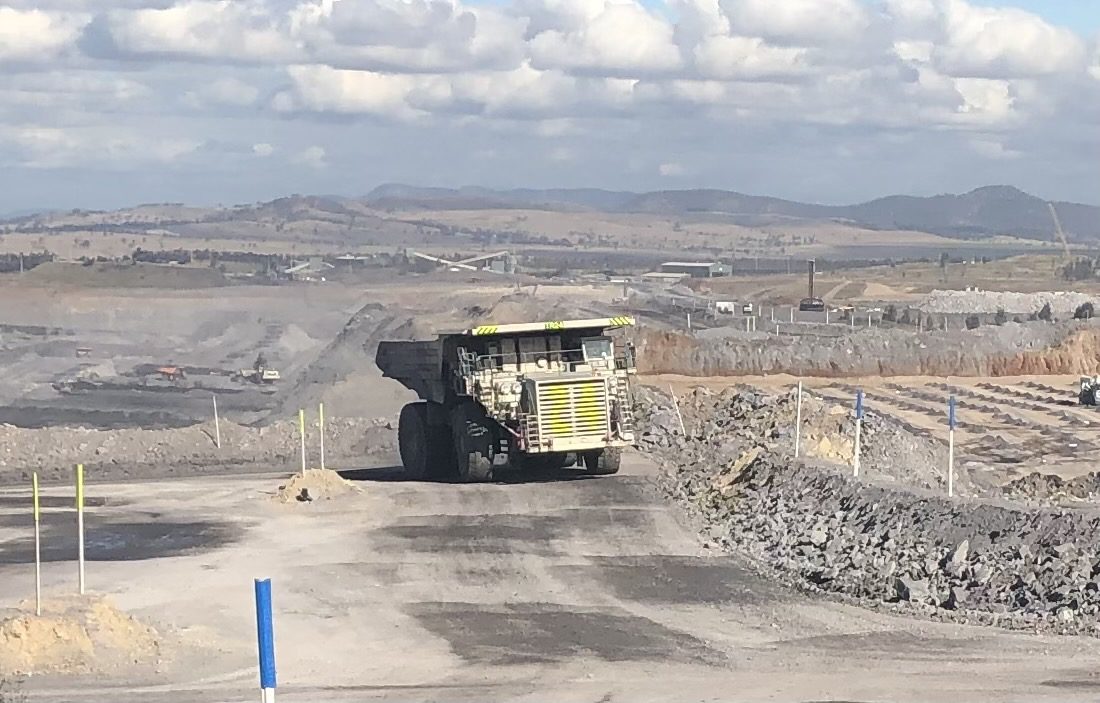
On this side of the globe, though, in Bowen’s home state, the Minns Labor government in New South Wales was acting with its own sense of urgency and resolve – and seeking parliamentary solidarity – to rush through legislation protecting the expansion plans of a giant coal mine in the Hunter Valley.
About five weeks ago, the High Court upheld an appeal against the approval by the NSW Independent Planning Commission (IPC) of an extension of MACH Energy’s Mount Pleasant coal mine.
MACH want to dig 406 million tonnes of coal over 22 years from December 2026 – doubling the current 10.5m tonnes annual rate.
The split 3-2 court decision cited the estimate of former Australian chief scientist, Penny Sackett, that the coal extension would be “one of the 650 largest greenhouse-gas emitting projects or collective human activities in the world over industries including energy, transport, agriculture, and urban development.”
After initially downplaying the need for government intervention, the Labor government decided the appeal had failed because of a legal technicality, introduced by the IPC’s consent for the extension in 2022.
With just a few sitting days left before NSW enters a caretaker period ahead of state elections on March 13, the government expects Opposition support to close a “unique legal uncertainty” – a.k.a. loophole – because of the IPC’s errors.
Premier Chris Minns and key ministers have made much of the need to protect as many as 400 jobs that were at risk while MACH restarted its application – emphasising the need to deliver “certainty to workers and their families ahead of Christmas.”
The mine has approvals to dig coal out to 2032 but without the extension to 2048, it would have had to wind back production, one well-placed source told Renew Economy.
“As the mine’s planning application has been returned to the Land and Environment Court, the government’s intervention means that Mount Pleasant workers won’t need to be stood down while the process plays out,” the government said in a statement on Tuesday.
Notably, the release was headed by police and counter-terrorism minister, Yasmin Catley, who also happens to be minister for the Hunter – a region where all of Labor’s seats are in jeopardy to One Nation, the source told Renew Economy.
The other minister to sign off on the release was Courtney Houssos, whose roles include being the minister for natural resources and finance.
The bill would allow Mount Pleasant to keep its current production and workforce profile, and produce as much as 16.5 million tonnes a year of coal until 2032, or until a new consent is granted.
In relation to the IPC’s decision, the new bill would “impose new Scope 3 emissions consent conditions, consistent with the IPC’s recent approval of the Hunter Valley Operations mine, including limiting exports of coal to countries with emissions reductions policies in line with the Paris [climate] agreement”, the release said.
Scope 3 emissions result from the burning of the coal and gas a nation such as Australia exports, but don’t land on the pollution ledger of the exporters’ account.
That way, Australia might claim to be on track to meet its 2030, 2035 or 2050 emissions reduction goals (although we aren’t), since we only account for the carbon, methane and other greenhouse gases resulting from digging up and processing the fossils for export.
(Incidentally, the High Court noted in its judgement where the IPC had fallen short on how it dealt with Scope 3 emissions, citing comments made in the NSW Court of Appeals verdict:
“[The Commission could] have imposed conditions such as requiring the coal to be washed before it is exported; limiting the coal that is exported to coal of a certain high calorific content or that the coal be exported only to those countries which have [Nationally Determined Contributions] under the Paris Agreement (or equivalent in the case of an entity such as Taiwan); requiring that coal exported from the project only be used in power stations which use technology such as carbon capture and storage or fluidised bed combustion; or requiring that MACH implement offsets to the emissions caused by the coal.”
“The Commission did not say that any of these possible conditions had been considered. And even if all of these possible conditions had not occurred to the Commission, the Commission did not even say, as it had in other cases, that no conditions were imposed concerning scope 3 emissions because scope 3 emissions were outside of MACH’s control or because no conditions had been suggested by the parties,” the High Court stated.)
Opponents of the Mount Pleasant extension understandably cheered the High Court ruling, seizing on the prospect that scope 3 emissions might finally be accounted for in planning decisions.
It’s not as though the impacts of combusting the fuels and heating up the planet remain confined to the region where they were burnt. Neither the atmosphere that we dump the pollution into, nor the oceans that absorb more than 90% of the extra heat being trapped in our biosphere, respect national borders, after all.
“This is a totally inappropriate use of the Parliamentary process and offends the separation of powers that underpins our constitutional democracy,” said Elaine Johnson, director of Johnson Legal, the firm that represented the original mine opponents – Denman Aberdeen Muswellbrook and Scone Healthy Environment Group – in the Court of Appeal and the High Court.
“The proper court process should be allowed to play out without political interference.”
Labor’s actions were also jumped on by the Greens, who stand to gain from Labor’s pro-coal stance in Sydney and elsewhere.
“Labor has accepted MACH Energy’s claims about threatened job losses without publicly demonstrating that hundreds of jobs are actually at risk,” said NSW Greens MP, solicitor, and spokesperson for planning and climate change Sue Higginson.
“Every additional tonne of coal extracted from Mount Pleasant will contribute to the climate crisis that is already costing communities across NSW their homes, livelihoods and futures,” Higginson said.
“The government knows the consequences of expanding coal production, but it’s choosing to protect the commercial interests of the coal industry instead of the people who will bear those costs.
“Chris Minns is setting a dangerous precedent that the law applies to everyone except the coal corporations with enough political influence to have it changed,” she said.
The government’s release hints at the near-term economic imperatives that complement the political ones.
“Coal mining directly employs around 25,000 people across NSW, including around 15,000 in the Hunter,” it said. “Last year the region’s 19 coal mines contributed $16.4 billion to the state’s economic output and more than $1 billion in royalties to fund the schools, hospitals and roads working families rely on.”
The finance and resources minister, Houssos, said the government’s new bill – legislation for which is not yet public – was a stop-gap filler.
“This mine was approved under the previous [Coalition] government’s framework,” she said. “While MACH Energy works through the court process, we need to make sure the mine’s workers – to put it simply – keep their jobs.”
“Our NSW Coal Industry 2026–50 framework provides certainty to workers so they can plan their future and to coal-producing communities so they can look to the future with optimism,” Houssos said.
The trouble is that optimism is on a crash course with the changing climate reality, as Prime Minister Albanese noted on Monday in announcing an extra $12 million to strengthen bushfire risk management and support the mental health and wellbeing of emergency first responders – before boarding a plane for Türkiye.
“For a long time, science has told us that there would be more extreme weather events, and they would be more intense with each passing year,” the PM said on Monday.
At a rhetorical level, Albanese will reading from the same climate playbook as Bowen, who has been busy telling COP31 that “we meet at a moment of consequence.”
“Whether it be glacial collapse in Nepal, heat deaths in Europe, or an intensifying El Niño. Climate change is here,” Bowen declared, going on to say:
“Every fraction of a degree, and every delay, increases the risks to lives, communities, economic growth and the environment.
“Raising the cost of adaptation, deepening future losses and making the task ahead harder,” he said.
“While the challenge is growing, so is our response.”
Somebody should tell that to the NSW parliament.