Queensland government-owned generation company CS Energy is using coal plant byproducts to, quite literally, build a bridge between its traditional fossil fuelled power stations and its new renewable energy assets.
The company revealed on Monday that fly ash from Callide Power Station has been used in the concrete to build the 80-metre Yellow Creek Bridge that will deliver turbine components to its Lotus Creek Wind Farm.
“The 80-metre bridge is engineered to carry turbine components weighing more than 100 tonnes, connecting both sides of the site and improving access for local landowners,” CS Energy said in a LinkedIn post.
“It’s a simple idea with real impact: smart engineering, efficient use of resources, and infrastructure that supports Queensland’s energy future!”
Coal fly ash, a by-product of coal combustion in thermal power plants, is one of Australia’s biggest and most complex waste problems. In 2019, the nation’s coal power plants produced an estimated 12 million tonnes of ash a year, according to the ABC.
In Australia, the majority of coal ash waste is mixed with water to create a sludge which is pumped into containment dams that have been found to contaminate surrounding soil and waterways.
As a side note, it was a larger-than-usual clinker (piece of hardened coal ash) that was found to be the cause of a serious explosion at the Callide C Power Station back in April 2025, taking it out of action until June.
But there is significant potential to reuse coal ash. In particular, the fine ash – or fly ash – can be used as a substitute to cement to make high quality, lower carbon concrete.
CS Energy – which owns and operates the Callide B and Kogan Creek power stations, and has a 50 per cent interest in the Callide C Power Station – is at least showing some signs of thinking outside of the dam on how to manage its coal ash problems.
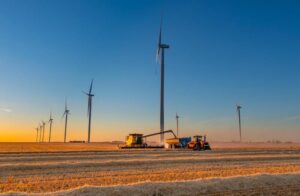
CS Energy’s Lotus Creek Wind Farm is a 285 megawatt (MW) project that is being constructed on privately owned cattle grazing land on Barada Barna and Barada Kabalbara Yetimarala Country in Central Queensland.
A consortium of Vestas and Zenviron is leading equipment supply and construction, and Copenhagen Infrastructure Partners is helping to deliver the project.