Australian states could take huge strides towards protecting endangered animals and plants by setting aside just 30 per cent of the land within their borders with the highest biodiversity values, a new study finds.
The research mapped renewable energy projects against biodiversity and found that smart planning can both avoid up to 90 per cent of vulnerable habitats and hit energy targets.
In doing so, projects could be fast tracked or avoid stringent environmental planning, and be more acceptable to local communities.
“Siting renewable energy in low biodiversity areas would see huge cost savings,” said Australian Conservation Foundation acting chair Paul Sinclair in a statement.
“With faster planning approvals and stronger community support, this would boost productivity, grow jobs and speed up the shift to a clean, affordable, renewable future.”
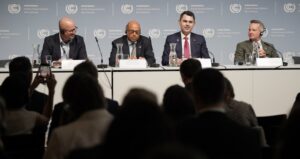
The report Mapping Renewables for Nature comes a week after federal environment minister Murray Watt announced new regional planning guidelines which will create go and no-go zones for renewable and other developments.
But for this type of mapping to work as a way to fast track renewables, the federal government needs to weigh in with the long promised EPBC environmental reforms and an independent Environment Protection Agency (EPA) to ensure the rules are followed, the new study says.
“Strong standards, smart mapping and an independent EPA are key to developing regional plans which can guide siting decisions, identify and protect nature and support efficient assessments,” it says.
‘Reforms can deliver faster assessments for renewable energy projects, while ensuring that these projects meet the same environmental conditions and standards as other industries and projects.
The other requests were for funding to do nation-wide biodiversity prioritisation mapping, and consultation to identify irreplaceable habitats across the country for ‘Matters of National Environmental Significance.
Localisation reveals depth of planning
The analysis, by the Melbourne Biodiversity Institute, the Melbourne Energy Institute and Net Zero Australia, of Queensland, Victoria and New South Wales (NSW) found that state-wide, avoiding just 30 per cent of the highest value land achieved the biodiversity protection aim.
Zooming in on specific areas made that general rule more rubbery.
The report Mapping Renewables for Nature zeroed in on three zones: in the Banana shire in Queensland, where the highest biodiversity value actually made up 40 per cent of the area; the 30 per cent value was on the mark for Central West Orana in NSW; but in Gippsland in Victoria researchers found the best 30 per cent had already been excised from the local proposed renewable energy zone (REZ).
The Central West Orana area, which lies inside a pseudonymous declared REZ, is home to threatened regent honeyeaters, swift parrots, koalas and brush-tailed rock-wallabies.
The mapping showed about 70 per cent of the zone has relatively low conflict with important habitat for threatened species.
It found that an average of 93 per cent of the habitat of these creatures could be safeguarded by protecting the other 30 per cent from development.

The Banana shire in Queensland is home to threatened species such as koalas, southern snapping turtles, painted honeyeaters, northern grasslands, black box woodlands and brigalow forests.
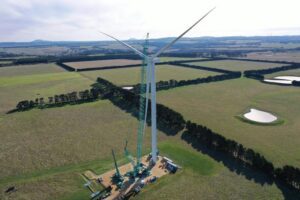
It’s a hotbed for renewables projects, with the council keen to tap the financial benefits that come with hosting and RWE Renewables’ 1 gigawatt (GW) Theodore wind and battery project being one of the lucky projects to make it past the wind-resistant LNP state government.
Local councils and regional communities identified a 930km renewable energy corridor led by the seven Remote Areas Planning Development Board (RAPAD) Councils in collaboration, the report says.

But while the Banana shire may be a useful planning example, Queensland in general is a concern.
“Some renewable energy projects are planned for areas of high biodiversity value and that a small handful of projects are planned for areas of very high biodiversity value,” the study says, a point based on a draft paper from the Melbourne Biodiversity Institute called Renewable Energy and Biodiversity in Queensland: Mapping the Co-Occurrence of Energy Generation, Energy Density, and Threatened Species.
That research didn’t name which projects are problematic but did say the average proposal is in an area with a mapping score of 75 over 100, which is an area the software considers very important for endangered species.
Avoiding these areas will add cost to developments, but this would likely be wiped out by cheaper planning expenses, a separate piece of research found last year.
The awkwardly named Joint infrastructure and biodiversity optimisation reveals favourable cost-protection trade-offs in a carefully planned renewable energy transition paper found in 2024 that avoiding 30 per cent of the most important areas for threatened species would add 1-2 per cent to electricity bills in 2050, but also avoid 90 per cent of species’ distributions.
“Increasing protection to 50% of lands protects 96% of species distributions, adding just 2-4% to electricity bills in 2050. These cost increases are likely much smaller than the uncertainty of the planning task, rendering them effectively unobservable,” the authors wrote.
See also: A bright red bird warning – the new tool that could transform where Australia builds renewables
See also: SwitchedOn podcast: The game changing tool to protect birds in Australia’s renewable rollout