“I can announce today that to boost investment, a Coalition government will elevate gas to the same status as a critical mineral”.
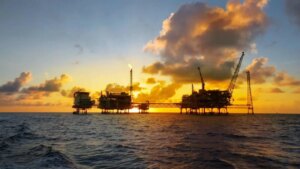
That was Queensland Liberal party Senator Susan Macdonald at a gas industry conference earlier this week. As first reported by The Guardian, the Coalition have announced that plan to allow fossil gas extraction to benefit from a $4 billion critical minerals facility.
Let’s get something important out of the way first: methane is not a mineral. Methane is a gaseous substance produced from living organisms, and minerals are mostly inorganic solids produced by geologic processes. ‘
Critical minerals’ are minerals that are particularly valuable to human technological enterprise – such as copper used in power lines, or lithium used in batteries.
Gas is gaseous, lithium is a rock. You can’t rest your laptop on water, and you can’t drink your table. You probably shouldn’t breathe coffee, and it’s really difficult to enjoy a refreshing morning cup of air. It being 2025, it’s important to just spend a little moment reconnecting with reality, and remember that very bad things happen when we start letting go of the taxonomy of substances.
The Coalition’s statements here are obscene and egregious, but the fossil gas industry and their government advocates have always been extremely into wordplay and the abuse of rhetoric, usually targeted at sneaking into the world of climate solutions through the backdoor.
They managed to maintain and then popularise the phrase “natural gas” – originally used to differentiate it from ‘town gas’ but now obviously a marketing term that is used almost universally by the energy industry and by most major media outlets.
“Renewable natural gas” has been a long-running effort to exploit the widespread support for renewable energy in order to sell more fossil fuels, and preserve the status quo. In America, ‘certified gas‘ is a brand new greenwashing scam being used by companies. There has been a massive, well-funded push in the European Union for gas to be defined as ‘clean’, with a concerning amount of success.
In Australia, there are a shocking number of options to source “carbon neutral” gas, such as AGL and Engie. MasterChef Australia (a show beloved almost universally by Norwegians, for reasons I haven’t yet figured out) has been actively promoting “renewable gas” on the show and through a variety of digital sources.
Almost every major gas infrastructure and retail group is somehow involved in some type of project to present this fossil fuel as renewable, clean, safe and natural – and most certainly a climate solution, rather than a climate problem.
Gas is indeed a climate problem. When it is burned in Australia, the subsequent carbon dioxide released forms a large proportion of Australia’s total climate impacts:

And even though Australia is a signatory to the global methane pledge, the direct-to-atmosphere dumping of methane gas hasn’t strayed from its trajectory – being wildly off track for those targets.
Dutton’s first week on the campaign trail has been a mess, in climate and energy terms. We already knew that the Coalition’s energy and climate policies would be a mess, but this first week has shown that their tactics, strategies and consistency are a muddy puddle. The latest reaction to Dutton’s gas reservation proposal is the reported distancing of mining magnate Gina Rinehart from the Coalition.
Keep in mind the gas reservation policy scheme was itself an attempt to correct from the disastrous and unpopular nuclear power theme of the past year (honestly, a welcome change to be talking about a technology that actually exists in Australia).
What’s going to be the corrective action against Dutton’s gas policies? How many times can they course correct, when by now the party is meant to have a consistent, clear and solid message? Redefining a gas as a solid just to soak up some subsidies and hand a cookie to an angry, betrayed fossil fuel industry seems to have fallen flat. 29 days to go.