rss

Articles by Paul Gilding

Paul is an independent writer, corporate advisor and advocate for action on climate change and sustainability. He is widely recognised as a global authority and thought leader on sustainability and business and has worked with the Chairs, CEOs and executives of many leading global companies including DuPont, Diageo, BHP Billiton and Ford. During 35 years as an activist and entrepreneur he has served as CEO of a range of innovative NGO’s and companies including Greenpeace International and two companies he owned - Ecos Corporation and Easy Being Green. He has also served on the board of many non-profit groups. His speaking and work has taken him to over 30 countries. His current roles include as a member of the Core Faculty at Cambridge University’s Program for Sustainability Leadership. His book “The Great Disruption” was published globally by Bloomsbury in 2011 and has been widely acclaimed, including in the New York Times. His blog, The Cockatoo Chronicles, can be found at www.paulgilding.com

2
How the anti-coal campaign is protecting Australia’s economy

How the anti-coal campaign is protecting Australia’s economy

It might seem ironic, but environmentalists and farmers fighting the expansion of coal mining and coal seam gas across Australia are the only thing likely to moderate the rude economic awakening we face when the global carbon bubble bursts and the fossil fuel industries start their inevitable, terminal decline.

8
What’s driving climate action? It’s the market, stupid

What’s driving climate action? It’s the market, stupid

When it comes to the shift to a low-carbon economy, many are so busy looking at politics for signs of change, they’re missing the signs in the market. Policy might be essential, but markets deliver solutions – and the signs are that this process is now well underway. Meanwhile, that carbon bubble just keeps getting bigger.

24
Victory at hand for the climate movement?

Victory at hand for the climate movement?

What began as a predominantly ecological question is rapidly transforming into an economic one, putting the global climate movement on the verge of a remarkable victory that would include the removal of the oil, coal and gas industries. And the greatest transfer of wealth and power the world has ever seen.

3
Will markets survive the end of growth?

Will markets survive the end of growth?

Is the end of growth the end of markets? The end of capitalism? Most definitely not. We will still need competition, we will still want ideas and innovation to flourish and we will want capital allocated as efficiently as possible. Markets are good at all those things.

2
Reality dawns: a fortune to be made in new economy

Reality dawns: a fortune to be made in new economy

Beneath the despair at the lack of serious global action on climate and more broadly on sustainability, there is a quiet but exciting revolution happening on the ground. While the politicians talk, the market is preparing for the inevitable failure of the old economy by starting to build a new one.

10
The Growth Monster is slaying itself

The Growth Monster is slaying itself

In the first of a three-part series, author Paul Gilding examines the end of economic growth. Once dismissed as the fantasy of fringe economic thinkers, the combination of climate change and associated economic risks, peak oil, and rising food prices has caused the penny to drop – growth may not go on forever. Will politicians, economists, and business leaders be able to cope?

6
The end of growth: China leads the way

The end of growth: China leads the way

In the second of a three-part series, we look at how how China is hitting the limits of economic growth faster and harder than any other country. Little wonder that they are aggressively pursuing clean technology and other measures to reduce the impacts on the environment and to respond to a limited resource supply.

3
We cannot avoid the global crisis… but we can deal with it

We cannot avoid the global crisis… but we can deal with it

In a speech this week, Paul Gilding said the world was ‘locked in’ for a sustainability crisis that would trigger world-changing climate impacts and resource conflicts. The only question now is how will we respond? Will this be a century of chaos or a few decades of messy but successful transition?

14
The End of the Industrial Revolution

The End of the Industrial Revolution

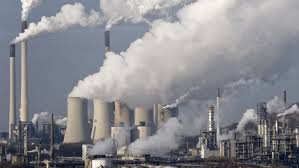
Despite the emergence of the smart phone, Facebook and Google, the economy is still being driven by belching smokestacks and is still being shaped by those who inherited the economic momentum of 19th century England – the coal, oil and gas industries. But after 250 years, their time is coming to an end – and faster than you, or they, think.

15
Will the techno-optimists save the world?

Will the techno-optimists save the world?

Techno-optimism is a form of denial. That things aren’t that serious and that politically difficult change that will confront powerful vested economic interests can be avoided. Such a view is reassuring, it feels good and it fits nicely with our genetic tendency to optimism. Unfortunately, it’s also wrong.

0
The end of growth: No denying this giant Ponzi scheme

The end of growth: No denying this giant Ponzi scheme

It is happening now. People will argue oil price spikes are being caused by political unrest, not the underlying reality of peak oil. That food shortages are caused by market inefficiencies, not the reality of climate change and the broken model of oil dependent, non renewable industrial agriculture. The worse the crisis gets, the more fanciful the excuses will become.