 On Sunday midday, close to 100% of the electricity demand in Germany was covered by renewable sources. A lot of sun and wind made this possible.
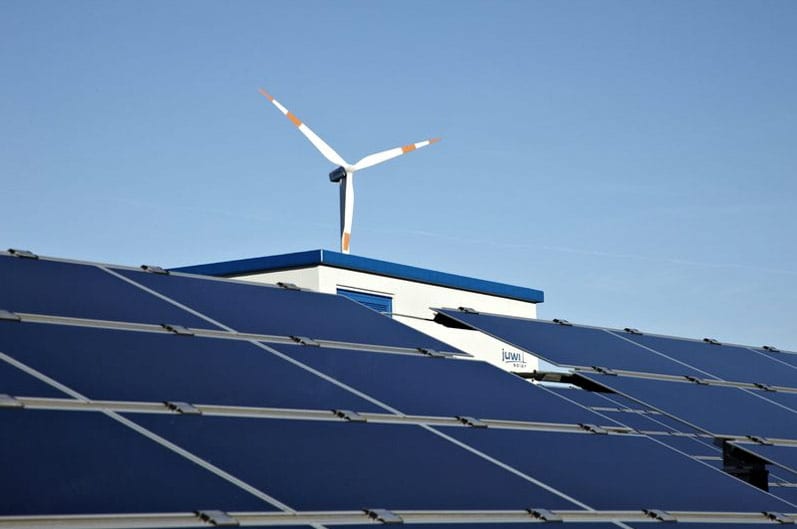
Almost 100% of the electricity demand in Germany noon last Sunday was covered by PV and wind power. According to the evaluation by the forum “Together against interim storage, and for responsible energy politics” the PV plants at noon produced more than 24 GW of solar power.
Wind power contributed more than 18 GW. The electricity consumption in Germany was at around 55 GW at this point of time as indicated by “Agorameter” which gather electricity data in the country.
This demand is seen as pretty low, mostly a result of warm temperatures, the summer break and the weekend, when most commercial operations remained closed. But exactly at such points of time, it can be proven how renewables can come close to covering 100% of the demanded energy.
“Obviously we will not be able to reach the 100% renewable energy mark for 2015 anymore. But in spring and summer 2016, with the addition of new wind power generators, and an unfortunately small number of PV plant additions, the 100% goal is reachable. Historical! If we accelerate the PV plant development once again and keep up the wind power plant development, this can happen quickly,” the forum further highlighted.
PV and wind are seen as the “working horses” that will pull the Energiewende in Germany over the next two years. This is further asserted by the fact that electricity from new plants will be delivered at less than €0.10/kWh. On top of that, load management, grid redevelopment and storage will be necessary. More also has to be done in the direction of energy efficiency. The forum suggests a social ecological tax reform to make energy somewhat more expensive, and with the revenue to reduce income taxes on paid work.
Translated by Shamsiah Ali-Oettinger
Source: PV Magazine. Reproduced with permission.