Someone has found a good use for lawyers, or at least the reams of paper they produce to print their legal advice, contracts and writs.
Grocon, the redevelopers of Sydney’s historic Legion House, plans to use the waste paper to feed a biomass-driven cogeneration plant, that will allow the building to supply its own energy needs, with a zero-carbon footprint.
It won’t even be connected to the grid – becoming the first refurbished CBD building to make such a claim in Australia.
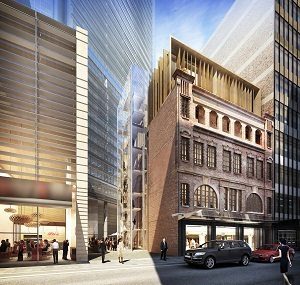
Legion House – which is heritage listed because of its connection to the YWCA and its role as a women’s refuge for more than 60 years – is being redeveloped as part of a large retail and commercial development at 161 Castlereagh Street.
It will have two stories added – and will house the NSW headquarters of Grocon – as well as the St James Ethics Centre on a pro-bono basis.
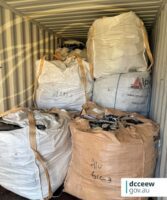
It plans to source the paper from Freehills, which will occupy several floors of the neighbouring 50-storey office tower. Using technology similar to that adopted in fuel-starved European countries in WWII, the shredded paper will be compacted into paper briquettes, fed into a biomass gasifier to produce syngas for a cogeneration plant, supported by batteries, which will supply electricity and heating to the building. Any excess power will be fed into the neighbouring office tower.
Grocon, which hosted a couple of dozen mostly foreign media on a site visit yesterday, extolling the ability to be able to respond to the carbon price with clever and efficiency ideas, says the development will set a new benchmark for heritage refurbishment and will become one of the most sustainable buildings in the world.
In common terminology, the building is carbon neutral, but under new definitions it becomes an “autonomous zero carbon life cycle building” that refers to a building that is disconnected from the grid and uses renewable energy to offset carbon emissions from its operations and the embodied energy over the life cycle of the building.
Air conditioning will be supply using chilled beam technology, using 100 per cent fresh outside air, and its water needs met through rain captured on the roof.
The technologies are similar to that used in Grocon’s zero carbon Pixel development in Melbourne, but the first time it’s applied them to a renovation.
Stephen Nicol, Grocon’s project manager, says having achieved this for a 2,000 square metre development, the aim is now to look at 5,000sq m and then 10,000sq m developments.