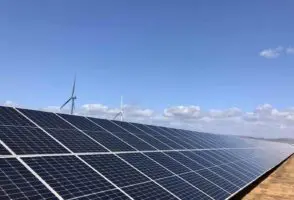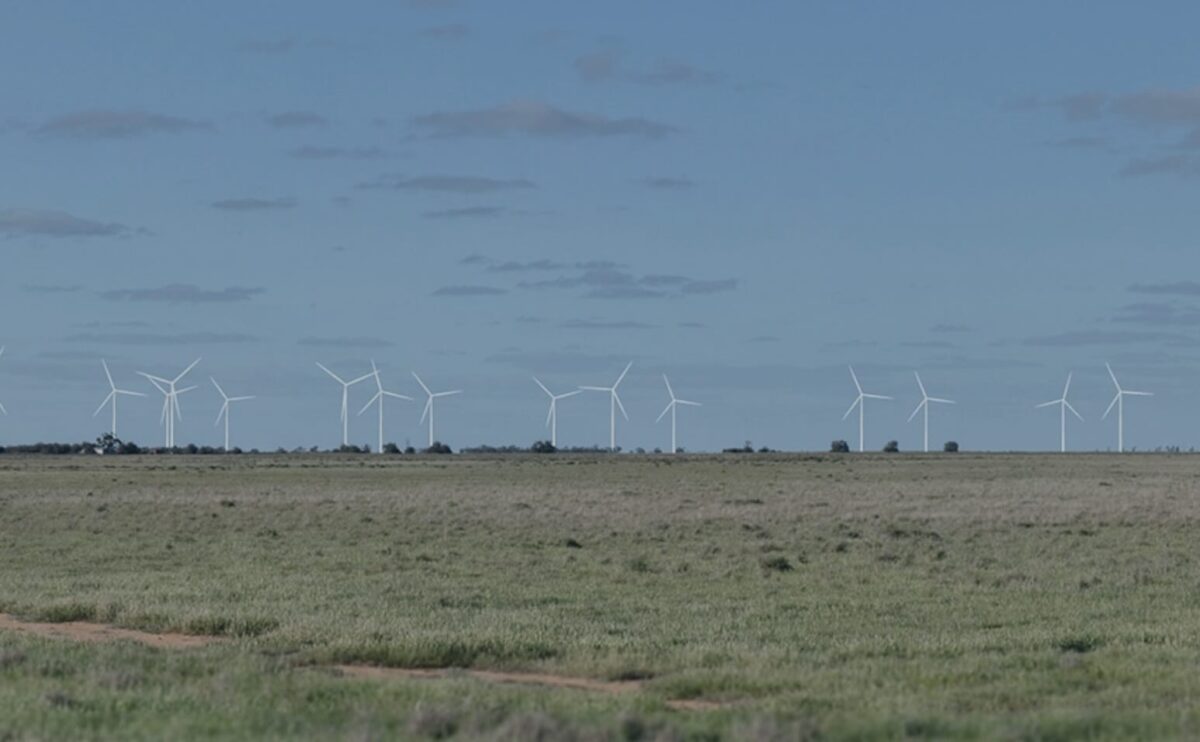
Navigating a wind farm proposal through the New South Wales state planning approvals process can take years and add up to $100 million to the cost of a project, a new survey has found.
The survey of 67 representatives from nearly 40 clean energy developers and financiers was conducted by legal firm Herbert Smith Freehills Kramer (HSF Kramer) as part of research into the NSW state significant development (SSD) process – the primary approval pathway for major clean energy projects in the state.
HSF Kramer says that two-thirds (67%) of survey participants identified assessment under the SSD planning framework as a greater source of delay than the federal process of assessment under the Environment Protection and Biodiversity Conservation (EPBC) Act.
“State significant wind and solar energy projects can take up to 12 months on average to prepare and lodge a scoping report with the NSW Department of Planning, Housing and Infrastructure (DPHI) to commence the formal assessment process,” the report says.
“And, in the last five years, average approval timeframes in NSW add another 1,167 days for wind and 993 days for solar with battery energy storage systems (BESS).”
But it is the eye-watering potential costs of the NSW SSD process that deliver the biggest sting – and come in much higher than for most clean energy projects in other states and territories.
And on this count, it is wind projects that are fielding the highest bills.
According to the survey findings, onshore wind energy projects, including those with a BESS, are paying up to $25 million for obtaining SSD consent in NSW, with some projects reaching up to $100 million, HSF Kramer says here.
The extended delays, and associated added costs, often come down to projects being referred to the state’s Independent Planning Commission, an extra step that is triggered when a project attracts more than 50 public submissions objecting to the proposal.

Image: HSF Kramer
Renew Economy regularly writes about wind, solar and battery projects that have been referred to the IPC, often sent there by objections from parties that live more than 100km from the proposed development, or even outside of NSW.
The AGL Energy-Someva Renewables Pottinger wind and battery project, for example, was referred to the IPC because it received 83 objections, 77 of which came from people living more than 50 kms away, as well as interstate. There were nine submissions from locals, and all supported the project.
The IPC gave its approval to that project, with conditions, in August, clearing it for 831 MW of wind capacity, and a 400 MW, 1600 MWh battery in the NSW south-west renewable energy zone, south of Hay.
HSF Kramer senior environment, planning and communities’ partner, Peter Briggs, says the time taken to prepare an environment impact statement or submit a development application, as well as independent assessment by the IPC and court appeals, are the common causes of delay.
“The NSW government recently introduced a new Planning Systems Reforms bill to address some of these challenges and streamline application and assessment processes … However, our survey suggests more can be done to support faster delivery of critical clean energy projects,” he said.
Briggs says broader use of a dedicated fast-track approval pathway and raising the threshold for independent review are among the top opportunities cited to reduce approval timeframes and cut costs.

Image: HSF Kramer
“Anecdotal feedback suggests it is too easy to trigger an independent review via 50 individual public objections from anywhere in Australia or council objection, which adds months to the approval process,” he said.
“To help reduce the number of projects referred to the IPC and speed up approvals, industry has suggested raising the public objections threshold, limiting local council objections and assessing the relevance and locality of a submission before the IPC can get involved.”
Certainly, some reforms appear to be needed, with the survey also finding that almost 90 per cent of respondent do not believe the state will meet its targets of 16 gigawatts of new renewable generation capacity by 2030 and 42 gigawatt-hours of long duration storage by 2034.
“With almost 90% of respondents highly valuing certainty and speed when choosing where to invest or deliver clean energy projects, NSW has strong incentive to consider further reforms to support investment and its energy transition goals,” Briggs said.