New constraints have been imposed on large scale wind farms in the north-west Victoria as a result of efforts by the Australian Energy Market Operator to limit the size of potential “contingencies” on the grid.
AEMO currently seeks to limit a single contingency size to 600 MW, so it can make sure it has the resource at its disposal should a large coal unit or a transmission line trip.
A new assessment has discovered that the total output of renewable projects that form part of a 220 kV Generator Fast Trip Scheme amounts to up to 1,000 MW – more than it is comfortable dealing with in the event of a trip.
As a result, AEMO has imposed a new constraint – imposed from Tuesday this week – that limits the combined output of these generators – located on a troubled part of the grid known as the “rhombus of regret” to 750 MW.
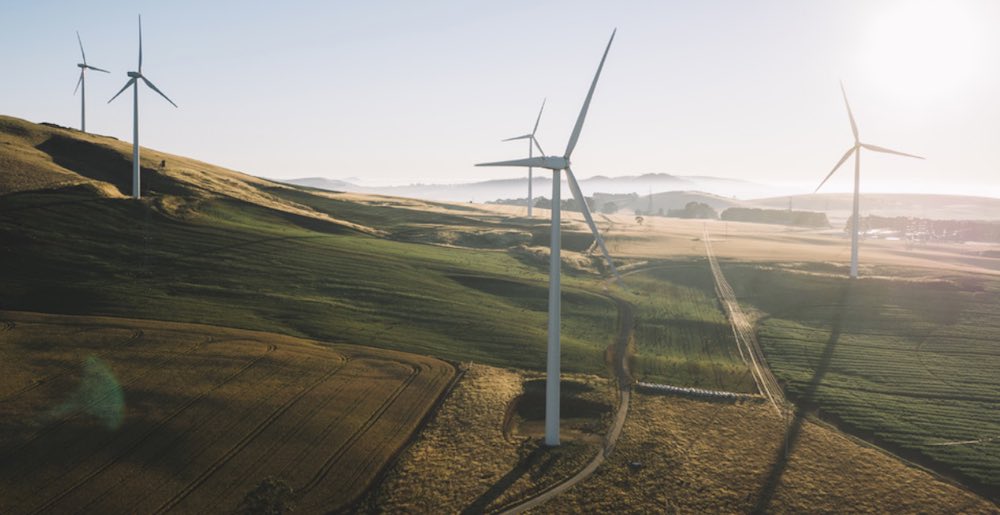
Those affected are further along the 220 kV transmission line from the Waubra wind farm. The identities have not been publicly revealed but are believed to include the Crowlands, Ararat, Bulgana and Murra Warra wind farms.
AEMO says the potential constraints were agreed as part of the connection agreements for the affected projects, but says it will be temporary and will be relaxed once the new Western Renewables Link transmission line is completed.
The new constraint equation will limit the total generation output for generators associated with the GFT1 scheme (and inherent tripping of Waubra WF) to a limit of 750MW.
AEMO says the restrictions on output are likely to be limited as these wind are generally more impacted by other constraints (presumably mostly economic ones caused by negative wholesale prices), meaning that total output of the affected generators is normally below the limit, even under high wind conditions.