As Forrest Gump says, “I may not be a smart man, but…”
Why is one of the most energy-rich countries in the world still exposed to global fuel markets?
Australians should have the cheapest, most abundant and most reliable energy in the world. And yet our energy consumers are about to cop another massive price hike.
Every time conflict breaks out somewhere in the world, energy markets react almost immediately. Prices go crazy, supply chains tighten and governments start talking about energy security again. We have seen this pattern over and over in the past two decades, and the underlying problem has not really changed. The Australian economy, like most modern economies, still relies too heavily on fuels traded on global markets and controlled by a relatively small number of suppliers.
Australia likes to think of itself as an energy superpower, but large parts of our economy are exposed to this risk. Oil and diesel power most of our transport and farming and, in some places, electricity generation. Gas is still a major input into electricity generation and industrial processes. When those markets move because of events overseas, the effects flow straight through to businesses and households at home. Not just through electricity prices, but in food, goods and simply getting to and from school and work.
The usual response is to ask how we secure more supply. Should we drill more gas, build more terminals or subsidise certain industries? Those debates miss the point. The core problem is not how we secure access to fossil fuels. The real question is why so much of the Australian economy is still structured around fuels traded on global markets.
Australia’s diesel problem
What often gets lost in the broader discussion is how much of the economy still runs on diesel. Freight transport, mining equipment, construction machinery, farm machinery and irrigation all run on it. Remote communities and industrial sites across Australia and the Pacific frequently generate electricity using diesel generators because, until the last decade, there was no viable alternative.
The problem is that diesel is not only polluting, expensive and noisy. It is also a significant national security risk.
Spreading the risk
According to official figures, Australia maintains what is supposed to be about 34 days of diesel, 36 days of petrol and 32 days of jet fuel onshore. On paper that sounds fine, but those figures assume supply chains keep moving normally and that people behave normally.
Anyone who lived through the COVID toilet paper panic will realise that human behaviour is not always rational. Once businesses and motorists start filling tanks early or stockpiling fuel, that buffer shrinks quickly. Realistically, the bowsers would not last two weeks.
Electrification: a different way forward
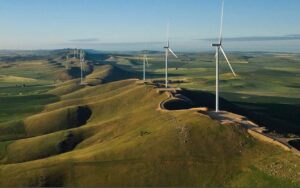
Electricity is fundamentally more flexible than fossil fuels because it can be generated domestically, in many different ways, at both small and large scales, and often close to where it is used. In Australia that increasingly means solar and wind backed by storage and other forms of generation connected to the grid. Once that infrastructure is built, the system is far less exposed to the price swings and supply disruptions that affect globally traded fuels.
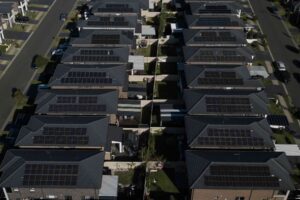
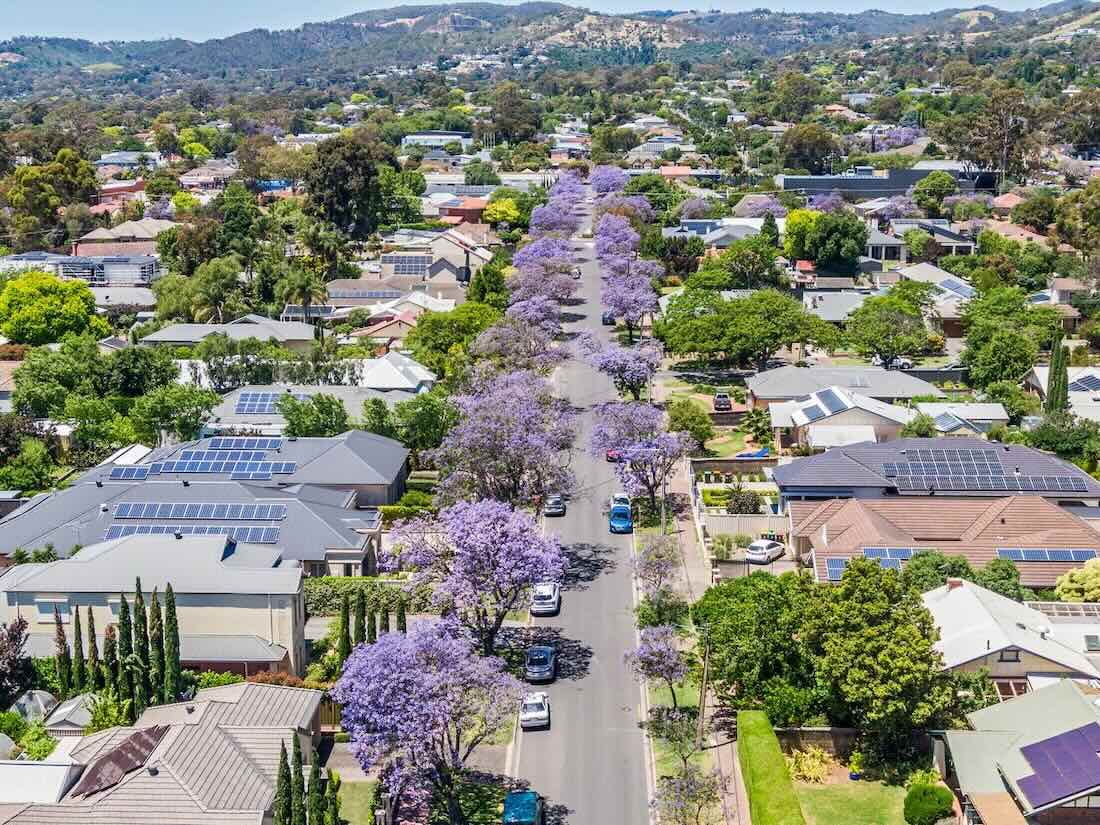
You can already see the beginnings of this shift in the growth of rooftop solar. Around forty per cent of Australian homes now produce some of their own electricity. That didn’t happen because households suddenly became energy policy experts. It happened because people realised that producing energy on their own roof gives them cheaper energy. Businesses are starting to reach the same conclusion, although more slowly than we might like.
Renewable electrification significantly changes that exposure because electricity does not rely on a single fuel source. An electric truck can run on power produced from solar or wind connected to the grid. An electrified factory can run on electricity generated domestically rather than gas priced on international markets. A building heated with electric systems instead of gas is far less sensitive to disruptions in fuel supply.
None of this means the electricity system is perfect or risk free. But electrification shifts the balance of risk in a direction that makes far more sense for a country like Australia. Instead of relying on imported fuels controlled by global markets, the system increasingly relies on energy produced domestically from many different sources.
Electrification is often framed purely as an emissions issue, and turning it into a political football because of carbon targets misses the point. Where electrification really matters is in protecting Australia, increasing our independence and strengthening our security.
The faster we electrify transport, industry and buildings, the more we shift our energy system toward resources that exist here at home. That’s the smart step Australia should be taking toward a more resilient economy and a country far less vulnerable to global shocks.
Huon Hoogesteger is the CEO of Smart Commercial Energy