
It’a highly technical discussion, and like everything about the electricity grid it is littered with acronyms. But behind the scenes policy makers and regulators are working on a project that could be transformational for Australia’s electricity market, particularly households and other consumers.
It’s being hailed by some as potentially the most significant regulatory change since the creation of Australia’s National Electricity Market more than two decades ago, and an acknowledgement that technologies and consumer choices have changed so fundamentally that things can no longer stay the same.
But first, for some context, some stunning statistics about the role of rooftop solar and household battery storage in Australia’s main electricity grids.
In some states, particularly South Australia, rooftop solar is already producing enough – at times – to meet all of the state’s electricity demand.
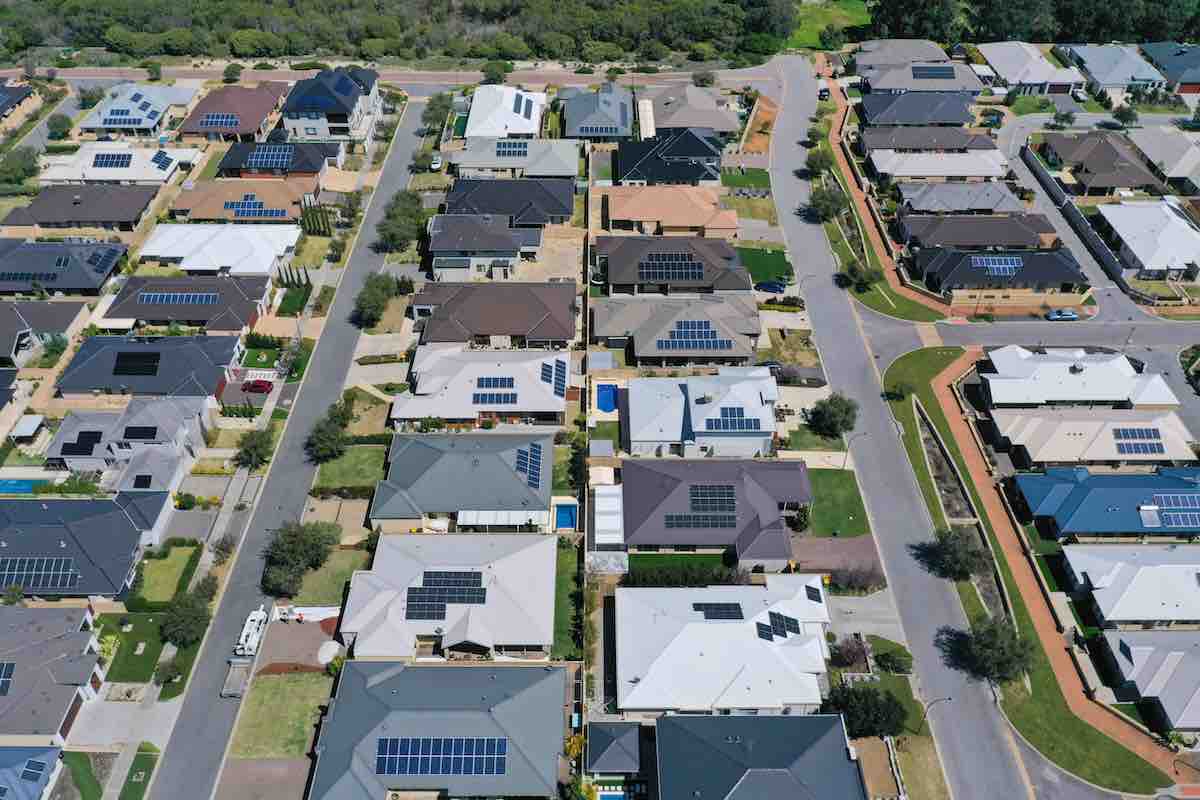
Already, across the country, there are more than 4 million households with rooftop solar, three times more than those with swimming pools, and this number is expected to double in coming decades – to the point where rooftop solar accounts for nearly half of total generation.
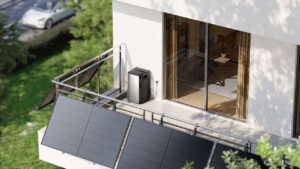
Household battery storage is also expected to boom, fuelled by the new federal rebate program. By 2040, there could be 11 million electric vehicles on the road, and plugged in to the grid, charging and potentially discharging. Around 15 GW of storage capacity will be owned by consumers – more than 7 times the nameplate capacity of Snowy 2.0.
It will signify, in market and physical terms, a complete reworking of the grid from a centralised system of generators sending out power to passive consumers, to a system where consumers have the ability to control their own power, and to a large extent the future of those centralised generators and long standing utility business models.
But who is responsible for managing and controlling this emerging giant known collectively as consumer energy resources (CER), or as some prefer to call it, distributed energy resources (DER)?
Well, no one really. The Australian Energy Market Operator has tried to manage it, or stop it doing damage to the existing grid operations, but at very low levels. No single body, however, has oversight. Australia might lead the world in the uptake of consumer energy resources, but it trails many countries in how they are managed.
Now that is about to change. Maybe. Instead of the knee-jerk response of “build more network”, two landmark work programs are looking at how these resources can be managed, and what a distributed system operator (DSO) and a distributed market operator (DMO) might look like.
The first, a consultation prepared with and for the federal government by the Australian Energy Market Commission has been published and sets the scene with a host of possible options. A second is due to land soon that has been prepared for the CSIRO and AEMO.
The AEMC paper notes that distributed energy resources are not just here in ever growing numbers, they also present significant existing and potential benefits, particularly with new enabling communication and data-rich technologies.
These benefits include boosting grid resilience, avoiding network investments, lowering wholesale prices, and providing system support. Properly harnessed, they can deliver tens or even hundreds of billions of dollars in savings. Left to their own devices, they are potentially a costly headache to network owners and grid operators.
The main issue, the paper notes, is around visibility and predictability, and ultimately manageability.
“The current visibility of CER activity on the network is low,” the paper notes. “The current ability to holistically coordinate the operation of CER is limited and piecemeal. New mechanisms are required to orchestrate CER in a manner that is informed by both whole-of-system and locational Distribution system and market operations.”
Mark Paterson, from Energy Catalyst, an advisory firm that has been working on the soon to released CSIRO document, says the industry has been thinking about this issue for around a decade, but has struggled to get traction.
“The Commonwealth process provides an opportunity to rethink how the system works in a world of millions of CER,” Paterson says. “We need new institutional and technological capability to keep this in flight.”
That’s largely because any solutions became muddied in turf wars, and the fact that network operators – as transporters of electricity – have been motivated by market rules and regulations to build bigger networks and earn more money, rather than making them more efficient
Paterson says the role of a DSO, or DMO, would be to work alongside these distributed networks with the goal of managing the distributed system and its now two-way flows, and how these consumer owned assets operate within the wider power system.
It’s role would not be to build new assets, but to be legally responsible to help optimise the system, using all of these millions of resources that customers have invested in, as well as the network assets, and to get the best outcomes for all.
How that looks is yet to be settled. Paterson likes what he sees in the UK, which he describes at 10 years ahead of Australia.
The most recent performance report from the DSO in the UK points to a huge number of benefits, particularly in the areas of new connections, flexibility, data, customer satisfaction and lowering bills.
“Networks’ asset value grows as they build more network, creating the risk of conflicts of interest when deciding the best way to deliver capacity,” the report says.
“We set the first legal separate DSO to provide confidence that investment decisions are truly made in the best interest of current future bill-paying customers.
“We have broken from traditional network thinking, using the latest data and technology to provide better solutions to customers.
Paterson says Australia has reached the point where this is becoming critical. “We’re at a point where physics are forcing their way into the discussions, because if we don’t do this, it becomes increasingly difficult to manage the system securely and efficiently.”