Victoria may or may not reach its renewable energy targets of 60 per cent by 2030 and 95 per cent by 2035, but it probably won’t be due to lack of production. It might come down to whether the wind and solar can blow and shine at the right time, or if enough excess can be stored.
On Sunday, the inevitable imperfections of the transition process were underlined again as energy abundance in the state translated into new levels of curtailment – a record 4,861 megawatts of large scale wind and solar, or more than 91 per cent of grid demand at the time.
The records fell around 3pm in the afternoon (grid time, which is AEST). Wind curtailment alone hit a record 3,942 MW at 2.50pm AEST, beating its previous peak set in early October by more than 100 MW, according to GPE NEMLog,
A year ago, the curtailment record sat at just 3,076 MW, says Geoff Eldridge, one of the chief analysts at GPE NEMlog.
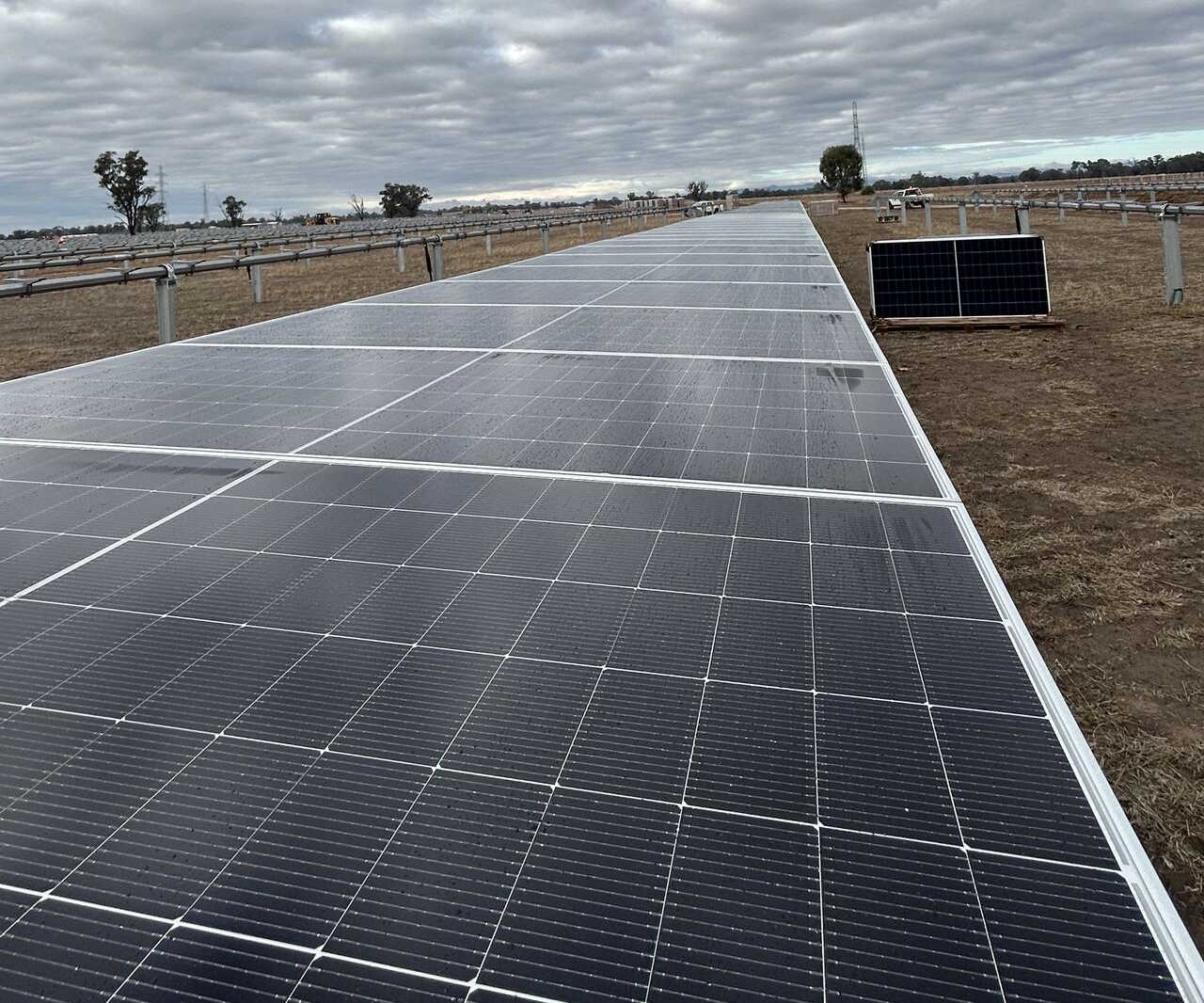
The reason for these new records is that Victoria has a lot of new capacity – the first stage of the country’s biggest wind farm at Golden Plains (756 MW) which is now fully commissioned, and also several new solar farms such as Goorambat east and Mokoan.
It also has a bunch of new big battery projects in construction and commissioning, and recently commissioned the Melbourne Renewable Energy Hun which at 600 MW and 1,600 MWh is the biggest in the state.
But it’s still not enough. And rooftop solar is also growing, and was contributing more than half of the state’s electricity demand at the height of the curtailment activities.
As a side note, wind and solar hit record production levels in NSW, hitting 5,417 MW on Sunday at 3.30pm.
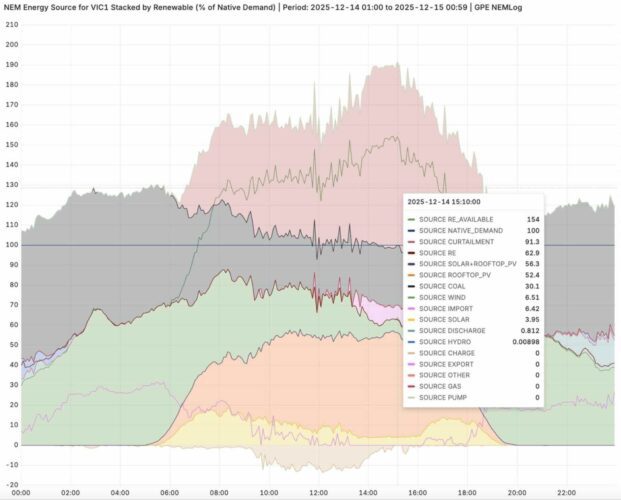
Eldridge says renewable “availability” in Victoria rises well beyond demand levels through the middle of the day, while delivered renewable output plateaus as curtailment (show in pink at the top of the chart above) expands rapidly.
“Abundance defined the day …. even though only part could be absorbed,” he wrote on LinkedIn. “Curtailment, not scarcity, constrained outcomes.
He also noted that coal – the state has three remaining brown coal generators – was displaced in net terms. “Coal net of VRE curtailment pushed to a new low, reflecting renewable oversupply relative to demand,” he wrote.
Despite all this, Victoria remained a net importer even during peak curtailment, and despite holding the lowest regional price in the NEM for much of the day. Imports were drawn from NSW and Tasmania, while Victoria continued to export to SA.
“Vic’s experience on Sunday highlights a broader seasonal pattern now emerging across the NEM: growing renewable availability, recurring curtailment, and a rising reliance on storage, flexible demand and network capability to turn abundance into delivered energy,” Eldridge says.
If you would like to join more than 28,000 others and get the latest clean energy news delivered straight to your inbox, for free, please click here to subscribe to our free daily newsletter.