Australian unions and industry groups are reportedly supporting new plans that may include the creation of a new investment vehicle to support wind, solar and battery storage to power the country’s struggling smelters.
Proposals have been put forward by the likes of former Clean Energy Finance Corp CEO Oliver Yates and the advocacy group, The Sunrise Project, including for structure known as a “scheme financial vehicle” that would support renewables and storage.
According to Yates, writing in the AFR last month, such vehicles could offer lower cost finance and co-ordinate the construction of the wind, solar and battery storage needed to power the smelters, such as Tomago in the Hunter Valley.
Yates argued that creating SPVs would not amount to a handout, because the lower cost financing could be repaid.
“An SFV would allow the government to contract for clean energy directly using power purchase agreements and on-sell it at a stable price to the smelter,” Yates wrote.
“With government credit support and concessional debt from special investment vehicles like the CEFC and the National Reconstruction Fund, we can significantly cut the cost of capital for developers, triggering the rapid build-out of around 3 GW of renewables and storage.
“A contract of that nature is not a handout. It’s a smart, repayable contract. Under a Tomago SFV model, the public can share in aluminium price upside and battery trading revenues. If done well we can recoup our investment and some.”
According to the AFR, the idea was presented to meetings hosted by industry minister Tim Ayres last week, and has the support – at least in principle – of unions such as the ETU and AWU, and industry groups.
Some smelter owners have already gotten on with job of replacing coal with wind, solar and storage. Rio Tinto has written multiple contracts – each the largest of their type – for new wind, solar and solar and battery hybrid projects to help power its Gladstone aluminium smelters and refineries.
It has flagged the early closure of the Gladstone coal fired power station in 2029, arguing that the smelters and refineries have no future if forced to rely on coal and fossil fuels.
Its early closure was pointedly announced just a week before the Queensland state LNP government announced a new “energy roadmap” that seeks to stop new wind and solar projects – with the exception of the Rio Tinto contracted ones – and keep its state owned coal generators running for as long as possible.
In South Australia, BHP has turned to two landmark contracts with Neoen to supply a mixture of wind and battery storage to help power its giant Olympic Dam mine and refinery in South Australia, and nearby infrastructure.
But other smelters are struggling. State and federal governments have already been forced to bail out Encore’s smelter in Mount Isa, which is largely dependent on gas thanks to a decision influenced by Glencore more than a decade ago to ignore the potential of wind and solar.
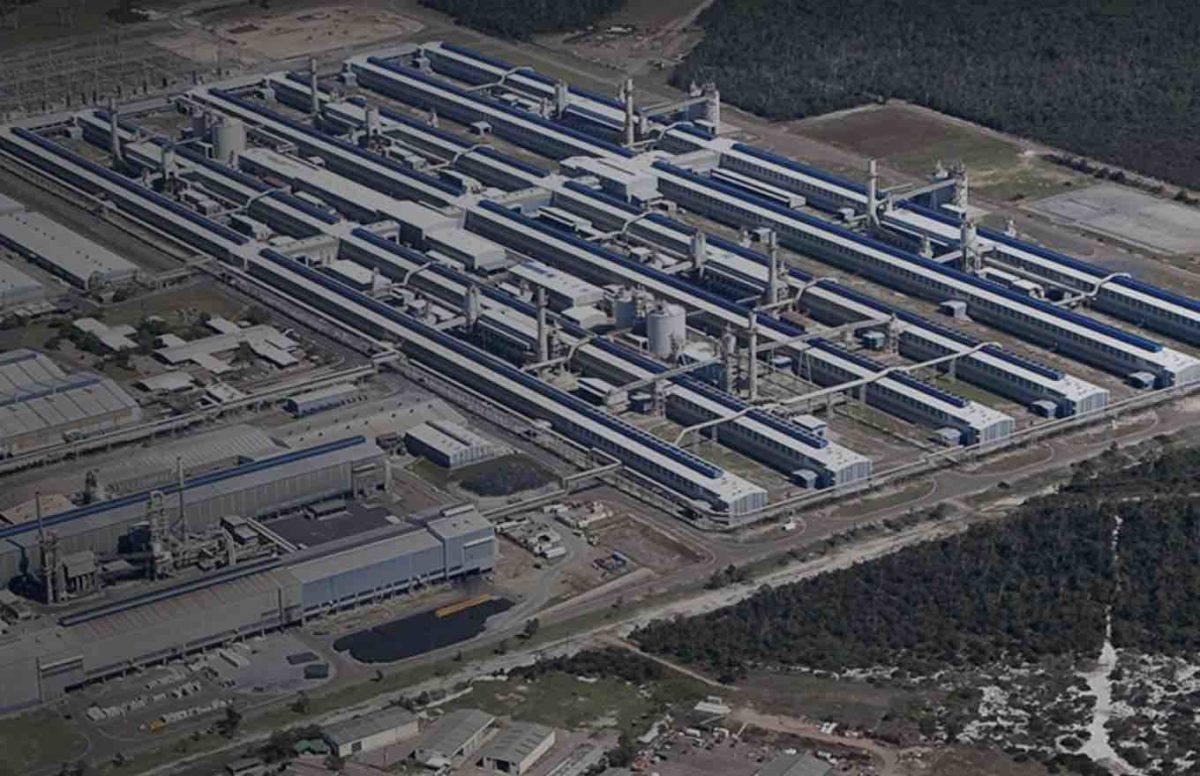
The Tomago smelter, partly owned by Rio Tinto, employs more than 1,000 people, is the biggest electricity consumer in NSW, and has treated to close as early as 2028 because of high electricity costs. It is currently largely dependent on coal, as is the Portland smelter in Victoria.
According to the AFR, a briefing to federal and state ministers from The Sunrise Project suggested about $14 billion of new renewable energy would be needed to decarbonise Tomago by 2035, and that taxpayer backing would reduce the cost of financing those projects by 3 to 4 per cent.
The group said creating the taxpayer backed entity would “trigger the rapid construction” of a two gigawatt four-hour “Big Tomago” battery and about three gigawatts of renewables. AGL, the current supplier to Tomago, has already committed to a 500 MW, 2000 MWh battery near the site.
The Sunrise Project briefing says reaching 85 per cent renewables would deliver a price of around $A75/MWh under such a scheme, up to $55/MWh cheaper than the energy costs they are current facing.
The issue is important because the political debate around energy has been based around the false idea that fossil fuels are the only solution for big industry, and that renewables and storage cannot provide low cost reliable power.
The reality is that big industry knows this to be false. And industrial giants such as Fortescue have set ambitious targets to reach “real zero” by 2030 at its energy intensive mining operations in the Pilbara, meaning it will have to replace nearly a billion litres of diesel consumption a year with renewables, storage and electrification.
ETU national secretary Michael Wright said he supported the idea for the smelters. “This is where governments have to go. Cheap, reliable electricity is the best hope for our industrial future,” he was quoted as saying by the AFR.
AWU assistant national secretary of the AWU Chris Donovan agreed, telling the publication: “For aluminium smelters that need bulk electricity, that means deploying gigawatts of new generation as quickly and cheaply as we can.”
Renew Economy has reached out to all parties for comment.
If you would like to join more than 26,000 others and get the latest clean energy news delivered straight to your inbox, for free, please click here to subscribe to our free daily newsletter.