The Narrabri shire council has comprehensively rejected what is describes as a “manifestly inadequate” shared benefits offer from a solar project proposed by coal miner Whitehaven Coal.
The thermal coal miner, which runs one of Australia’s dirtiest mining projects, is planning a 26 megawatt (MW) solar farm to power the Narrabri underground thermal coal mine in New South Wales (NSW).
But Whitehaven’s lowball shared benefits proposal – just $50,000 – was sent back to the drawing board last month, with one councillor calling it “manifestly inadequate” and a staffer dubbing it “undercooked”.
The NSW shared benefit guidelines suggest a rate of $850 per megawatt per year, which for the Whitehaven project comes to $22,100 annually or a total of $552,500 over the life of the project.
Whitehaven is trying to convince the council the solar project is an addition to the coal mine, which it says provides greater benefits than the mere $22,100 a year provided by a small solar farm.
“Whitehaven believes it provides significantly more community benefits to the Narrabri LGA than required under the guideline,” the miner said in a letter to council.
“Recent highlights include $370,000 to community causes and projects in the 2023 financial year, and $327,000 in the 2024 financial year.”

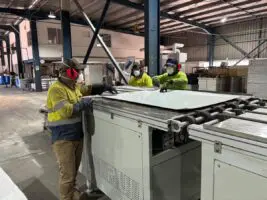
Whitehaven’s proposed solar project. Image: Whitehaven Coal
But the council wasn’t impressed with that excuse, saying the NSW government had been very clear about its expectations for renewable energy benefits and that the solar addition shouldn’t be considered part of the mine’s social licence activities.
“Whilst Council both recognise and appreciate the current funding opportunities offered by Whitehaven to the community, it can be considered that this is available as a result of Whitehaven’s existing mining operations within the shire and this project should be considered separately and in addition to what is already on offer,” council business papers said.
Furthermore, the mine is permitted until 2044 and Whitehaven has a stated goal of selling the $56.5 million behind-the-meter solar farm or decommissioning it at an earlier stage.
“Staff are of the view that the VPA [voluntary planning agreement] as presented is quite undercooked,” Narrabri planning director Donna Ausling told the councillors, saying Whitehaven needed to refer back to the state’s shared benefits guidelines for solar.
Councilor Jocellin Jansson commended the council staff for rejecting the initial offer and pursuing a better deal.
“The proposal from Whitehaven is manifestly insignificant as compared to the guidelines, and as compared to what other communities have been able to derive from VPAs,” she said, just before the council voted unanimously to reject the deal.
The NSW shared benefit guidelines caused a small amount of angst last year among developers, who were concerned the vague language either set a cap on benefits payments or a minimum, rather than a suggested value for both councils and developers to abide by.
But the guidelines are new this year, voluntary and being applied very inconsistently, Renew Economy understands.
Some councils are preferring benefits of a lower value when developers are showing they’re doing the work to properly target them, while others are setting their own shared benefits values and schemes.
And in some cases — but not all — the state government is directly telling developers it expects them to follow the guidelines.