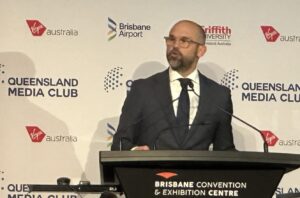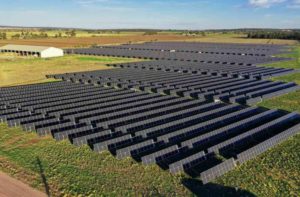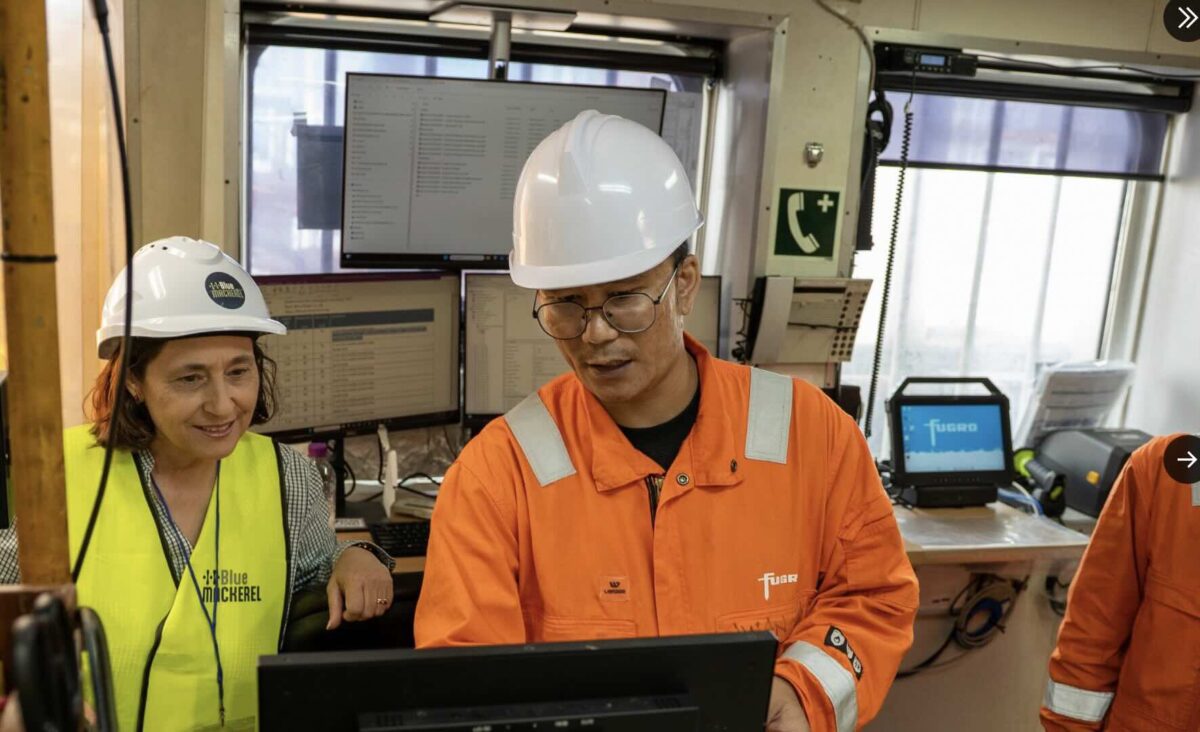
Victorian energy minister Lily D’Ambrosio says the state’s proposed transmission links will be built, and its ageing coal generators will be closed on time, as she insists that the state’s ambitious target to reach 95 per cent renewables in 10 years’ time remains on track.
In a wide-ranging interview with Renew Economy’s weekly Energy Insiders podcast, D’Ambrosio also says the design of the state’s renewable energy zones are not yet cast in stone, defends the push for offshore wind, and also hails the new electrification laws as nation leading.
The biggest political noise, however, comes around the state’s plan for transmission lines, the phasing out of gas in new homes, and the planned closure of its last three remaining power stations. D’Ambrosio says most of this noise comes from those with vested interests in the status quo.
“Look, there’s a lot of vested interests that don’t want change, because they’ve got a business model in terms of the energy industry, which is about the status quo,” D’Ambrosio says.
“But can I just be really clear here? Really clear. We are absolutely committed as a government, and I’ve personally been committed now, because I’ve been the energy minister in Victoria for more than 10 years … we know that as our ageing generators are getting older and less reliable, we can’t just let let things happen in a way that means that we’re going to end up having not enough electricity supplies.
“So we were really clear, and we need it (energy) to be clean, and we need it to be the most cost effective new energy coming in now, guess what? Renewables ticks all those boxes. So that is one of the reasons why we set about having ambitious but doable renewable energy targets.
“We’ve met every single target. In 2020, we met our 25% target. We are effectively meeting our 40% renewables energy target in 2025 and our target for 65% by 2030 is absolutely doable. That’s why we set the targets as we do, 95% definitely by 2035 that is absolutely achievable.
“We won’t be relying on any coal generators by then. The generators themselves have got exit plans, and this is about making sure that we manage this in a way that the market understands where it’s going.
“That’s why I’ve got structured transitional arrangements with both EnergyAustralia for Yallourn, and AGL for Loy Yang A, because telling the market that these plants won’t be there by certain dates means that the market steps in and builds knowing that they’re going to have people wanting to buy their electricity.”
D’Ambrosio says it is clear that transmission projects have been delayed, both in Victoria, for its proposed new links to NSW, and around the country.
“But that’s manageable, the market operator has been really clear that that will not affect Victoria’s reliability, it won’t affect our ability to be able to achieve those targets.
“There’s been a lot of work on consultation, absolutely. But at the end of the day, they’ve got to be built. They’ve got to be built, and they will be built.
“They will be built in a timely fashion, in a way that ensures that the proponents of new projects that need to be built can have confidence that, by the time they finish building their projects, they’ll have somewhere to connect to and start getting revenue for their investment dollar.”
D’Ambrosio said the state is working on “a few things” to accelerate the process. “On the transmission side, I don’t have anything to tell you right now, but I will soon.”
She also insisted the the recent transmission plan released by VicGrid, is a draft and able to be changed. This is in response to the feedback from some clean energy lobby groups which have voiced concern that the proposed renewable energy zones are too small.
Victoria is accused by some of putting too much faith in offshore wind, possibly as a result of the difficulties getting support for onshore renewable projects. But D’Ambrosio says that offshore wind is important for the diversity of resources and, even with those projects, some 17 GW of onshore wind and solar projects and storage capacity still needs to be built.
On electrification, D’Ambrosio says Victoria has led the country in its decision to ban gas appliances in new homes, require rental property owners to electrify when existing appliances expire, and to require owner occupied homes to go electric when their gas hot water systems need replacing.
She says it is clear that – because of the rising cost of gas, and the fact that Victoria has the biggest pro-rate consumption of gas because the commodity once was cheap – industrial customers are also looking for help to reduce their dependence on gas.
“We’ve got businesses saying, how do we electrify? Help us work that through. It’s about communicating that and working with them. There’s no easy, simple way to do this, other than sitting down, talking to people and getting a degree of comfort around that, because that’s how you get your outcomes done.”
You can find the full interview with D’Ambrosio in the latest episode of the Energy Insiders podcast here.
See also: Energy Insiders Podcast: Lily D’Ambrosio and the fight against vested interests