Three new big battery storage units have joined Australia’s main grid in the last week, reflecting the rapid rollout of new dispatchable capacity as the output of variable renewable sources such as wind and solar hit new peaks.
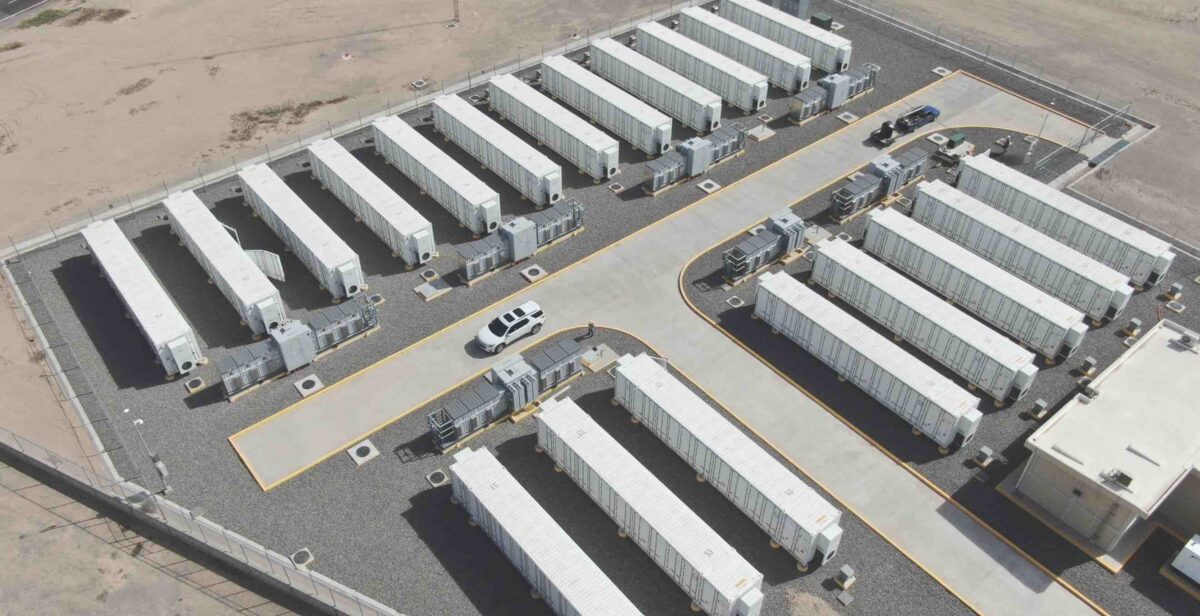
Last week, the Ulinda Park battery, near Millmerran in Queensland, joined the grid, entering the Australian Energy Market Operator’s management systems and starting on its journey through the commissioning process.
Ulinda Park is the second big battery project in Australia – and likely to be the last – to be supplied by the now collapsed US-based Powin, which appears to have become the victim of the uncertainty created by Donald Trump’s tariff gyrations, and has filed for bankruptcy protection.
Many of its key staff have been snapped up by Ulinda Park owner Akaysha Energy, which also owns the other project supplied by Powin, the 850 MW, 1680 MWh Waratah Super Battery in NSW, which is now well advanced in its commissioning process. Ulinda Park is sized at 150 MW and 300 MWh, but may be expanded in the future.
Two other battery units also joined AEMO’s grid management system this week, both at the giant Melbourne Renewable Energy Hub, on the outskirts of the city.
Geoff Eldridge, from GPE NEMLog, notes that the first two units of the MREH, each sized at about 200 MW and 567 MWh, are now ready for commissioning and testing.
They are part of the 600 MW, and 1600 MWh first stage of the giant project, which is being jointly developed by Equis and the newly created, or reformed, State Energy Corporation.
The government-owned SEC is expected to play a key role in financing and investing in wind, solar and storage needed to get the state to its legislated target of 95 per cent renewables by 2035, by which time the last of its ageing brown coal generators will have retired.
The need for more storage is underlined by the growing share of renewables, with wind and solar output setting a new peak of 12,662.5 MW on Wednesday, at 9.15am, just days after setting a new peak of 12,563 MW at 10.30am on Monday.
Wind alone has been setting a series of new records in recent days, with a new maximum share of 42 per cent of the main grid reached at 4.35am on Tuesday, and a new record output of 9,491MW for the NEM as a whole at 10.35pm on Monday.
Wind output has hit new peaks in individual states as well over recent days, including in Victoria (4,418 MW), NSW (2,405 MW), and Queensland (1,167 MW), according to GPE NEMLog.
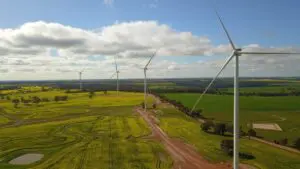
Many of these records reflect new projects working through their commissioning phase, including the country’s two biggest at Golden Plains (Victoria) and MacIntyre (Queensland).
Battery storage is also setting new charging and discharging records across individual states and the NEM as a whole as a number of new projects also work through their commissioning process.