United States EV and battery giant Tesla earned more than $5 billion in revenue in Australia in calendar 2024, with sales from its battery division leaping nearly five-fold to outstrip that from electric vehicle sales for the first time over the year.
The annual report for Tesla Motors Australia for the 2024 calendar year, filed with the Australian Securities and Exchange Commission, shows that revenue jumped by one third from $3.81 billion in calendar 2023 to $5.1 billion in 2024, delivering a boost in profits from $39 million to $65 million in the latest year.
There is little commentary from the company about the performance of its Australian operations – and even the company’s head office is frugal with the details of its operations when reporting its global results.
But it is striking that in Australia, battery storage revenue – from the sale and installations of batteries, both grid scale and household, and from the operation of some of those batteries – jumped nearly five fold from $580 million in 2023 to $2.55 billion in 2024.
That was enough to overtake revenue from electric vehicle sales and leases, which actually declined over the year from $3.18 billion to $2.44 billion. A further $82 million came from services and other revenue.
It’s a remarkable turnaround, and one that CEO Elon Musk has hinted at for the company as a whole in recent years, given the growing importance of battery storage to the Australian and global grids, and the likelihood of increased competition in the EV market.
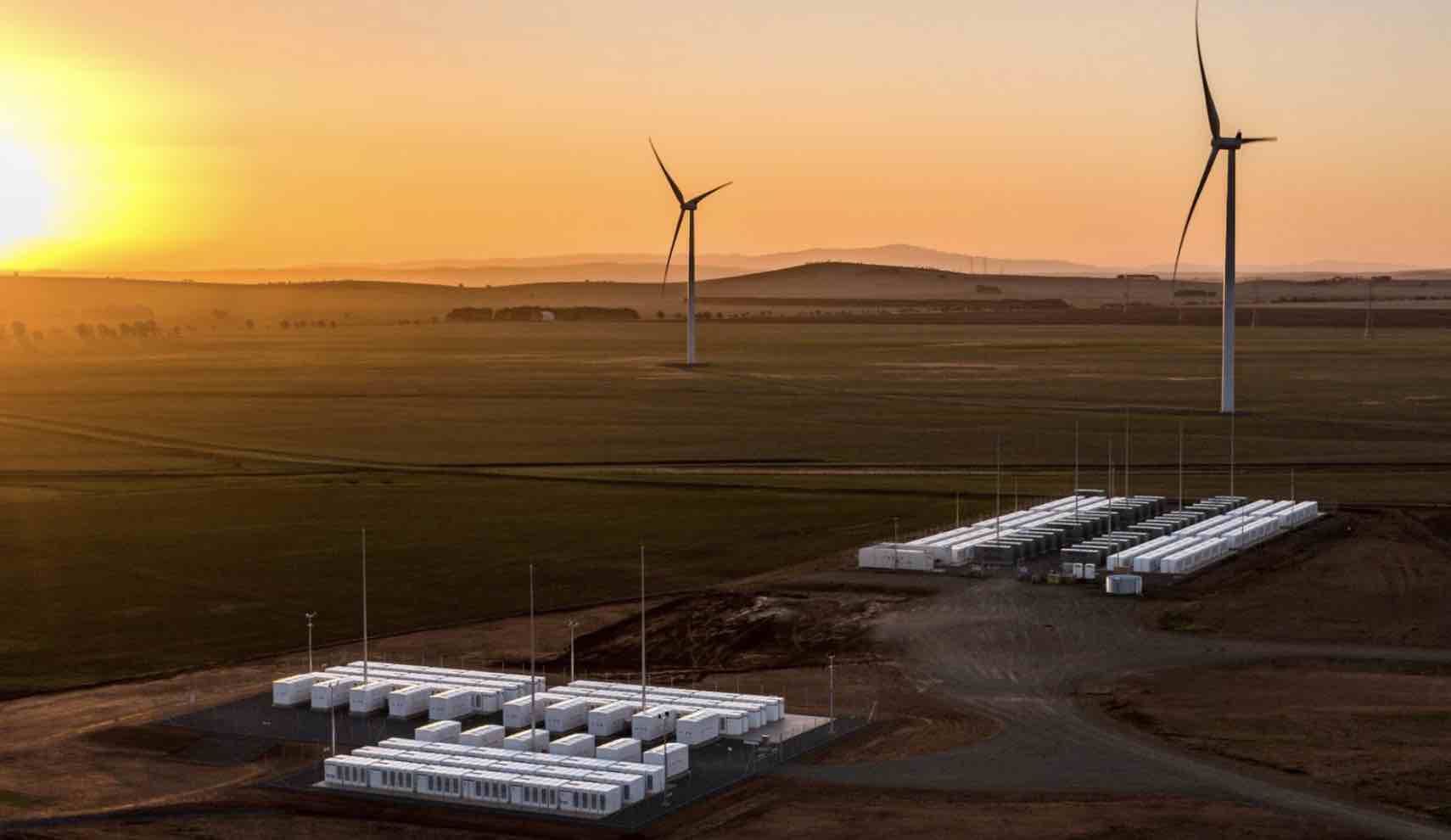
Australia is a significant market for Australia given it is where Tesla built the first “Tesla big battery” at Hornsdale in 2017, in an extraordinary response to South Australia’s blackout and a series of “billionaire tweets” between Musk, Australia’s Mike Cannon-Brookes, and eventually prime minister Malcolm Turnbull and South Australia premier Jay Weatherill.
Australia remains a leader in battery storage technology – with Tesla still at the forefront with landmark developments in grid forming battery technology – and although the likes of California and Texas have overtaken Australia in sheer scale, there is now more than 10 gigawatt hours operating and in commissioning, and more under construction.
Tesla is also earning money from its battery installations in various “revenue sharing” arrangements, such as that with the Bouldercombe battery in Queensland, which may also explain part of its boost in earnings.
EVs sales, on the other hand, have declined over the past year as Tesla’s once unshakeable dominance of the Australian EV market was challenged by new competition from China, led by the likes of BYD and MG, which in turn forced Tesla to cut prices on its best selling Model Y and Model 3 EVs.
In 2025, that situation is likely to be worsened with a substantial decline in EV sales – down 62 per cent for the year so far. It is yet to be seen how the refreshed version of the Model Y can reboot sales over the remaining 8 months of the year.
Tesla has had to retool its operations to cater for the updated Model Y, but it is clearly seeing pushback from consumers over Musk’s work with the Trump administration, and his promotion of far-right political parties and conspiracy theories.
In the home storage market, Tesla has also been relegated to fourth place with its Powerwall product, overtaken by new market leader Sigenergy, and trailing behind Sungrow and Alpha ESS.
Tesla’s utility scale storage business, however, is expected to continue to grow substantially, particularly as the scale of new battery projects continues to increase.
Its biggest contract in Australia so far, for the 560 MW, 2240 MWh Collie battery now under construction in Western Australia, has 15 times more storage capacity than the upsized Hornsdale unit. Both batteries are owned by Neoen, which has also used Tesla for its 540 MW, 1080 MWh Western Downs battery in Queensland.
The ASIC filing was devoid of commentary, but did note there were $363 million of “contract assets” relating to unbilled amounts on Engineering, Procurement and Construction projects and the Hornsdale Power Reserve, Victorian Big Battery and Western Downs market share.
Tesla says this relates to estimates and judgement around the future market energy price, seasonality and demand to arrive at a net present value of the total sales that the group is projected to receive over the remaining period of the deferred consideration.
The accounts also reveal that Tesla has signed an agreement for the sale of its South Australia virtual power plant business. The company is awaiting government approvals before the sale is complete.
Tesla also notes that a class action was filed in the Federal Court of Australia against Tesla Motors Australia, Pty Ltd and Tesla, Inc. on 21 February 2025 and an external law firm has been engaged to represent the Tesla entities.
That action, brought by legal firm Woodford and JGA Saddler, alleges that motor vehicles manufactured by Tesla, Inc. are defective and don’t deliver on the company’s promises around automation and battery range.