Home electrification and energy upgrades, including nation-leading new rules governing the thermal efficiency of rental properties, are at the centre of Victoria’s new five-year plan to cut emissions, as it strives to reach net zero by 2045.
The Allan Labor government on Thursday released its Climate Change Strategy 2026-30, the latest five-yearly pulse check on the state’s emissions reduction effort, so far, and its future pathway, as required under state climate legislation.
Victoria has cut its emissions by more than 31 per cent on 2005 levels, according to the latest data (2023), putting it two years ahead of its 2025 schedule, the state government says.
Currently, as the chart below shows, the bulk of the state’s emissions come from its remaining coal power generators, including the heavy polluting Yallourn Power Station, scheduled to close in 2028, as well as Loy Yang A and B which are slated to close in 2035 and 2032, respectively.
But the burning of fossil fuels in homes and businesses and in the commercial and industrial sector is also a major source of emissions, as is the burning petrol and diesel in vehicles used for transport.

Source: Victoria’s Climate Change Strategy 2026-30
State energy minister Lily D’Ambrosio says the 2026-30 climate strategy is expected to reduce emissions by more than three times as much as the previous five-year plan, backed by more than $8.5 billion dollars of investment announced since 2021.
Among the core new policies driving emissions reduction in the state are the recently announced Minimum Energy Efficiency Standards that will be applied to rental properties and public housing from March 2027.
For these dwellings, the new rules mean that both gas hot water systems and gas heaters must be replaced with efficient electric alternatives at end of life – a move that is expected to save rental households up to $215 a year on heating, and up to $220 a year for hot water.
On the energy efficiency front, minimum R5.0 rating ceiling insulation must be installed at the start of a new lease where there is no ceiling insulation already in place – saving a potential $450 every year.
Draught sealing, including weather seals on all external doors, windows and wall vents must also be installed at the start of a new lease, adding further potential energy bill savings of more than $110 a year.
More broadly, the state will require all households, from May 2027, to replace end-of-life gas hot water systems with heat pumps or other efficient alternatives, but falls short of banning replacement gas heaters.
The rule changes will also require all new homes and most commercial buildings to be built all-electric by January 2027, in a move the Allan Labor government says will cut home energy bills by $880 a year, or $1,820 if they have solar.
The updated suite of home electrification rules, which build on the Allan government’s Gas Substitution Roadmap, were unveiled in June as part of a Gas Security Statement, setting out a range of measures to avoid potential gas supply shortfalls as coal exits the grid.
Further, in 2026 the state’s Victorian Energy Upgrades program will re-introduce support for households to install ceiling insulation, which the government says is either absent or “insufficient” in more than 60 per cent of the state’s current housing stock.
On energy, the state has targets of 40 per cent renewable electricity generation by 2025 – it currently sits at about 42 per cent, the government says; 65 per cent by 2030 and 95 per cent by by 2035.
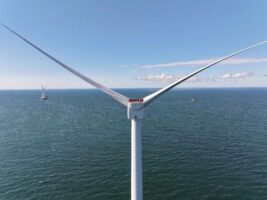
Additionally, the government is targeting 2 GW of offshore wind capacity by 2032, 4 GW by 2035 and 9 GW by 2040. And on energy storage, the government is aiming to have 2.6 gigawatts (GW) on the grid by 2030 and 6.3 GW by 2035.
Victorian Labor’s climate update comes as the federal Liberal Party falls in line with the National Party and agrees to abandon Australia’s commitment to net zero by 2050, as well as its 2030 target of a 42 per cent reduction in emissions.
And at the state level, the new climate plan coincides with the Victorian Liberal Party’s appointment of a new, new leader, Jessica Wilson, following a leadership spill that ousted Brad Battin, 19 votes to 13.
Asked about the state branch’s position on net zero, Wilson reportedly declined to commit, but did note that the party had supported emissions reduction legislation in the parliament.
“There’s no plans to change what legislation has gone through the parliament but what we are doing is we are saying we have to focus on the fact that power bills keep increasing and that we have a gas shortfall in future years and that’s why we have been very clear that we want gas to be part of that transition,” Wilson told ABC Radio Melbourne.
“We have been clear in our position in the parliament in supporting emissions reduction targets here in Victoria, but what I’m saying is it can’t be by itself,” she said.
“We have to make sure people are actually able to pay their power bills.”
But as minister D’Ambrosio noted last week, Victoria has so far done a reasonable job of keeping both keeping energy bills and emissions lower than other states.
“While the Liberal-National Opposition meltdown in climate infighting, we’re doubling down on our nation-leading investments in renewable energy and public transport, to move to net zero and lower households’ cost of living,” a statement said this week.
“Victoria leads the nation in climate action, because we know that moving to a net zero economy can help households with the cost of living, and create jobs and growth for decades to come,” says D’Ambrosio.
“The Climate Strategy 2026-30 builds on our nation-leading record of investment in renewable energy and public transport, to chart a course for the next five years that puts families and fairness first.”
If you would like to join more than 28,000 others and get the latest clean energy news delivered straight to your inbox, for free, please click here to subscribe to our free daily newsletter.