Two renewable energy projects proposed for Western Australia have taken important next steps forward this week in the race to meet the state government’s pledge to quit coal by the end of the decade.
Western Australia’s Cook Labor government has committed to closing its publicly-owned coal plants, the Muja and Collie power stations, by 2029, and has suggested the state could phase out coal altogether by 2030.
One of the state’s last remaining privately owned coal plants, Bluewaters is also expected to close by 2029, despite its relative youth, due to the financial difficulties of its owner Griffin Energy and the expiry of state government support next year.
WA, however, still has challenges in ensuring enough new wind and solar is built to provide the bulk energy needed to replace coal, and last month rolled out a proposed new transmission plant to provide the grid infrastructure to host new projects.
In the north of the state, it is also seeking to decarbonise the massive iron ore province, which is nearly totally reliant on gas and diesel, and this week, the government announced that it would provide $2.7 million in initial support to a Traditional Owner group in their bid to develop a green energy park in the Pilbara.
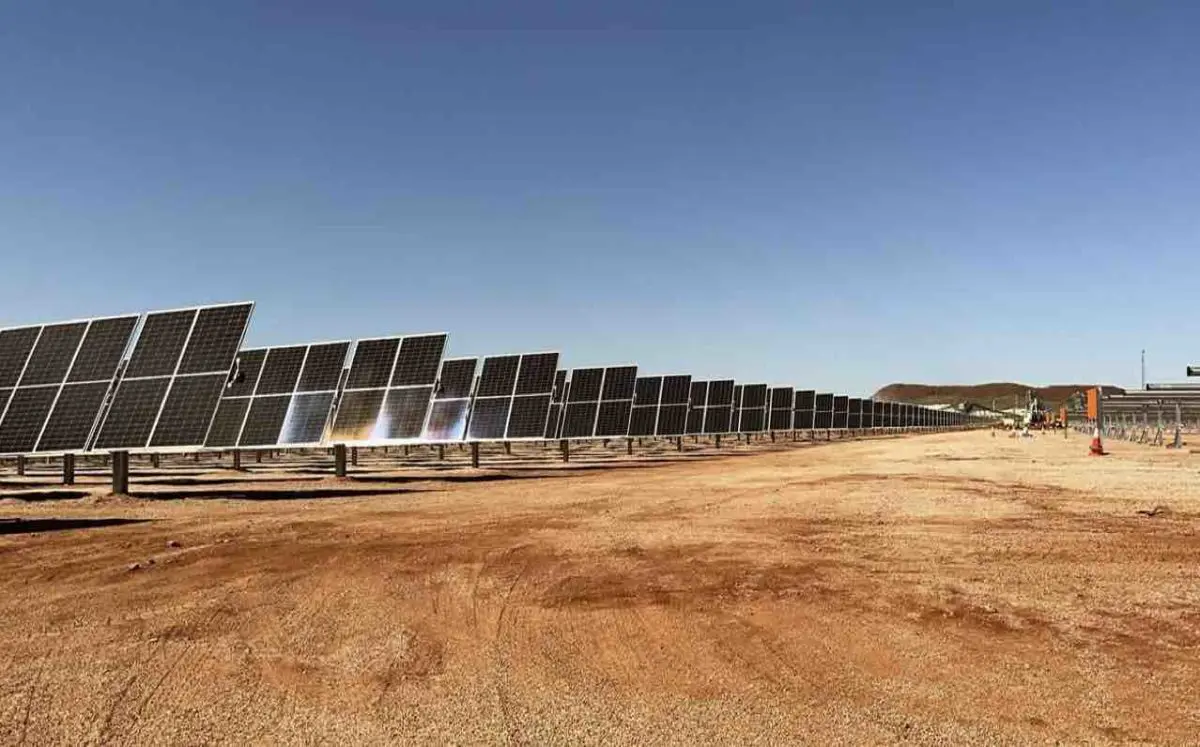
The Ngarluma Aboriginal Corporation (NAC) has developed a business proposal to establish 100 per cent Traditional Owner owned and operated green energy parks with up to 5 gigawatts (GW) of capacity on land in its native title determination.
Ngarluma country stretches across much of the coastal areas in the western Pilbara region and includes the coastal towns Karratha, Roebourne, Wickham, Cape Lambert, and out to Whim Creek. The region is home to much of the Pilbara’s Industry including Rio Tinto Iron Ore, Dampier Salt, Woodside, Yara, and Perdaman.
Plans for the Ngarluma Green Energy Park involve obtaining tenure over the area and offering subleasing arrangements to solar generation and battery storage proponents.
The Western Australian government has therefore provided $2.7 million in initial support to NAC to support the development of surveys, approvals works, and technical activities over the next 12 months.
“Traditional Owners are invested in the success of the Pilbara Energy Transition, and the Cook government is determined to ensure they gain genuine economic benefits from our clean energy transition,” said Amber-Jade Sanderson, state minister for energy and decarbonisation.
“The common-use infrastructure approach reduces the need for multiple transmission lines on Country while still unlocking the renewable energy resources of the region.”
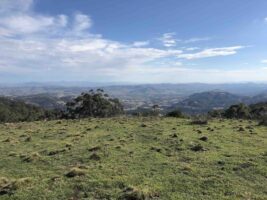
The news came at the same time as it was reported that the developers of the proposed Kojonup Wind Farm in the Great Southern region of the state had lodged state development approval.
Set to consist of 33 wind turbines with a combined capacity of 204-megawatts (MW), the $750 million wind farm is being developed by Moonies Hill New Energy, the developer behind the Flat Rocks Wind Farm, and is backed by a development agreement with government-owned Synergy.
Approval appears to have been lodged late last month, and the application will be available for inspection through to 9 January 2026.
In addition to the wind farm itself, the project will also require necessarily ancillary infrastructure as well as a 20-kilometre underground transmission line connecting the site to the Kojonup Western Power substation.
It comes as Synergy’s proposed 20-turbine near Augusta in the state’s south-west has been waved through by the W.A. planning authorities, despite local opposition.
If both wind projects – and others also in the pipeline – are successfully brought through to completion, they will play important roles in helping Western Australia meet its goal of closing all state-owned power coal power stations by 2030.
Announced back in mid-2022 by then-premier Mark McGowan, the goal of retiring all the state’s taxpayer-owned coal power stations by 2030 was billed as being driven by the continued uptake of rooftop solar and renewable energy which is forcing changes in the state’s energy system.
“WA’s electricity system is being increasingly challenged by the overwhelming uptake of rooftop solar,” the government said at the time.
“These pressures force Synergy to offload excess power generated during the day at a loss, and add additional maintenance and generation costs, which are ultimately borne by taxpayers.
“To address this, the State’s energy generation system will embark on a sensible, managed transition to a greater use of renewables, while ensuring electricity reliability and affordability continues to be paramount.”
But reports earlier this year cast doubts over the viability of the coal phase-out, due in large part to the slower-than-expected rollout of renewable energy sources.
If you would like to join more than 28,000 others and get the latest clean energy news delivered straight to your inbox, for free, please click here to subscribe to our free daily newsletter.