The South Australian government and AGL Energy have reached a funding agreement for the extension of the ageing Torrens Island B generator near Adelaide, in a move that eliminates a potential reliability gap in the state.
The deal to delay the closure of three Torrens island B units totalling 600 megawatts from mid 2026 to July 1, 2028, was announced on Wednesday, but the terms of the funding arrangement were not revealed.
The delay was sought by the state government after the Australian Energy Market Operator identified in its recent 10-year outlook (known as the Electricity Statement of Opportunities) a potential reliability gap for a short period in early 2027.
But in an update published on Wednesday after the extension was sealed, AEMO says that gap is now eliminated, along with the need to require retailers to secure contracts through the retailer reliability obligation.
In a separate statement, AGL said it will receive “financial contributions” to help cover the costs of operating Torrens B for the additional two years. The details were not released.
It is not the first funding deal to be announced between a private generator and a state government. Victoria has negotiated two deals with EnergyAustralia and AGL over the closure dates of Yallourn and Loy Yang A respectively, but has not revealed the financial details.
In NSW, the state government offered to underwrite the two year extension of the Eraring coal fired power generator, offering up to $450 million. But Origin has chosen not to tap into that offer, deciding instead it can make enough money from the extension on its own, without having to share any bonus revenue with the state.
South Australia leads the country – and the world – with its penetration of wind and solar, with a share of 75 per cent over the last 12 months, and a target of reaching 100 per cent “net” renewables by the end of 2027.
The reliability gap was largely created by the delay in the completion of the new link to NSW, Project EnergyConnect, which should be completed before the end of 2027.
State energy minister Tom Koutsantonis has never been a fan of the new transmission link, which he describes as the “extension cord to nowhere.”
In a statement, he said: “We said it would face delays, and we said that building an interconnector into New South Wales would displace South Australian thermal generation – and that is exactly what happened.
“AGL’s closure of Torrens Island B is a direct consequence of the Marshall Liberal government’s plans to build interconnection into New South Wales.
“It’s bizarre that (South Australian opposition leader) Vincent Tarzia and his Shadow Minister for Energy and Net Zero, Stephen Patterson, have continued to celebrate the catastrophic impacts of their extension cord to nowhere.
“But it’s more bizarre still that they unveiled an energy policy to negotiate with AGL to keep Torrens Island open – despite its closure being a direct result of their own policies.”
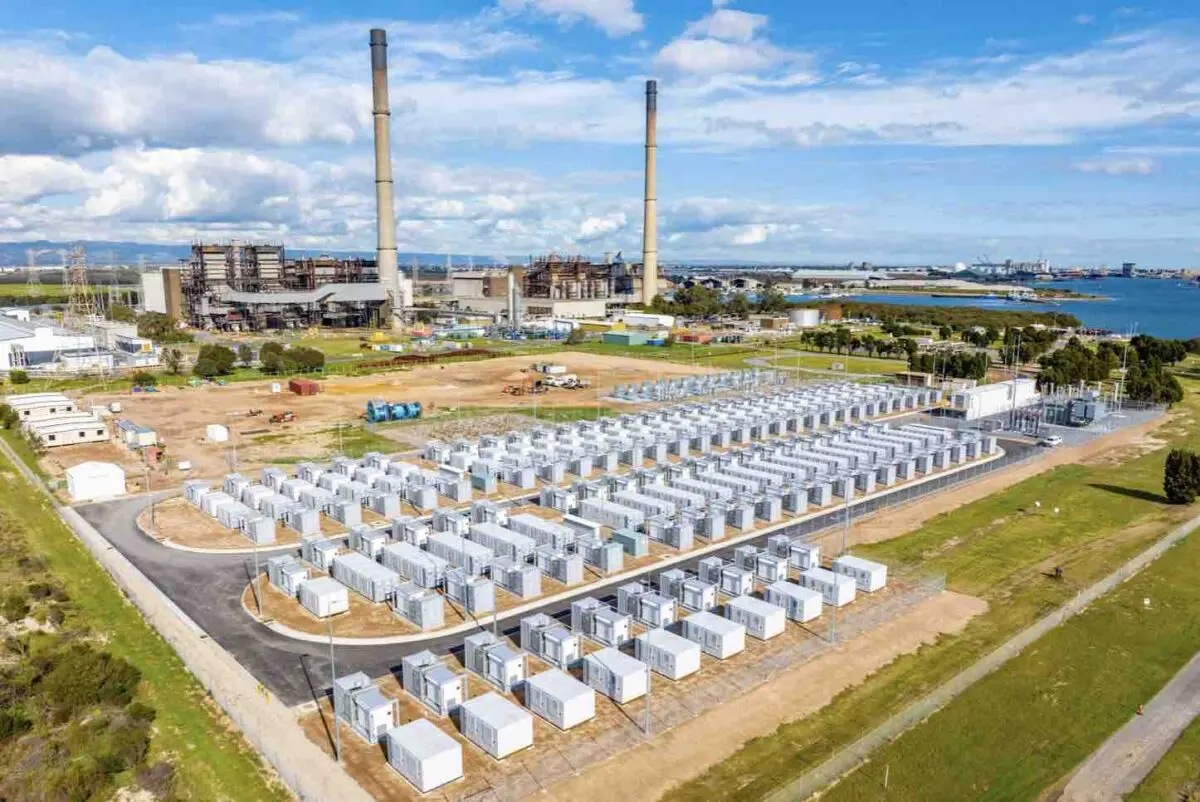
Torrens Island B was built in 1976 and one of its units has already been mothballed. AGL has built a 250 MW, 250 MWh battery at Torrens Island as part of plans to transition the facility to a green energy industrial hub.
AGL says the extension was requested (and paid for) by the state government. It says the facility, which includes the relatively new 210 MW Barker Inlet peaking power station, will continue to providied flexible generation and firming capacity for the SA electricity market.
“We continue to have discussions with potential partners in renewable energy and associated industries as we plan for the transition of the site into an integrated energy hub,” it said.
The last unit of the Torrens Island A gas fired power station was closed in 2022 after 55 years of service.
Meanwhile, AEMO also noted the announced early closure of the 1,600 MW Gladstone coal fired power station earlier on Wednesday, which could now close six years early in 2029.
It said that shile forecast reliability gaps emerge in Queensland from 2029-30 due to the earlier closure notification, no RRO instruments apply at this stage
“The delayed retirement of AGL’s Torrens Island B power station has improved the short-term reliability outlook in South Australia,” said Nicola Falcon, the executive general manager of system design at AEMO.
“Bringing forward the Gladstone Power Station’s retirement by six years flags the need for the timely delivery of planned longer-term investment.
“More broadly across the National Electricity Market, the delivery of new generation, storage and transmission, along with the operation of consumer energy resources to support reliability, remain critical with considerable power station retirements and increasing demand forecasts.”