For years there has been a game of shadow boxing around the nature of the green energy transition in Australia. There is the admission that rooftop solar is helping households and businesses cut their bills, and some industries have made a big deal about the savings from contracts with big wind and solar farms.
But the naysayers keep insisting that nothing could, would or should replace good ol’ reliable fossil fuels, and “always on” coal power, apart from a lot of gas and maybe nuclear energy if someone could figure out a way to invent cost competitive small modular reactors.
That is a view based around hope, vested interests and ideology, and old fashioned energy system thinking. And it has been steadily undermined by the plunging cost of solar and battery storage, and the growing scientific evidence that Australia – and the world – needs to move quickly to cut emissions.
Now, it could be argued, the case for renewables and storage is more or less settled, or at least it should be: Rio Tinto, the biggest consumer of electricity in Australia, has chosen wind, solar and battery storage over coal and gas to secure the future of its Queensland-based aluminium smelters and refineries.
See our story: Rio Tinto signs massive solar and battery deal to help secure future of smelters and refineries
It is a stunning decision, and one made for a simple reason – Rio Tinto says wind, solar and battery storage offer the cheapest and most reliable energy option, and, of course, the lowest emissions. And it will save the jobs of thousands of people in and around the industrial city of Gladstone.
It means that the energy landscape in Australia will never be the same, and the baseload and nuclear arguments can finally disappear back to where they belong – in the last century.
Rio Tinto has previously signed big renewable purchase agreements for large wind and solar projects, the biggest in the country, with 1.2 GW from the 1.4 GW Bungaban wind project, and 1.1 GW from the Upper Calliope solar project.
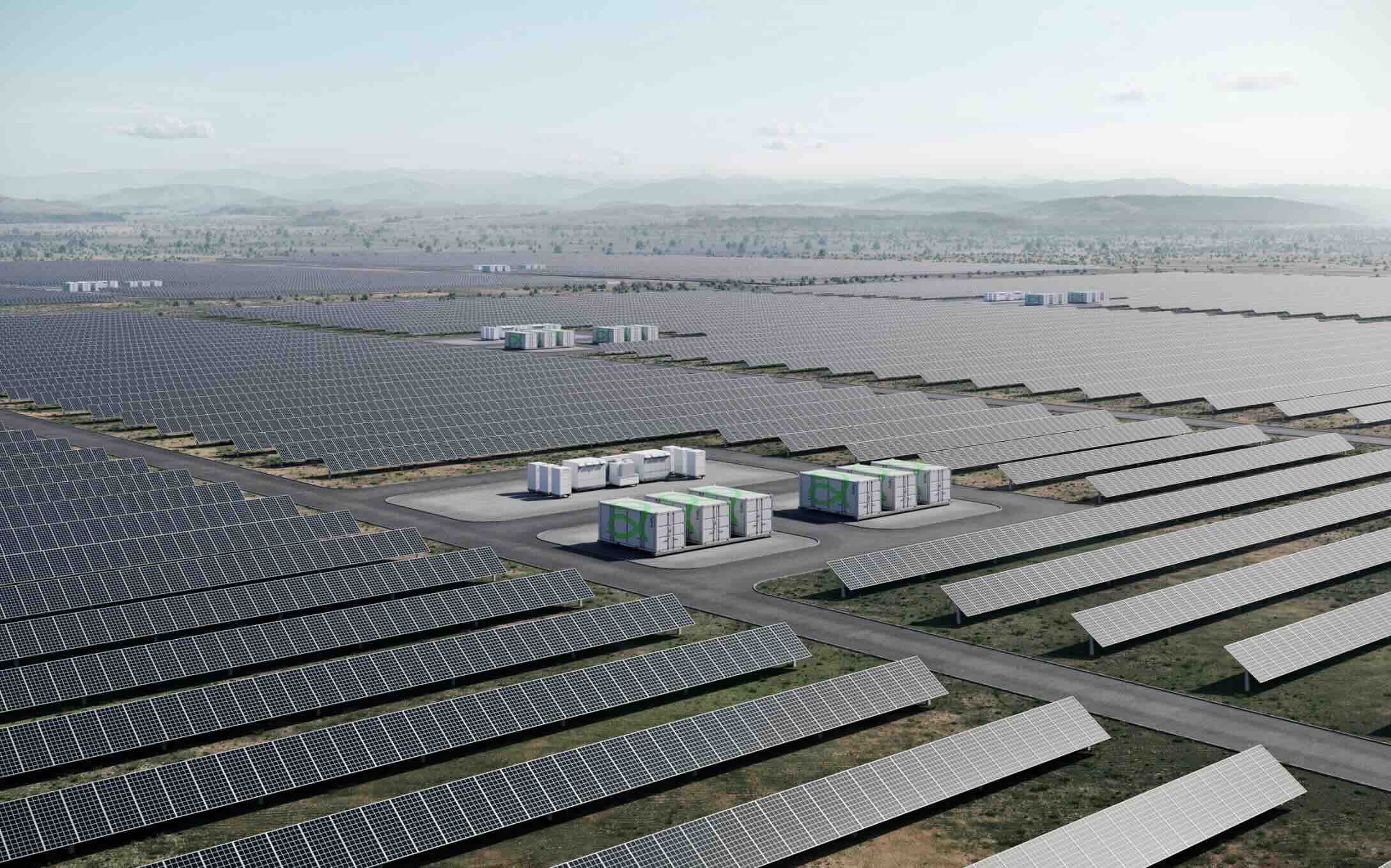
The additional deal signed this week between with Australian company Edify Energy – for a new project combining 600 MW (720 MW DC) of solar and 600 MW and 2,400 MWh of battery storage – is significant for a number of reasons.
Firstly is the size – it is the biggest of the three record breaking power purchase agreement signed by Rio Tinto over the last year – and secondly it will help fill the crucial need for the “firming capacity” for the smelters and refineries.
The batteries that Edify will build at its co-located Smoky Creek and Guthrie Gap solar projects will be “DC-coupled”, which means that they will be scattered across the vast solar arrays – rather than as a standalone facility – and will require only one set of inverters, delivering significant enough cost savings in construction.
According to Andrew Stiel, Edify Energy’s head of energy markets, the design combines the best of the lowest cost source of electricity in solar, and the dispatchability and flexibility of batteries. And the fact that it is DC-coupled gives it significant advantages over stand-alone renewables and AC-coupled hybrid designs.
One of the advantages is a reduction of plant losses, as a result of the lack of duplication and because the transfer of solar energy to the battery is as direct as possible (via a direct DC feed), rather than having to be conveyed through multiple sets of inverters and AC reticulation.
- Grid forming inverters will be used, and will deliver a net benefit to the grid because the project has just one set of inverters. That avoids the payment of network system strength charges, but it also allows for revenue from the sale of this capability to network service providers, as Edigy has done at the Koorangie battery in Victoria.
An AC-coupled hybrid solar battery can’t do that, as the solar component will likely have to use grid following inverters, effectively negating the grid forming benefits at the connection points.
- The set up at Smoky Creek also mitigates constraints on the grid, because the ability to store energy reduces exposure to potential thermal constraints and the grid forming inverters reduce exposure to potential voltage and stability constraints
“All of this culminates into an optimal power plant design that is both a source of clean electricity and is dispatchable, allowing it to target any time of day – in particular the 4 hour battery is sized to cover the evening period coinciding with high demand and prices,” Stiel says.
“This opens up a host of options in how these plants can operate in the market and how they can be contracted.”
Rio Tinto’s aluminium chief Jérôme Pécresse, quite possibly the biggest buyer of electricity in the world outside of China, recently visited Australia and noted his company’s smelters are agnostic to the source of the electrons.
“They can technically work on any source, provided they are guaranteed to get uninterruptible power supply, as they cannot stop production,” he wrote on LinkedIn.
Historically, he noted, this was achieved in Australia with coal, but “there is no reason why, in some places, it cannot be achieved via a mix of intermittent renewables, provided that this mix is ‘firmed’ via batteries and other sources.”
Stiel says that the fall in battery costs means that this technology can deliver “firm” solar at the same cost as wind energy. In terms of dispatch, the batteries enable the output of solar to be hollowed out in the middle of the day, with the solar stored and dispatched back into the evening peak.
“That breaks that nexus between utility solar and rooftop PV,” Stiel says.
The deal with Edify will mean that around 30 per cent of the “firming needs” of the Boyne Island smelter will be met.
Rio Tinto’s Pécresse notes that the “last percentages of firming can indeed prove expensive”, but also says that smelters can “flex”, meaning they can reduce their demand needs at certain time, acting like a giant battery of its own.
“By flexing our smelters more, we can provide significant value to these systems,” Pécresse says.
Stiel says the innovations from this technology are important for the future of power systems that do not relay on traditional synchronous machines.
“It is a real vote of confidence in renewables,” Stiel says. “The largest energy consumer in Queensland has said yes to renewables and batteries for firming, and has chosen us on commercial grounds, reliability grounds, and the benefits from zero emissions.
“If it is good enough for Rio Tinto, then surely it is good enough for all manner of industrial users and consumers.”