The continued growth of the global renewable energy sector, led by a surge in solar generation, has for the first time seen renewables overtake coal generation in the global electricity mix over the first half of 2025.
Fulfilling predictions made by the International Energy Agency (IEA) over the past 18 months, renewable energy sources produced more electricity than coal in the first six months of 2025, according to a new analysis from global energy think tank Ember.
It was an impressive six months for global renewables, due in large part to the record pace of the solar sector, which Ember described as “spectacular”.
According to Ember’s analysis – which draws on monthly electricity data from 88 countries representing 93 per cent of global electricity demand – solar grew by 306 terawatt-hours (TWh), up 31 per cent over the same period a year earlier, making it the fastest absolute growth on record.
If this pace continues, Ember expects solar to once again be the fastest-growing source of electricity for the 21st consecutive year, outpacing wind growth in absolute terms for the fourth year in a row.
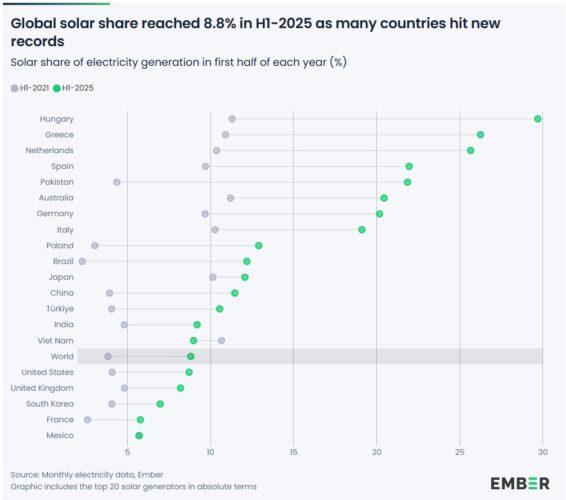
Solar increased its share of global electricity generation to 8.8 per cent in the first half of the year, up from 3.8 per cent in 2021 and 6.9 per cent in 2024.
China accounted for 55 per cent of global solar generation growth during the first six months of the year, followed by the United States (14 per cent), the European Union (12 per cent) India (5.6 per cent), and Brazil (3.2 per cent), with the rest of the world only contributing 9 per cent.
In many countries, solar now accounts for a considerably higher share of the electricity mix, with a number of countries hitting new records: Seven countries generated over 20 per cent of their electricity from solar, including Australia, with Hungary leading the way with solar accounting for a nearly 30 per cent share.
While wind energy continues to generate more than solar, slower wind energy growth in the first six months suggests that solar will soon overtake wind generation.
Wind energy generation grew by only 7.7 per cent in the first half, compared to solar’s 31 per cent, and down on the 9.1 per cent growth seen in the first half of 2024. Nevertheless, wind’s share in the global electricity mix still grew this year, up to 9.2 per cent from 8.8 per cent.
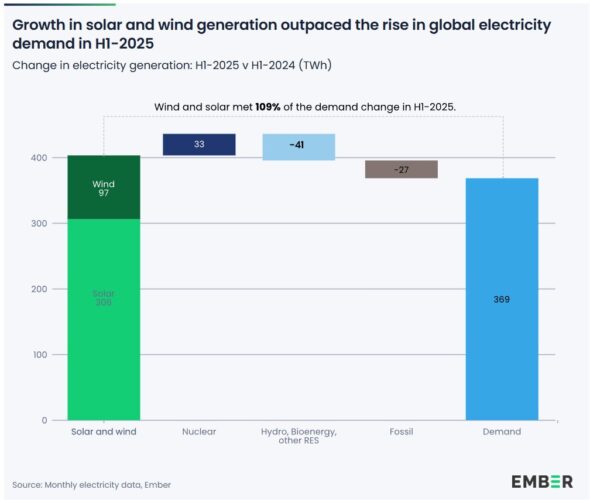
Together, the pace of solar and wind growth exceeded the growth in global electricity demand. According to Ember’s analysis, global electricity demand increased by 369 TWh in the first half of 2025, which was more than met by the 403 TWh increase in solar and wind generation – with solar generation meeting 83 per cent of the global increase in demand.
All of this contributed to renewables overtaking coal in the electricity mix for the first time on record, rising by 363 TWh to 5,072 TWh in the first half of 2025.
This increased the share of renewables in the global electricity mix to 34.3 per cent, up from 32.7 per cent in the same period in 2024, whereas coal generation fell by 31 TWh to 4,896 TWh, with its share dropping from 34.2 per cent to 33.1 per cent.

Importantly, there was a slight drop in fossil fuel generation during the period, of 0.3 per cent, a drop of 27 TWh, which Ember described as “modest but significant”. Just as notably, fossil fuel generation fell in the first half for both China and India but increased in the United States and European Union.
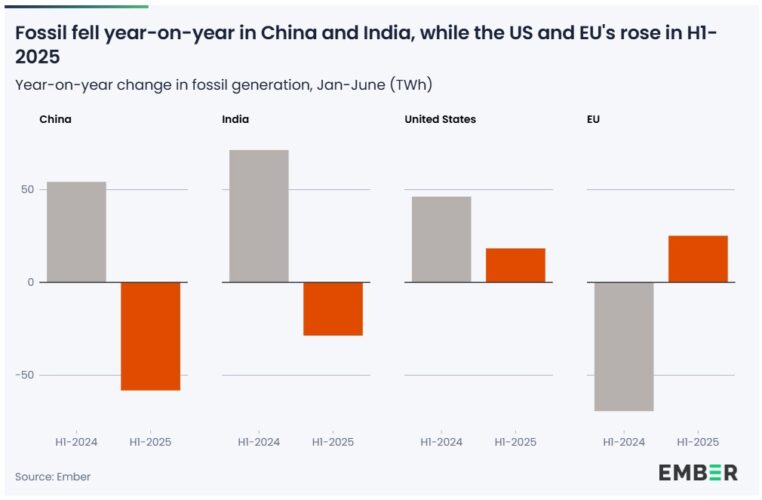
This helped ensure that global CO2 emissions from the power sector plateaued, falling by 12 megatonnes of CO2 (MtCO2) (-0.2 per cent) to 6,963 MtCO2 in the first half of 2025
“We are seeing the first signs of a crucial turning point,” said Malgorzata Wiatros-Motyka, senior electricity analyst for Ember.
“Solar and wind are now growing fast enough to meet the world’s growing appetite for electricity. This marks the beginning of a shift where clean power is keeping pace with demand growth.
“As costs of technologies continue to fall, now is the perfect moment to embrace the economic, social and health benefits that come with increased solar, wind and batteries.”
If you would like to join more than 26,000 others and get the latest clean energy news delivered straight to your inbox, for free, please click here to subscribe to our free daily newsletter.