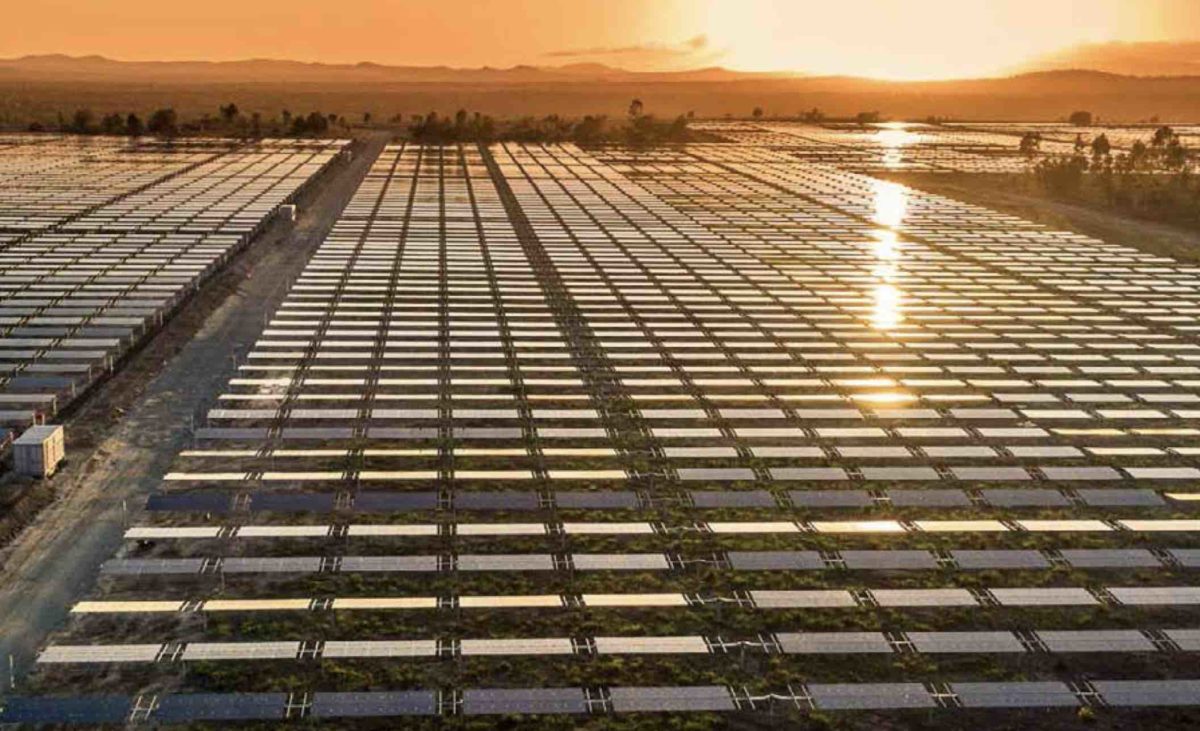
The new Queensland LNP government may be trying desperately to pretend that it is not happening, but the growth of renewables in Australia’s most coal dependent state is still occurring, even if the pace of the transition will be deliberately slowed.
On Sunday, the state reached a new record of 99.3 per cent “potential renewables”, which reflects the amount of renewables that could have been delivered without economic, or network constraints. The previous highest was 96.9 per cent in October, 2024.
As it turns out, when the record occurred just after 12.30pm on Sunday, rooftop solar had hit a record high share of 53.6 per cent, helping to push network demand to a new record low of 2,961 MW, according to GPE NEMLog.
That meant that well over half of the state’s utility-scale solar capacity was switched off to avoid negative prices, and the actual penetration of renewables at the time was just over 66 per cent of demand.
The state’s growing number of big batteries and its pumped hydro facilities were also taking advantage of the negative prices, while nearly a gigawatt of capacity was being exported south to NSW.

Queensland has averaged just 31.5 per cent renewables over the last 12 months, the lowest of any state in the country, and its dependence on coal is the highest, with an average of 65 per cent over the last year.
The figure for “potential renewables” was less than 20 per cent of grid demand way back in 2018, getting close to the point where renewable naysayers said the grid would fail, the economy would collapse and we’d all be living in caves.
The new LNP government clearly believes some of that fear-mongering, because it has decided to scrap the state’s renewable energy targets set by Labor – 50 per cent by 2030, 80 per cent by 2035 – and is not interested in emissions targets, despite the obvious damage done to its greatest tourism attraction, the Great Barrier Reef.
Instead, the LNP has promised to spend several billion seeking to extend the life of its ageing coal generators, while some of its biggest employers, such as Rio Tinto, seek to do the opposite – making clear that its refineries and smelters have no future if they cannot switch from coal to renewables by the end of the decade.