Over the past decade, electricity systems have started to feel less like steady machines and more like living networks. Not because the physics has changed, but because the mix of supply has. When a growing share of generation depends on sunlight, the state of the sky becomes operationally consequential.
A recent ABC article on Australia’s solar forecasting ecosystem sits inside this shift. It describes how cloud cover can rapidly change rooftop solar output, how five-minute settlement can translate those changes into sharp price movements, and how forecasting has become part of keeping the grid stable.
What feels worth lingering on is a subtler theme beneath the technical detail: informational power. The ability to predict earlier and respond faster can start to matter as much as owning megawatt-hours.
If that is true, what does it change about fairness, resilience, and governance? And what do we miss if we keep talking about the energy transition only in terms of generation and storage?

NSW Regional Supply on Wed 26 Nov 2025 | GPE NEMLog
The value of minutes
Small timing differences can carry outsized consequences.
There is a simple point that is easy to overlook: in a system priced and balanced in short intervals, the same physical event can have very different outcomes depending on when it is noticed and how quickly it is acted upon.
What follows is a way of translating that into a broader lens:
– When markets clear quickly, the clock becomes a factor: Five-minute settlement does not create volatility on its own, but it can make rapid swings more visible and more consequential.
– When supply moves with weather, uncertainty becomes operational: Rooftop solar responds to cloud cover whether anyone is ready or not, so uncertainty shifts from “forecast error” to “system condition.”
– When responses are slow, risk concentrates: A brief mismatch between expected and actual supply can create disproportionate price and stability stress.
This is where “informational power” begins to appear – not as a slogan, but as a structural feature. The next question is what, exactly, is being powered by information?
Forecasting as a form of control
Not all control looks like a switch being flipped.
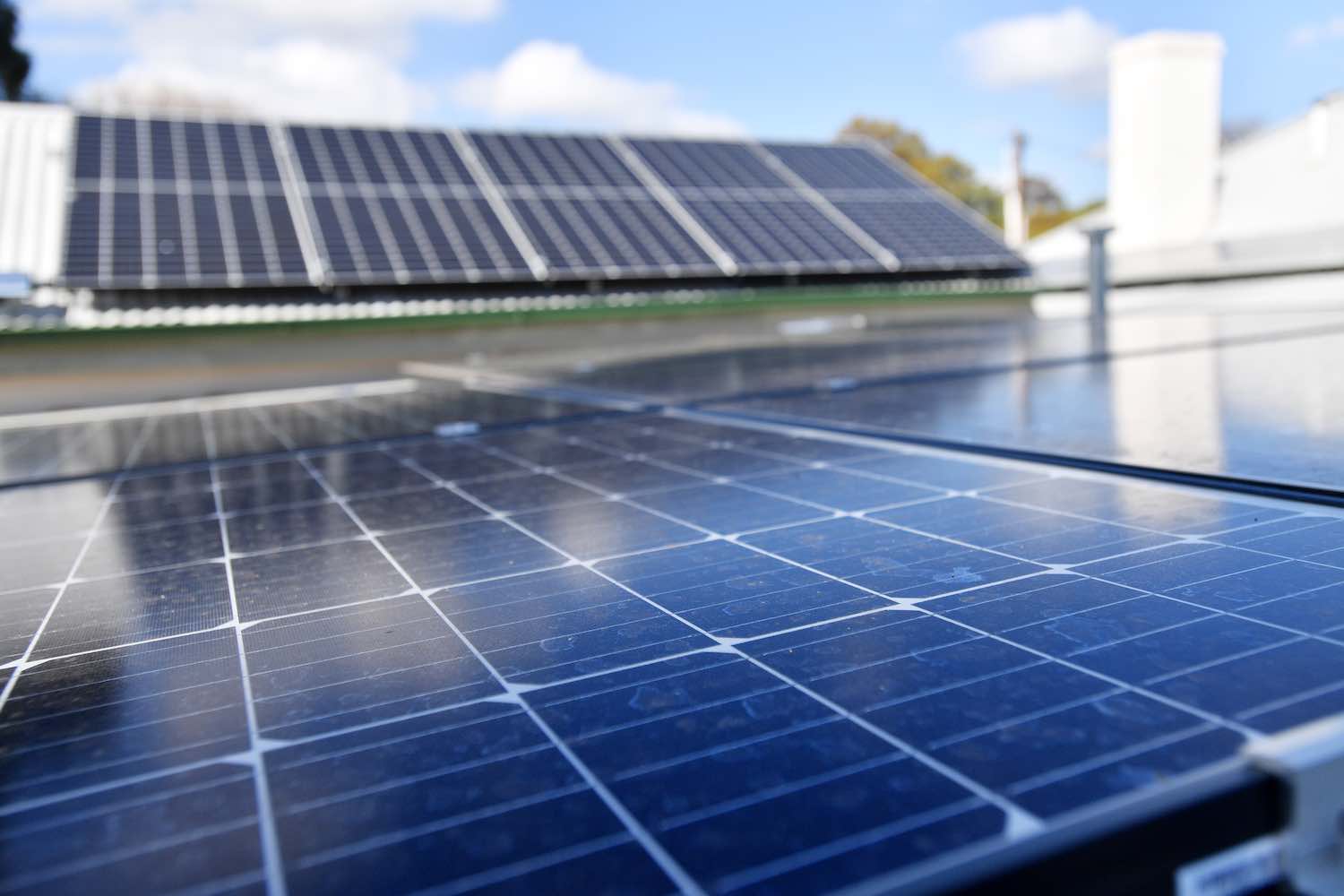
Rooftop solar is widely distributed. No single operator can dispatch it like a large generator. Yet it behaves, at times, like a single aggregated unit: when cloud cover rolls in across a region, output can drop together.
One way to interpret this is that forecasting becomes a proxy for control:
– When direct dispatch is limited, anticipation fills the gap: If you cannot instruct millions of rooftops, you manage the consequences by positioning other resources ahead of time.
– When prediction becomes routine, it quietly becomes infrastructure: Forecasting stops being an “add-on service” and starts resembling an enabling layer of grid operation.
– When accuracy improves, expectations rise: The better forecasting gets, the more the system comes to rely on it being available, consistent, and well understood.
This introduces a delicate idea: if forecasting is infrastructure, then its weaknesses are also infrastructure weaknesses. That leads naturally to the role of speed.
Latency is leverage
Being right is helpful. Being right in time can be decisive.
Recent examples from Australia’s solar-heavy system hint at a practical truth: in five-minute systems, informational advantage is not only about better models. It is also about how fast information travels and how quickly decisions translate into action.
This is where the “respond fastest” part becomes as important as “predict first:”
– When the interval is short, latency becomes a performance variable: A forecast that arrives late can be functionally similar to a poor forecast, even if its underlying accuracy is high.
– When execution is automated, capability compounds: Organisations with fast data pipelines and decision automation can act consistently in moments when manual processes struggle.
– When coordination is needed, common timing matters: Rapid response is not only about profit; it can also reduce the severity of imbalances when the system is surprised.
Speed, however, has an uncomfortable companion: shared signals can produce shared behaviours. That is where systemic risk becomes less intuitive.
The monoculture problem
A shared map can help people navigate, or lead them into the same blind spot.
In Australia, forecasting services are widely embedded across operators and market participants. That is sensible: common tools can support common understanding. Yet a “keen eye” question sits beneath it.
If many participants rely on the same forecast inputs, what happens when the forecast is wrong in the same direction for everyone?
– When reliance concentrates, errors can correlate: Not because anyone is careless, but because everyone is looking at the same signal.
– When forecasts coordinate behaviour, they can also amplify it: If many actors respond similarly to updates, the system can become more sensitive to revisions or surprises.
– When a feed fails, it may fail loudly: An outage or degradation can ripple across multiple organisations at once if contingency planning is thin.
This is not an argument against shared tools. It is a reminder that resilience sometimes depends on diversity—of models, data sources, and operational pathways. Which then raises a quieter question about where the data comes from in the first place.
We explored issues of this nature in When Signals Become Too Loud (Thu 08 Jan 2026).
The sovereignty of data
Dependence is not always visible until continuity breaks.
One of the more striking background details in this domain is the role of satellite imagery—particularly the step-change in resolution and frequency that made certain kinds of cloud tracking more practical. It is an enabling story, but it also hints at dependency.
If a material part of market stability and operational planning depends on external data streams, then energy security begins to overlap with data continuity:
- When key inputs are external, sovereignty becomes layered: Reliability can depend on arrangements and norms beyond the electricity sector itself.
- When openness supports innovation, it also sets exposure: Publicly available imagery can be a catalyst, while its disruption or restriction would be consequential.
- When systems become data-rich, governance becomes strategic: Questions of access, continuity, and standards move from technical detail to national capability.
This still leaves the human layer: who experiences the benefits, who bears the costs, and how trust is maintained as systems become more software-mediated.
Who gains from uncertainty
In complex systems, the same event can look like opportunity to one group and cost to another.
Volatility can translate into profits for some assets in certain conditions, while also flowing into hedging costs that are ultimately borne by customers. It also touches on the risk that, in the extreme, imbalance can threaten stability.
What feels worth drawing out is not a moral judgement, but a distributional question:
- When flexibility earns “tail-event” rewards, advantage can concentrate: Assets positioned for rare spikes can capture disproportionate value.
- When costs are managed through hedging, the bill can be socialised: Customers may experience volatility indirectly through retail pricing and risk premiums.
- When participation is uneven, legitimacy can erode: If households supply distributed generation but do not share in the value created by fast response, tensions can emerge quietly over time.
If informational power is rising, then so is the importance of how that power is governed—technically, economically, and socially.
Conclusion
There is a temptation to treat forecasting as a technical subplot in the energy transition: interesting, important, but secondary. The ABC article suggests something more structural. As rooftop solar grows, the grid becomes more sensitive to short-horizon uncertainty, and systems increasingly reward the ability to notice change early and respond quickly.
Seen that way, “informational power” is not a niche concern. It is a way of naming how value, risk, and influence are shifting – towards data, models, latency, and operational execution. Not because megawatt-hours no longer matter, but because minutes now decide outcomes more often than we might expect.
It may be worth holding this theme gently, without rushing to solutions. What changes when prediction becomes a form of infrastructure? What kinds of diversity make systems more resilient? And how do we ensure that a transition built on distributed participation does not quietly concentrate advantage in the hands of those who can act fastest?
The future rarely arrives with a new machine. It arrives with a new dependency.
This article was originally published on Geoff’s Substack, here. Republished with permission